

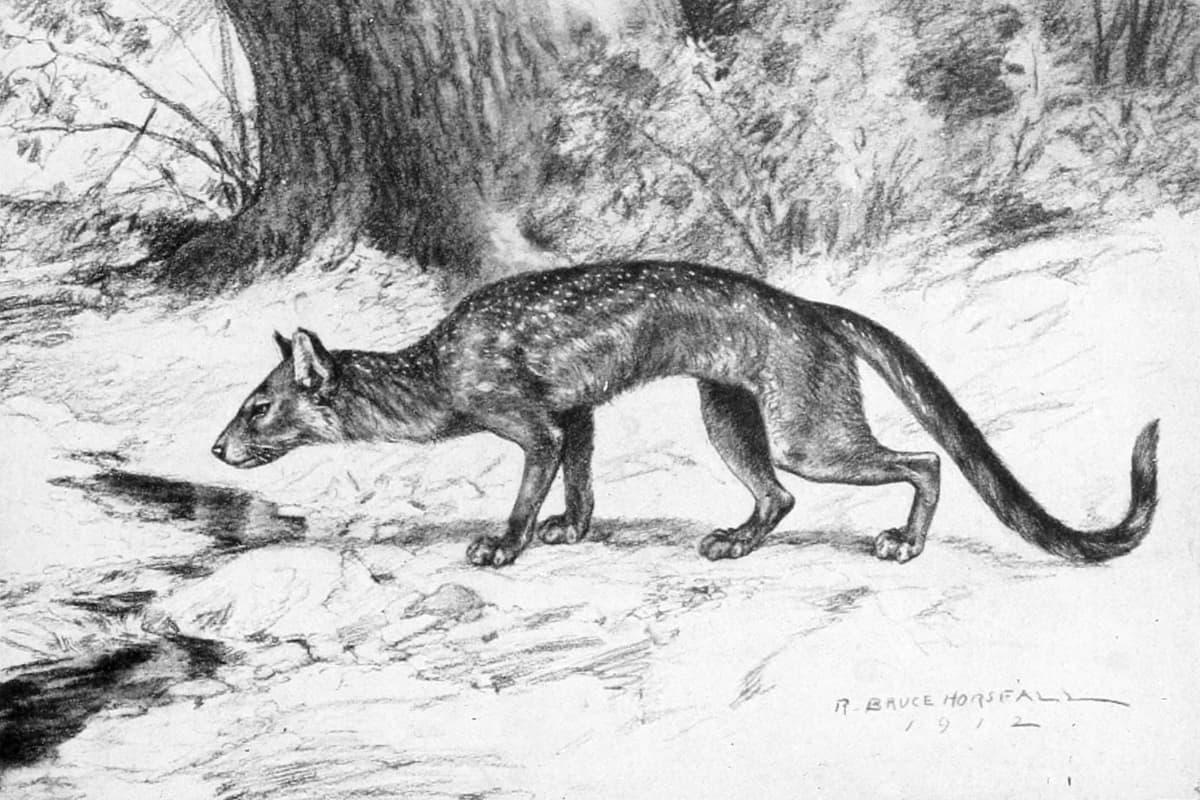
Hesperocyon appeared on Earth over 40 million years ago as the first true ancestor of all dogs, wolves, and foxes, BBC Wildlife reported. The extinct predator gets its name, which translates to western dog, from living exclusively in North America between southern Canada and modern Colorado.
The animal measured only 80 centimeters long, making it smaller than most modern domestic cats. It had a long tail, an elongated body, a sharp snout, and short legs, giving it an appearance closer to a ferret or mink than a dog. Unlike all living canids, Hesperocyon possessed five toes on each paw and an enlarged thumb claw that some paleontologists think helped it climb trees.
Forest habitat and climate evolution
Researchers said the predator lived in dense subtropical forests covering much of North America during a period when the climate was much warmer and more humid than today. It hunted rodents and possibly insects from ambush and fed mostly on meat, though it could supplement its diet with plant material like a modern raccoon or civet.
As the climate cooled and forests gave way to open grassy plains, dog ancestors evolved from tree ambush hunters into fast ground predators that led to modern wolves, foxes, and domestic dogs. Hesperocyon existed for about 11.5 million years before the dog family split into three main branches: the bone-crushing borophagines, which included the bear-sized Epicyon weighing over 100 kilograms, the extinct subfamily Hesperocyoninae, and the genus Caninae, which contains all 37 surviving canid species.
The publication previously reported on the binturong, a tropical Asian forest creature nicknamed the bearcat despite having no connection to cats or bears. That animal uses its prehensile tail like a fifth limb and smells like fresh popcorn due to a chemical compound identified by scientists.


