

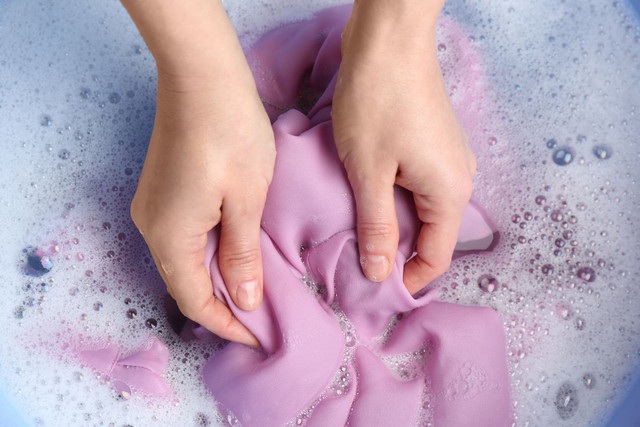
Many people believe hand washing is the safest way to protect delicate clothing, but performing the task incorrectly can cause far more damage than a standard washing machine.
Hand washing is widely recommended for delicate weaves like wool, silk, and fine cotton that cannot endure the mechanical agitation of machine drums. However, garments that stretch out of shape, fade in color, or become uncomfortably stiff are usually suffering from repeated routine laundering errors rather than bad luck. These common care mistakes are simple to resolve with basic adjustments to routine garment maintenance.
Common mistakes in manual garment care
Using excessively hot water is one of the most frequent errors during manual washing. High water temperatures relax fabric fibers, breaking structural bonds and causing cotton and wool garments to shrink, warp, or lose their natural elasticity. Unless a garment care label explicitly instructs otherwise, cool or lukewarm water should always be used to safeguard fiber integrity.
Scrubbing garments vigorously like a stained carpet also causes severe surface wear. Heavy friction does not clean fabric more effectively; instead, it destroys surface fibers and leaves clothes looking worn out. Rather than rubbing materials together, garments should be submerged in water and pressed gently so that detergent circulates evenly through the weave.
Pouring excessive detergent into the wash bowl further damages delicate materials. Adding more soap does not produce cleaner clothing, as heavy detergent is difficult to rinse out and leaves stubborn chemical residues that make fabrics stiff and dull. A small amount of soap is sufficient to lift dirt, provided it is completely dissolved in the water before garments are immersed.
Methods for rinsing and drying delicate fabrics
Wringing garments out with force stands as a primary cause of permanent shape loss. Twisting wet fabric places immense mechanical stress on fibers, stretching them beyond their elastic limit. Squeezing garments gently or wrapping them in a clean, dry towel absorbs excess water through capillary action without subjecting the weave to damaging tension.
Hanging dripping wet clothing creates additional structural distortion. When a garment remains heavy with saturated water, gravity pulls the wet fabric downward and permanently stretches its outline. Knitted items and delicate garments should always be laid flat to dry, ideally positioned on top of a dry towel to maintain their original shape.
Soaking clothes in water for extended hours can cause dye bleeding and ruin original coloring. Turning garments inside out prior to washing provides an extra layer of protection for surface dyes against surface friction. Thorough rinsing remains equally vital, as lingering soap particles gradually degrade fiber strength over time.
Selecting mild detergents formulated specifically for delicate textiles ensures long-term fabric preservation. Successful manual washing relies on gentle movement, proper water temperature control, and patience rather than physical strength, proving that improper technique rather than hand washing itself damages clothes.


