

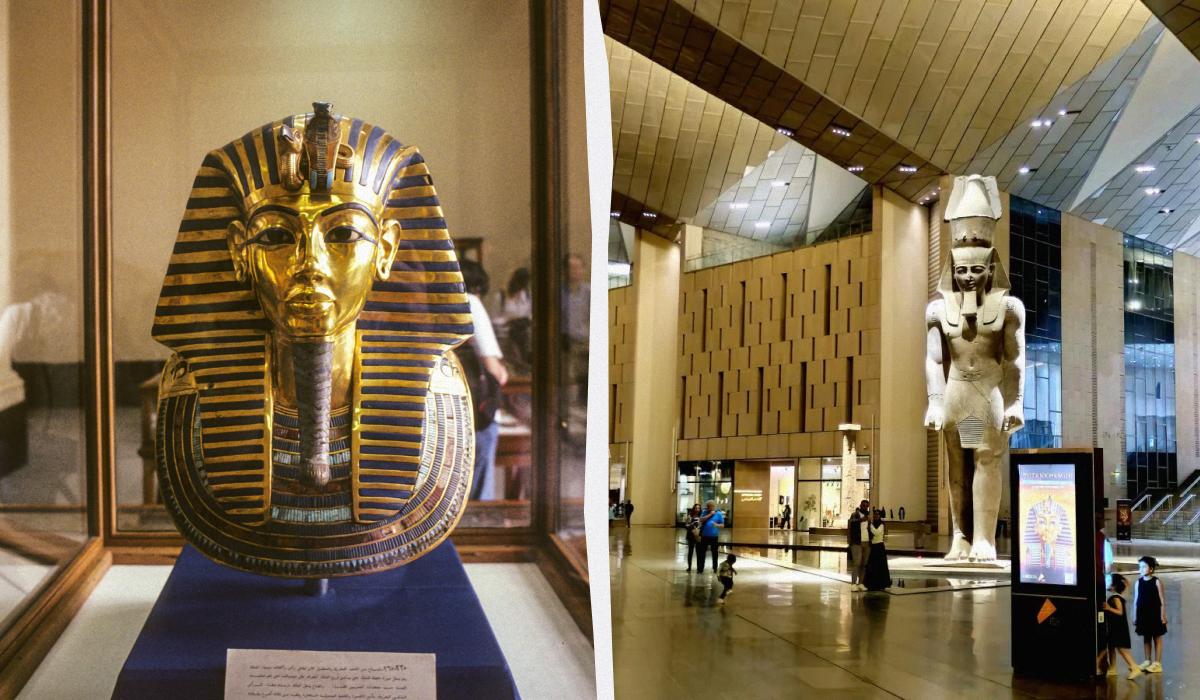
National Geographic has selected five key exhibits that visitors to the Grand Egyptian Museum in Giza should be sure to find, as the long-awaited institution opens up new ways for travelers to explore the history of ancient Egypt.
The Grand Egyptian Museum finally opened its doors to tourists on November 1, 2025, after more than 20 years of construction. The museum had originally been scheduled to open in 2013. It sits just over a kilometer from the Giza pyramids and cost roughly $1 billion to build.
Statue of Ramesses II
As visitors pass through the hieroglyph-decorated facade into the museum's grand atrium, they are greeted by a colossal statue of Ramesses II, one of Egypt's most powerful pharaohs. The statue was created 3,200 years ago and stands 11 meters tall. It was discovered in 1820 broken into six pieces, later restored and displayed for decades in central Cairo. When construction of the Grand Egyptian Museum began, the statue became the first exhibit delivered to the site, and the museum was effectively built around it.
Tutankhamun's mask
The discovery of Tutankhamun's tomb in 1922 triggered a surge of worldwide interest in ancient Egypt. The museum now displays more than 5,000 objects from the young king's tomb, but the centerpiece of the collection is the solid gold burial mask found with Tutankhamun's mummy. After the mask's braided beard was accidentally damaged in 2014, it underwent careful restoration and now sits in a glass case before a long line of visitors.
Khufu's solar boat
This boat, built for King Khufu from cedar around 2500 BC, was discovered in 1954 next to the Great Pyramid of Khufu in 1,200 separate fragments. It is now displayed in a vast two-story gallery with raised viewing platforms, having been carefully reassembled based on archaeological records. Because ancient Egyptians believed a pharaoh would join the sun god Ra on his cosmic journey across the sky after death, archaeologists named the vessel the "solar boat."
Statue of Hatshepsut
Hatshepsut was one of the few women to take on the full authority of a pharaoh at a time when royal power was considered an exclusively male prerogative, around 1470 BC. To legitimize her rule, Hatshepsut was depicted in official art and inscriptions in the guise of a male ruler, taking on male titles and even wearing a false beard, a detail reflected in this granite statue.
Ostraca
While attention usually falls on Egypt's famous rulers, the stories of ordinary laborers who worked in the shadow of the great pyramids are often overlooked. In the galleries devoted to the New Kingdom era, display cases are filled with ostraca, pottery shards bearing inscriptions similar to graffiti. Far cheaper than papyrus, ostraca were used to record events of everyday life. Many of these artifacts, found near Luxor and now held at the Grand Egyptian Museum, are more than 3,000 years old. The collection includes records of routine administrative matters, such as lists of workers absent due to illness. One fragment even contains a complaint about a mother-in-law.


