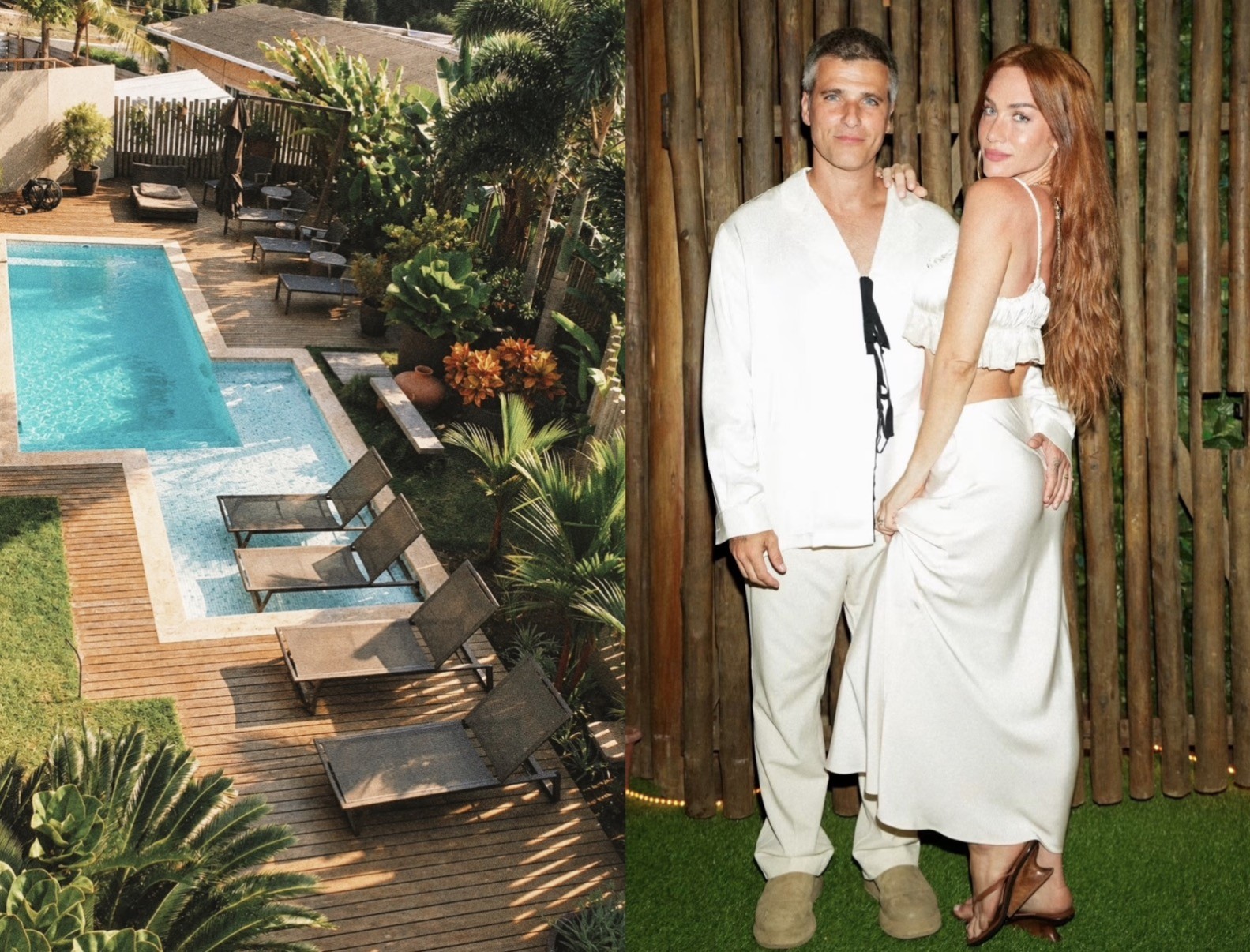
Brazilian actors Bruno Gagliasso and Giovanna Ewbank have built a name for themselves in luxury hospitality through two boutique inns on the island of Fernando de Noronha, Maria Bonita and Maria Flor, where nightly rates can top R$3,000.
The couple's properties are held up as an example of how high-end hotels in Brazil add value through architecture, personalised service and exclusive experiences rather than through accommodation and location alone.
At Maria Bonita, rates start at around R$1,300 during the low season and can rise above R$2,000 during peak demand. At Maria Flor, prices begin at roughly R$2,200 and can exceed R$3,000, depending on the room and the time of year.
Both inns sit in the Floresta Nova area near Vila dos Remédios on Fernando de Noronha and feature pools, gardens, sophisticated decor and personalised service. Maria Bonita has about 12 suites, while Maria Flor is built around contemporary, minimalist architecture with some rooms offering sea views.
Fernando de Noronha is a Brazilian archipelago off the coast of Pernambuco state, known for its beaches, marine life and protected natural areas, and is a frequent draw for high-end tourism.
What justifies the price of luxury accommodation?
Tamara Lorenzoni, a brand strategist with international experience, a specialist in the luxury market and founder of Lorenzoni & Co., said customers in this segment look for qualities that go beyond the physical facilities of a property.
She said perceived value is tied directly to a property's ability to deliver exclusive moments by combining identity, location and service excellence.
Lorenzoni said that in the luxury market, the customer is not simply paying for a night's stay. She said guests expect to find something that cannot easily be replicated elsewhere, and that while location carries real weight, it is the way a brand turns that address into an experience that makes the difference. She added that service, privacy, atmosphere, food and attention to detail all need to align, and that the price has to match what the guest actually experiences.
Architecture and nature as differentiators
Architectural design also plays a central role in how luxury properties build their value, with elements such as lighting, materials, functionality and integration with the natural surroundings shaping both the guest experience and the commercial positioning of a property.
On Fernando de Noronha, where natural beauty is one of the main draws for visitors, one of the challenges is designing sophisticated projects that respect and highlight the region's character.
Thiago Castilho, chief executive of Elemental Construtora, a property developer specialising in innovative construction methods and one of the people behind the Península Três Marias development, said that building this kind of distinction starts at the earliest stages of a project.
Castilho said a high-end project cannot be reduced to spending on fine finishes. He said it is necessary to think about the experience a space will offer, including circulation, lighting, the choice of materials and how the building integrates with its surroundings. He added that when architecture and functionality work together, a property gains both quality and identity, and that in destinations with such striking natural features as Noronha, that relationship with the landscape also has to be part of the design from the start.
Exclusivity goes beyond sophistication
Another decisive factor in the success of luxury hotels, Lorenzoni said, is the ability to meet the expectations of a demanding clientele. She said qualities such as warmth, discretion and personalised service are essential, even though they are not always visible in photographs or promotional material.
She said exclusivity does not necessarily mean offering more things, but offering what makes sense for that particular audience, consistently. She added that a memorable experience happens when every point of contact is handled with care, and that in the luxury market a detail that seems small can be decisive in shaping how a customer perceives a brand.
The inns owned by Gagliasso and Ewbank illustrate how high-end tourism combines the desire to visit paradise-like destinations with a search for distinctive experiences. In this market, properties aim not just to provide sophisticated accommodation but to turn the stay itself into one of the main attractions of the trip.
Test yourself
Who owns the Maria Bonita and Maria Flor inns in Fernando de Noronha?
Roughly how much can nightly rates at the two inns reach?
According to Tamara Lorenzoni, what mainly drives value in the luxury hotel market?
Have your say
What matters most to you when booking a luxury stay?
Where it happened
Fernando de Noronha, Brazil