

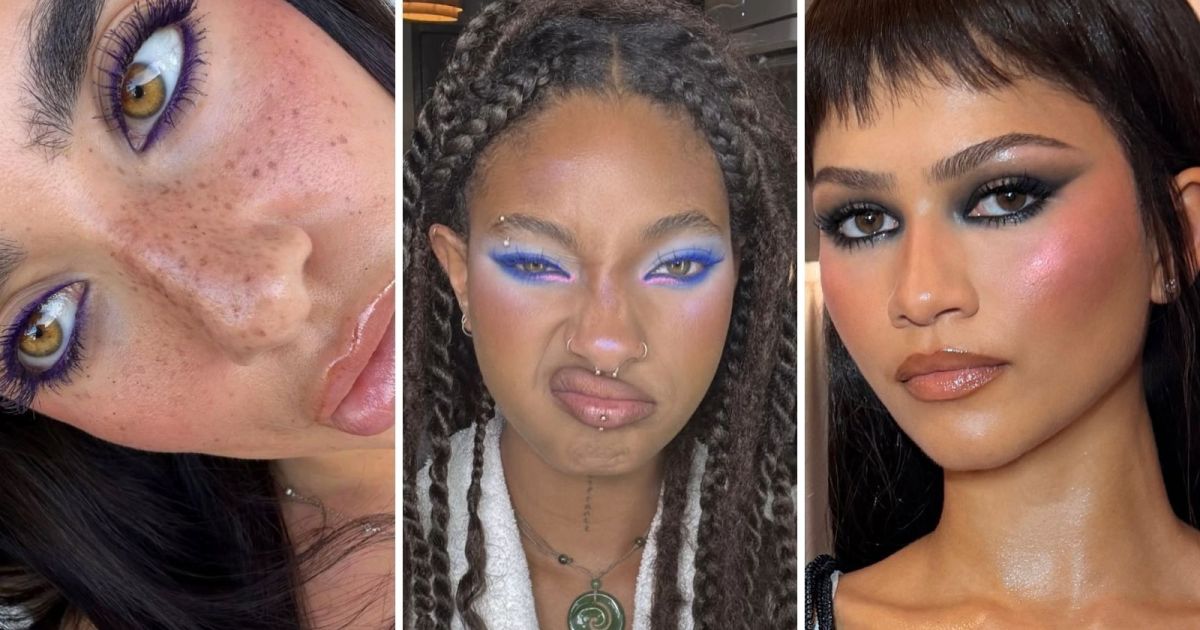
The eye maxxing beauty trend is rising on social media as users apply color theory to highlight natural iris shades without digital filters.
The viral method relies on pairing opposing hues from the chromatic wheel against the eye, creating an optical contrast that makes natural iris pigments appear more prominent under different light conditions.
Bruna Scharf, a makeup artist with the Walter's Coiffeur salon network, said the technique is a long-standing professional practice rather than a novel invention. Scharf said the approach represents a direct application of color theory to enhance the eyes, adding that modern makeup focuses on highlighting natural beauty instead of concealing it in a movement toward authenticity.
Color theory has served as a foundational principle in visual arts and cosmetics since formal color wheels were developed in the seventeenth century. By placing complementary colors opposite each other, artists create visual emphasis and depth. The term eye maxxing stems from internet culture, where the maxxing suffix is frequently added to terms describing the optimization of specific aesthetic features.
Understanding the optical contrast method
Executing the eye maxxing technique does not require bold or bright eyeshadow shades. Scharf explained that choosing a neutral brown eyeshadow with a specific undertone or applying a subtle warm metallic product can produce a sophisticated highlighting effect.
The visual impact of eye color changes depending on surrounding environmental lighting. Natural sunlight, cool white artificial bulbs, and warm yellow indoor lights alter how light reflects off both the iris and cosmetic pigments, which explains why many individuals notice their eye color appearing to shift throughout the day.
Scharf said that eye maxxing takes advantage of this optical effect. She explained that selecting appropriate cosmetic shades allows makeup to accentuate natural shifts in light, making the eye color look noticeably more intense.
Selecting complementary colors by iris shade
The technique uses specific color pairings for each iris category based on complementary color principles:
- Brown eyes: Highly versatile brown irises gain strong contrast when paired with navy blue, violet, eggplant, or emerald green eyeshadows.
- Blue eyes: Blue irises benefit from warm tones such as copper, terracotta, bronze, gold, and brown shades with orange undertones.
- Green eyes: Green irises stand out when framed by reddish and purplish nuances, including wine, plum, bordeaux, and copper.
- Hazel and honey eyes: Hazel and honey-toned irises harmonize with earth tones, gold, copper, and deep green shades.
Human iris coloration is determined by the concentration and distribution of melanin within the stroma layer. Brown eyes contain high levels of melanin, while blue and green eyes contain less pigment and rely on Rayleigh scattering of light within the eye structure, making color contrast strategies particularly effective.
Application techniques and natural beauty trends
Creating the eye maxxing look does not require complex or extravagant makeup routines. Scharf noted that combining the proper complementary color with mascara and a subtle eyeliner is enough to deliver an elegant, personalized result.
The growing popularity of eye maxxing reflects a broader shift within contemporary beauty toward customized routines that honor individual traits. Scharf concluded that the technique encourages people to better understand their own facial features and discover how to highlight what makes their eyes unique, emphasizing that beauty does not conform to a single standard.


