

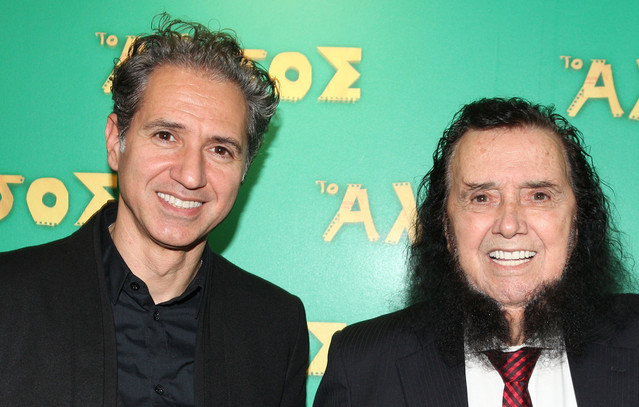
Greek singer Dimitris Kokotas has died at the age of 57 after more than two years of hospitalization at the G. Gennimatas General Hospital in Athens.
The popular laiko performer had been receiving medical care since March 28, 2024, when he suffered an acute myocardial infarction and cardiac arrest during rehearsals for the television music show J2US.
Emergency responders immediately transported Kokotas to the public hospital, where medical staff intubated him and admitted him to the Hemodynamic Unit, marking the beginning of a prolonged health ordeal.
His death has brought widespread grief across the Greek artistic community and among fans who connected with his voice and songs over a career spanning several decades.
Musical background and duet with Stamatis Kokotas
Dimitris Kokotas was the son of Stamatis Kokotas, one of the most iconic figures in Greek laiko music, a popular genre of urban folk music. Despite growing up in the prominent shadow of his famous father, the younger Kokotas established his own distinct identity in the music industry.
One of the most memorable moments of his career was a rare duet on stage with his father at the Garden of the Athens Concert Hall in 2015.
The father and son performed the song Gie mou, which translates as My Son, offering the audience a performance of authentic laiko music that remains a defining snapshot of their personal and artistic bond.
Throughout his career, Kokotas collaborated with several of Greece's top vocalists, including Marinella, Katy Garbi, Angela Dimitriou, Antypas, Vassilis Karras, Konstantina, and Litsa Giagkousi.
Chart success and gold albums in the 1990s
Kokotas achieved major commercial success during the 1990s, releasing a series of hit albums that earned gold and platinum certifications in Greece and Cyprus.
His debut solo album, Diadoseis, released in February 1994, featured music and lyrics composed by Phoebus. The album sold more than 30,000 copies across Greece and Cyprus, earning a gold certification with standout tracks such as Diadoseis, Auta ta cheilia, Ante geia mas, and Ki an s' agapo.
In November 1995, Kokotas released his second album, Syneidisi, once again collaborating with Phoebus for both music and lyrics. The project surpassed 60,000 sales and achieved platinum status, driven by popular songs including Giati me tyrannas, Poly kali gia na 'sai alithini, Ki ase na lene, Syneidisi, and Anemona.
The final album in his trilogy with Phoebus, titled Acharistia, arrived in 1997. It attained gold status within its first week of release before going platinum in Greece and Cyprus with over 80,000 copies sold, becoming one of the biggest commercial achievements of his career.
Later discography and musical legacy
Kokotas continued to build his discography in the late 1990s and 2000s by partnering with prominent Greek songsmiths.
In 1998, he released the album Gia mena, featuring music and lyrics written by Nikos Karvelas. The release included tracks such as Gia mena, Sto 'cho pei, Paliocharaktiras, and Gia panta, reaching gold certification on its first day and achieving platinum status within 15 days.
The following year, Kokotas launched the 1999 album Se revmata antitheta, composed by Giorgos Theofanous with lyrics by Panos Falaras. The record gained widespread popularity with songs including Eisai gynaika ouranos, Pantou simadia sou, Ti sou chrostao, and Minyma grapto.
He remained active in subsequent years, releasing Echo fygei in 2000, Olopsycha dikos sou in 2002, Ena in 2003, and Aprosmeni agapi in 2004. In 2007, he issued the studio album Ama de se do opopse alongside the album Live + 4, leaving behind a significant musical legacy and songs remembered by those who grew up with his voice.


