

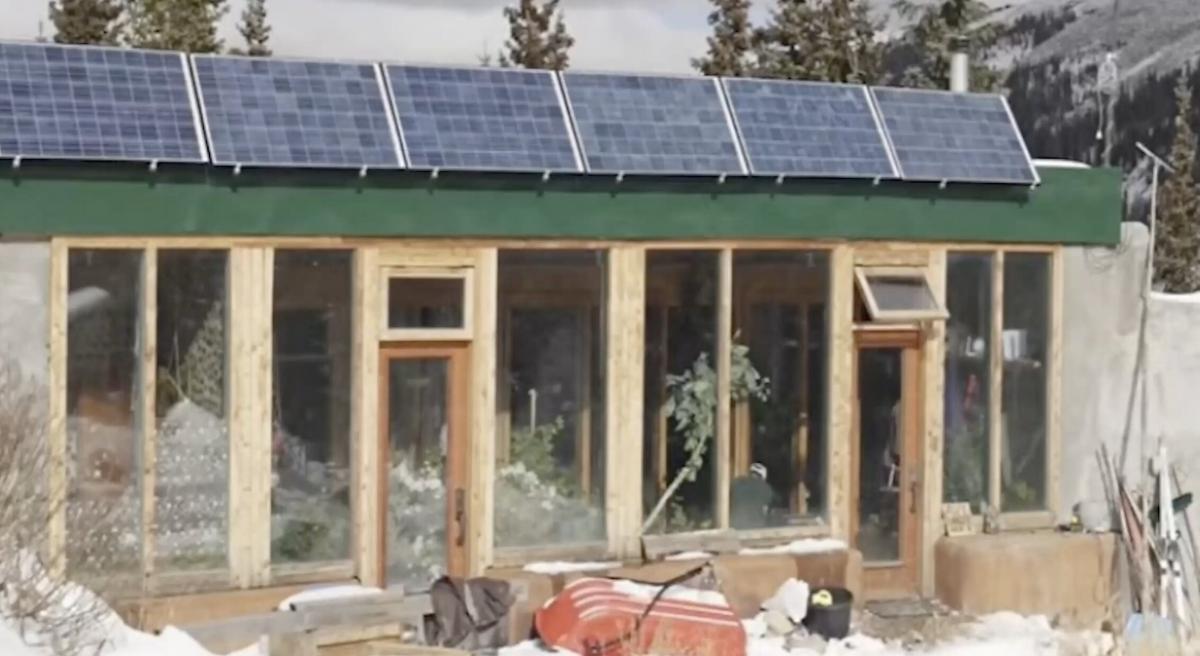
Zak Schechter and Elyse Schiffman have built a 65-square-meter off-grid home from 700 recycled tires high in the Colorado mountains above St. Elmo. The property sits on a 12-hectare plot at an altitude of more than 3,400 meters in a remote mountainous zone.
Construction of the custom home, symbolically named Earthship, began in the summer of 2020. The structure was designed to handle the high elevation and extreme climate of the region while maintaining comfortable indoor living conditions.
The Earthship design philosophy originated in the 1970s with American architect Michael Reynolds, who advocated building eco-friendly structures from discarded waste such as aluminum cans, glass bottles, and scrap tires. Schechter and Schiffman adopted this architectural method by integrating local natural resources alongside recycled materials. Colorado, located in the western United States, is known for the steep peaks and severe winter weather of the Rocky Mountains, where high-altitude sites require specialized insulation techniques.
To build the framework of the house, the couple used local spruce wood for the roof structure. The building is partially buried directly into the hillside, utilizing the surrounding earth as natural thermal mass insulation.
The remote mountain site experiences harsh winter conditions, with annual snowfall measuring between 2.4 meters and 3.7 meters. Despite the heavy snow, the snowpack acts as an extra layer of thermal insulation over the buried structure. The house relies on a wood-burning stove and a south-facing greenhouse that absorbs solar radiation. According to a report by Liber Tatea, indoor temperatures can reach 27 degrees Celsius during winter, even when external temperatures fall well below freezing.
Off-grid power and water systems
To generate electricity, six solar panels are mounted on the roof and connected to modern lead-carbon storage batteries. A small backup generator provides supplementary power during extended winter snowstorms when solar capture is reduced.
Water for the residence is harvested from rain and melting snow, which drains into two underground storage tanks with a combined capacity of 9,000 liters. During dry spells without precipitation, the couple manually shovel snow into the collection tanks or use a dedicated heating system on the roof to melt snow cover.
Inside the home, the kitchen features custom handmade wooden furniture. A decorative partition wall is constructed from thousands of glass bottles set into mortar, allowing natural light to filter through the structure. A greenhouse stretching along the front facade doubles as a garden space, equipped with an automated irrigation system.
The garden beds are watered using recycled graywater collected from the shower stalls, domestic sinks, and washing machine. Wastewater from the shower passes through a gravel bed to be filtered naturally before being directed into the plant beds. The home does not contain an electric clothes dryer, so clothing is air-dried outdoors during the summer and inside the greenhouse throughout the winter months. Hot water is supplied by a propane boiler, with a single gas cylinder lasting one month.
Local integration and future plans
Following their move to the region, Schechter and Schiffman established roots within the local mountain community. Schiffman opened a local sawmill, while Schechter started his own construction business. The couple are currently working on a second self-sustaining building project, which will feature a larger total area of 195 square meters.


