

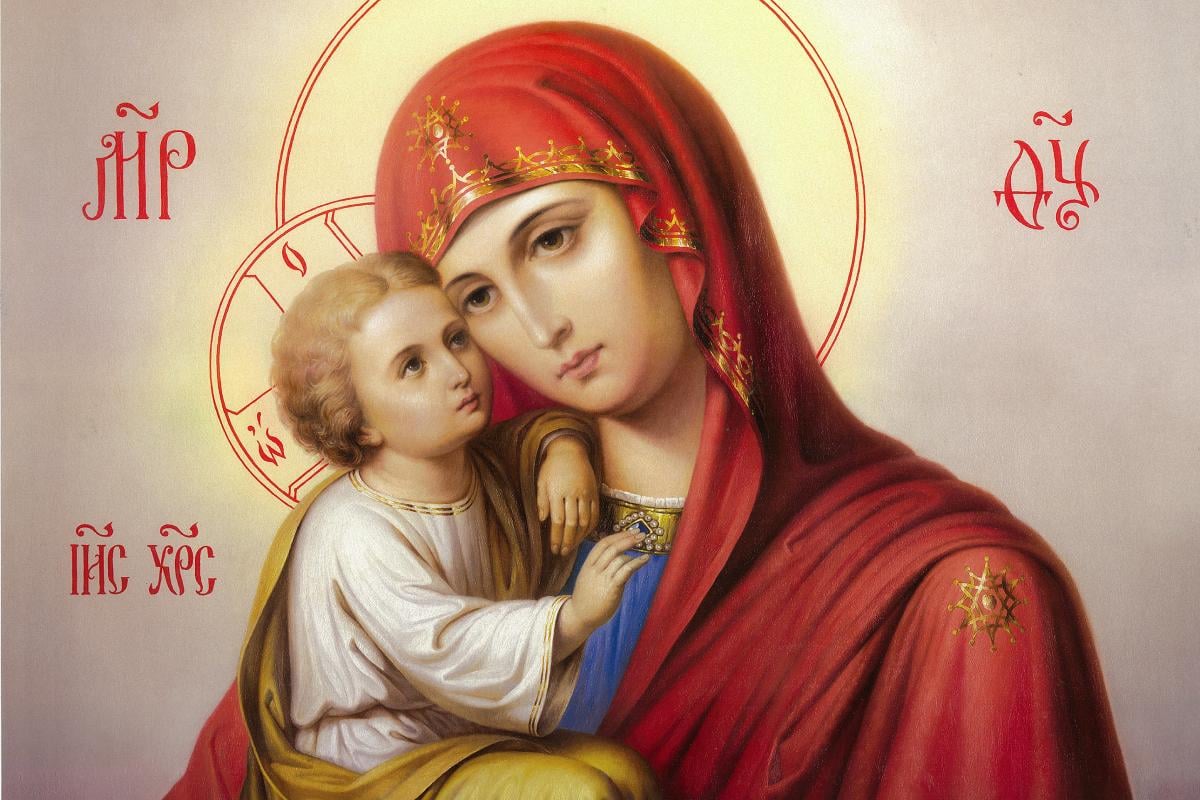
Orthodox believers observe the Feast of the Deposition of the Venerable Belt of the Most Holy Theotokos on August 31, honoring what is held to be the only surviving material relic of the Virgin Mary from her earthly life. The commemoration, which corresponds to September 13 under the old style calendar, brings together sacred church traditions and centuries of rural autumn observances across Ukraine.
Alongside the main feast, the church calendar for August 31 under the older tradition also remembers the Martyrs Florus and Laurus, as well as the revered Pantanassa Icon of the Mother of God, known as the All-Queen. Congregations gather on this day to offer prayers for bodily and spiritual health, the protection of children, peace within families, and safe childbirth.
History of the Sacred Relic
Church tradition holds that the Virgin Mary hand-wove the belt from camel hair and presented it to Apostle Thomas shortly before her Dormition. The holy relic was preserved in Jerusalem for centuries before being transferred to Constantinople during the 4th century. Historical accounts record numerous miraculous healings connected to the belt, including the recovery of Empress Zoe, the wife of Emperor Leo the Wise, who decorated the garment with gold embroidery in gratitude for her cure.
The commemoration gained official liturgical status in the 12th century. Today, surviving fragments of the belt are preserved at the Vatopedi Monastery on Mount Athos in Greece, as well as in church repositories across Germany and Georgia, where believers continue to report miraculous recoveries attributed to the holy artifact.
The Deposition of the Belt is one of several feast days dedicated to the Virgin Mary in Eastern Christian liturgical calendars. Mount Athos, a mountainous peninsula in northern Greece, is an autonomous monastic state that has served as a central spiritual hub for Eastern Orthodox Christianity since the Byzantine era. The Vatopedi Monastery, established in the late 10th century, ranks among the oldest and most prominent of the twenty sovereign monasteries on the holy mountain.
Folk Traditions of Kupriyan Day
In popular folk tradition, August 31 is known as Kupriyan Day, Zhuravlinka, or the Cranes Council. Local lore describes how migrating crane flocks gather in marshlands on this date to select their flight paths and bid farewell to human settlements before departing for warmer southern regions.
The date also marks the traditional start of the wild cranberry harvest, from which the name Zhuravlinka is derived. Rural communities value cranberries as a remedy for colds, heart pain, headaches, leg ailments, and stomach issues, using the fruit to prepare juices, tinctures, preserves, and wine. Farmers also use the day to finish harvesting ripening crops of pumpkin, carrot, and potato before the onset of autumn rainfall.
Household tradition dictates that families clean their living spaces on August 31 while also focusing on clearing their minds of heavy or burdensome thoughts.

Three Main Folk Prohibitions
Folk customs associated with Kupriyan Day include three major prohibitions that households traditionally observe. First, residents are advised against quarreling or settling personal disputes, as conflicts arising on this day are believed to risk lingering for many years. Second, lending or borrowing money is discouraged, with tradition warning that financial transactions on the date bring severe economic hardship.
Third, gardeners are cautioned to avoid planting or transplanting crops, as vegetation set on this date is thought to root poorly and fail to yield flowers or produce. Furthermore, organizers are advised against holding lavish celebrations, noisy banquets, or weddings on September 13.
The distinction between formal church doctrine and folk custom reflects a longstanding cultural pattern across Eastern Europe, where agricultural cycles and pre-Christian seasonal lore became intertwined with the liturgical calendar. While church canons govern religious services and sacramental life, local domestic rules often guided farm management and community behavior around key seasonal transitions.
Ecclesiastical authorities clarify that household bans regarding money, gardening, or disputes stem entirely from folk superstitions rather than church law. The church imposes no domestic restrictions on the feast day, encouraging believers instead to attend divine services and seek spiritual intercession for family well-being.
Weather Signs and Name Days
Rural observers track animal behavior and atmospheric conditions on August 31 to forecast weather patterns for the coming seasons. Cranes flying high in the sky indicate an impending frosty winter, whereas low-flying cranes suggest mild cold. Loud calling from a crane flock signals approaching rain, while early swan migrations south point to early snowfall. Swans remaining in local habitats indicate a prolonged, warm autumn, and morning fog heralds windless weather.
The calendar date of September 13 marks the name days of Ivan and Gennady. Folk tradition describes individuals born on this day as possessing a firm and unyielding character, while displaying gentle, attentive, and caring qualities toward family members and partners.


