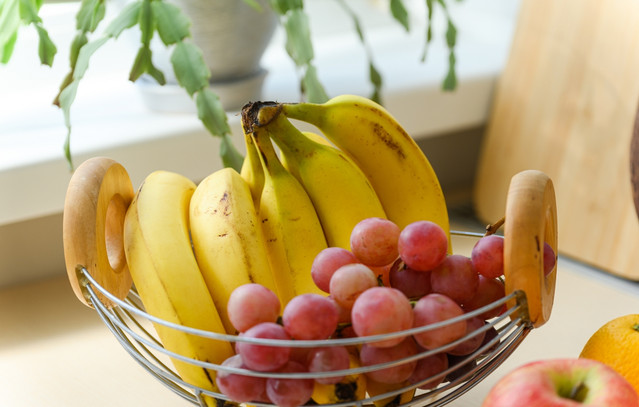
Bananas supply more than double the potassium content of grapes per serving, while dark grapes deliver a broader spectrum of antioxidant polyphenols, according to comparative nutritional figures.
The World Health Organization recommends that individuals over 10 years old consume at least 400 grams of fruits and vegetables daily. Health authorities emphasize that overall dietary variety of whole plant foods provides greater benefit than relying on any single fruit.
Serving data indicates that one cup of banana contains approximately 537 milligrams of potassium. In comparison, one cup of green grapes contains about 218 milligrams, while one cup of red grapes provides roughly 229 milligrams.
Potassium functions as an essential electrolyte required for normal muscle and nerve operation, as well as maintaining blood pressure regulation. The European Food Safety Authority, which evaluates food standards across Europe, sets the adequate daily potassium intake for adults at 3,500 milligrams. Authorities noted that potatoes, legumes, vegetables, nuts, dairy products, and other fruits also contribute toward meeting daily potassium requirements.
Antioxidant Compounds in Grapes
Grapes contain a high concentration of phytochemical compounds, with dark-colored varieties offering an exceptionally diverse profile. A scientific review examining grape polyphenols identified key antioxidant categories including anthocyanins, flavanols, flavonols, and resveratrol.
The phytochemical profile of grapes also includes specific compounds such as quercetin, kaempferol, catechin, and epicatechin. These bioactive molecules contribute to the distinct antioxidant properties found in different grape varieties.
A separate scientific review analyzing grapes as a source of polyphenolic compounds showed that chemical concentrations vary based on grape variety, fruit skin, seeds, climate, and cultivation conditions. Because of these agricultural and environmental factors, red and green grapes do not possess identical antioxidant profiles.
Banana Nutritional Profile and Ripening
Bananas provide a broader range of nutrients beyond their potassium content. The fruit contains vitamin C, magnesium, manganese, dietary fiber, and various phenolic compounds.
The chemical makeup of a banana undergoes significant transformation during the ripening process. As the fruit matures, internal starch gradually converts into simpler sugars.
This conversion means green, yellow, and fully ripe bananas are chemically distinct from one another. Health experts note that this natural sugar conversion during ripening does not make mature bananas unhealthy.
Caloric Content and Weight Comparisons
Caloric evaluations based on standard cup servings show clear differences between the two fruits. One cup of banana contains approximately 134 calories.
By contrast, one cup of green grapes supplies about 80 calories, while one cup of red grapes contains around 86 calories. Grapes therefore provide fewer calories per single cup measurement.
Nutritional experts caution that equal cup volumes do not weigh the same, making a 100-gram weight measurement a more balanced basis for direct comparisons. Additionally, higher per-cup calories do not make bananas inherently fattening, as overall energy intake and total dietary patterns determine weight management.
Health Limits and Medical Guidance
High antioxidant content in food does not automatically guarantee superior health protection. Antioxidants consist of multiple distinct chemical compounds that the human body absorbs and metabolizes in different ways.
Laboratory findings regarding antioxidant activity do not translate directly into guaranteed disease prevention in humans. For example, a scientific review detailing the cardioprotective effects of grape polyphenols outlined potential biological mechanisms, but researchers emphasized that eating grapes does not serve as a cure or standalone disease prevention strategy.
Potassium management also requires caution for individuals with specific medical conditions. While healthy kidneys clear excess dietary potassium without difficulty, individuals with chronic kidney disease or disorders affecting potassium regulation face health risks from high potassium intake.
Patients taking potassium-sparing diuretics or medications that affect the renin-angiotensin system must also manage their potassium intake carefully. Medical guidelines advise affected individuals against increasing potassium-rich foods independently, noting that daily consumption amounts must be customized based on kidney function tests, blood work, and prescription regimens.
World Health Organization Guidelines
The World Health Organization outlines clear recommendations for dietary carbohydrate sources within a balanced diet. The agency advises that daily carbohydrates should come primarily from whole grains, vegetables, fruits, and legumes.
Comparative summary figures designate clear category distinctions between the fruits. Bananas win for higher potassium content, dark and red grapes excel in anthocyanins and polyphenol diversity, and grapes contain fewer calories per cup serving.
Health guidance concludes that neither fruit needs to win an overall comparison. Both fruits supply fiber, carbohydrates, and vital micronutrients, making a colorful rotation of diverse plant foods the most effective approach to nutrition.