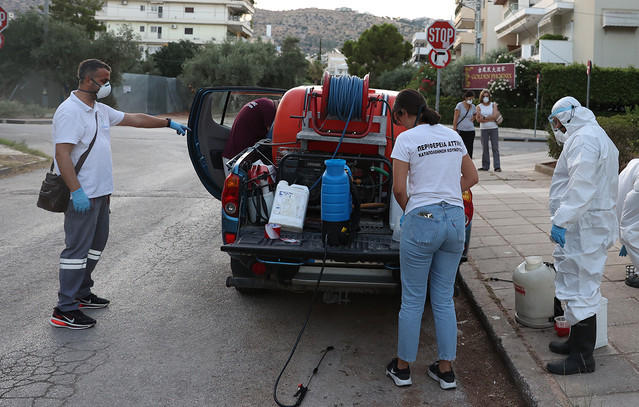
The Athens Medical Association has raised strong concerns over increased West Nile virus circulation in Attica, calling for immediate mosquito control measures. The medical body stated that the current epidemiological picture mandates the urgent reinforcement of prevention and mosquito control efforts across the region.
The association said the current situation raises reasonable questions regarding the adequacy, timely planning, and overall effectiveness of mosquito control programs implemented in Attica. It emphasized that tackling West Nile virus cannot rely on fragmented spraying or interventions that are intensified only after virus circulation and human cases have already been recorded.
Call for Early Mosquito Control
According to the medical association, spraying programs must begin early in the year with systematic larviciding at breeding sites before larvae develop into adult mosquitoes. The organization stated that a comprehensive mosquito management strategy is required, which should start well before the high circulation season begins.
The association stressed that such a strategy must be grounded in systematic entomological surveillance and adapt immediately to incoming epidemiological data. Timely and organized prevention by competent state authorities represents the most critical defense against the spread of West Nile virus.
When control programs are not applied early, systematically, and with the necessary coordination, the burden of protection shifts inevitably onto individual citizens and personal precautionary measures, the association added.
No Vaccine or Specific Treatment
The association highlighted that prevention is particularly vital because there is currently no specific antiviral treatment for West Nile virus infection in humans, nor is there an available human vaccine. West Nile virus is a mosquito-borne illness transmitted primarily through the bites of infected Culex mosquitoes, which acquire the virus after feeding on infected wild birds.
Attica, the administrative region of Greece that encompasses the capital city of Athens and its surrounding metropolitan area, experiences heightened mosquito activity during the warm summer months. Athens Medical Association President Giorgos Patoulis said the intense circulation of West Nile virus in Attica serves as a serious alarm bell for public health.
Patoulis stated that authorities must not mobilize only after human cases appear. He said mosquito control must be based on a scientifically backed, comprehensive, and timely plan that begins several months before the peak of mosquito activity.
Patoulis emphasized that particular importance must be given to systematic larviciding at the start of the year, the mapping and elimination of breeding sites, continuous monitoring of mosquito populations, and timely, targeted interventions in high-risk areas.
Personal Protection Recommendations
The Athens Medical Association called on citizens, especially those belonging to vulnerable population groups, to consistently follow personal protection measures. It also urged competent authorities to immediately intensify coordinated prevention actions across the region.
For individual protection, the association recommended the following measures:
- Use approved insect repellents on exposed skin and over clothing in accordance with product instructions.
- Wear suitable clothing that covers as much of the body surface as possible, particularly during hours of peak mosquito activity.
- Use mosquito nets, especially for infants and individuals at higher risk of severe disease.
- Install and maintain insect screens on doors and windows.
- Use electric fans or air conditioning units where possible to discourage mosquitoes.
- Remove standing water from flowerpots, saucers, buckets, containers, rain gutters, and other collection points around the home.
- Regularly renew water in animal drinking bowls and other outdoor containers.