

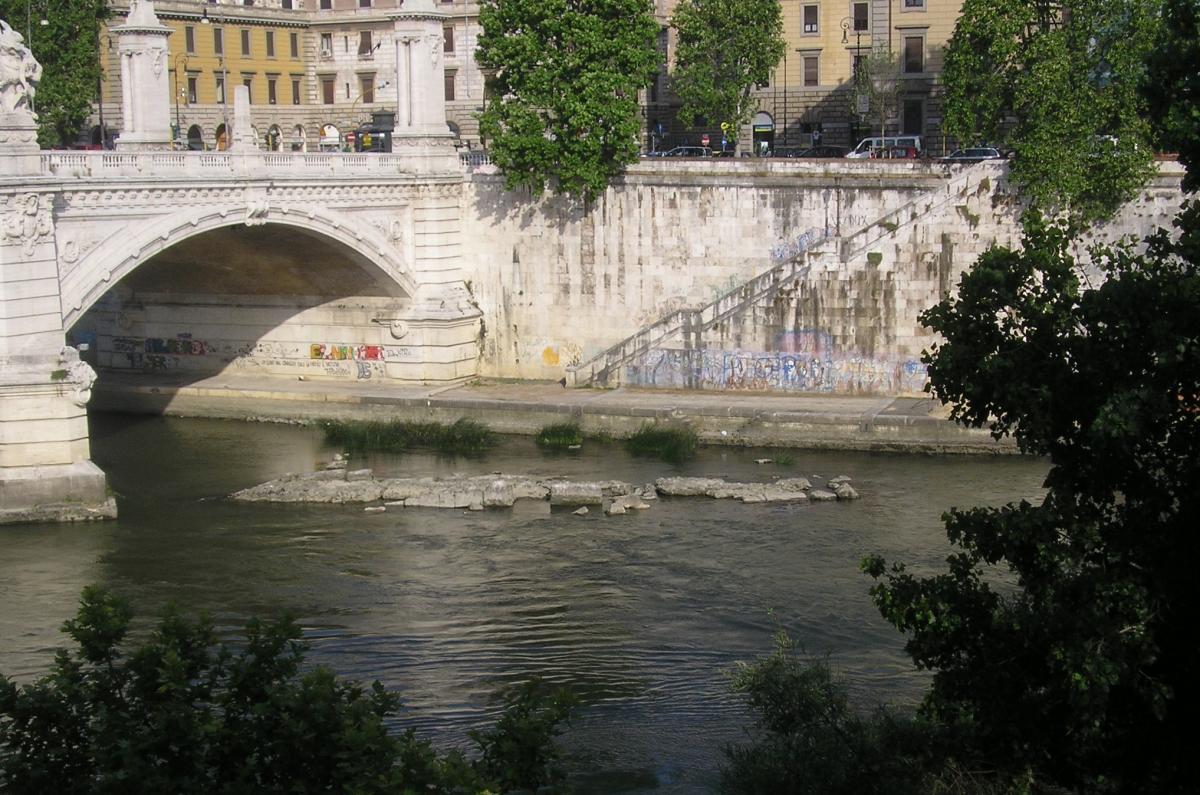
The ancient ruins of the Pons Neronianus bridge have reappeared above the surface of the Tiber river near the Vatican in Rome due to extremely low water levels, Hungarian news outlet Portfolio.hu reported.
Giovanni Giganti, the coordinator for water resources management at Rome's civil protection service, said the river's flow rate dropped below 80 cubic metres per second. He noted that although the preceding winter brought heavy precipitation, extended dry periods through the end of summer led to a severe water deficit across the Italian capital.
The visible stone piers sit in a stretch of the river near Castel Sant'Angelo, the famous cylindrical monument commissioned by Emperor Hadrian in the second century as a mausoleum. Emperor Nero, who ruled from AD 54 to 68, is believed to have constructed the crossing in the first century to link his private properties on the western bank with central Rome.
Imperial estates and ancient roads
During the Roman Empire, the structure carried the Via Triumphalis, a major thoroughfare that connected the Campus Martius public area with the suburban territory of modern Vatican City. The surrounding riverbanks formed part of the private imperial estates, which once included a grand villa belonging to Nero's mother, Agrippina the Younger.
Although the emergence of the bridge supports during dry summer months is not unusual for local hydrologists, portions of the ancient ruins were intentionally removed in the late 19th century to improve river navigation along the Tiber. Subsequent underwater research and excavations in the riverbed uncovered iron stakes and heavy wooden beams anchored deep within the soil.
Uncertain collapse during ancient wars
Historians and archaeologists have never determined the exact timeframe or specific cause of the structure's eventual demise. According to theories outlined in the publication, the bridge was either destroyed during the fifth century wars with the Goths or deliberately dismantled as a defensive tactic during military conflict.


