

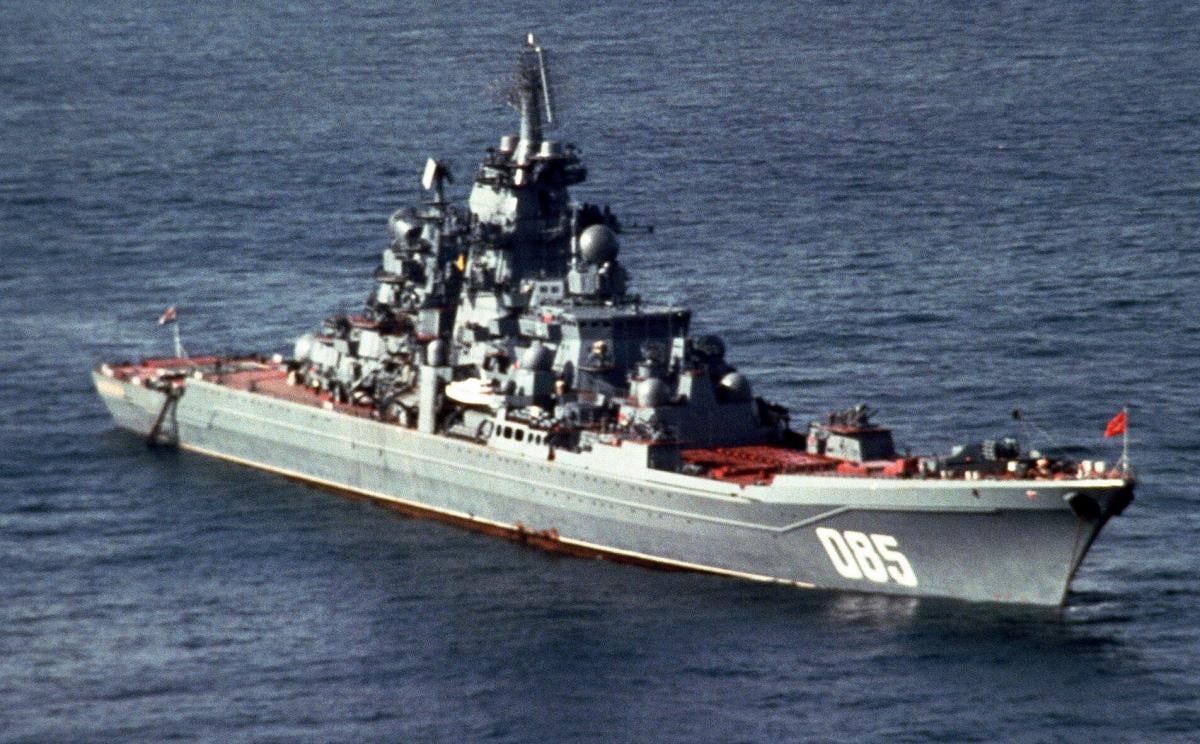
Russia has launched final sea trials for its nuclear battlecruiser Admiral Nakhimov after the 28,000-ton ship left Severodvinsk at the end of May. Russian authorities described the deployment as the final stage of testing following repairs and upgrades. The warship had remained out of active fleet service for nearly 30 years, according to 19FortyFive.
The cruiser last served in the Northern Fleet in 1997 before arriving at the Sevmesh shipyard in 1999. Modernization began in 2014, with an initial return planned for 2018 before facing repeated delays. Experts estimated the total project cost reached approximately $5 billion.
Reports indicated the updated Admiral Nakhimov features roughly 80 universal launch cells for Kalibr, Oniks, and Zircon missiles alongside anti-submarine weaponry. An additional 96 launch cells are designated for long-range air defense, complemented by six Pantsir-M systems for close-range protection. While the exact weapon configuration remains unconfirmed, the ship potentially carries one of the largest missile payloads of any modern surface warship.
Nuclear propulsion allows the vessel to remain at sea for extended periods without refueling. The cruiser can also function as a fleet command post and supply air defense cover for accompanying ships.
Fleet Limitations and Modern Warfare Risks
Russian industry turned to upgrading the vessel because it cannot quickly build new cruiser-class warships. Russia has not constructed new large surface combatants of this scale since the Soviet era. The aircraft carrier Admiral Kuznetsov has remained out of operation for years, while the nuclear cruiser Pyotr Veliky is expected to be decommissioned rather than modernized. Admiral Nakhimov is positioned to become the flagship of the Northern Fleet.
19FortyFive reported that the shift toward modern missile and drone warfare raises questions about the practical value of such an expensive warship. The sinking of the missile cruiser Moskva in April 2022 demonstrated that large vessels face threats from relatively inexpensive anti-ship weapons. Subsequent Ukrainian operations using naval drones, missiles, and long-range drones forced Russian naval units to alter tactics and stay clear of high-risk areas.
While the ship's advanced air defense and planned deployment in the Arctic near Russian aircraft, submarines, coastal radars, and missile units offer protection against drone attacks, concentrating massive combat capabilities in a single hull presents strategic risks. Heavy damage or loss would simultaneously eliminate a major missile stockpile, air defense hub, command post, and flagship that took decades to rebuild.
Planned Operating Areas
Moscow is expected to operate Admiral Nakhimov primarily in the Barents Sea and close to its northern military bases. Positioned near home waters, the cruiser can operate under land-based air and defense cover while guarding strategic submarines and conducting missile strikes. Operating further from domestic bases would require substantially higher levels of escort ships, reconnaissance, air defense, and technical support.


