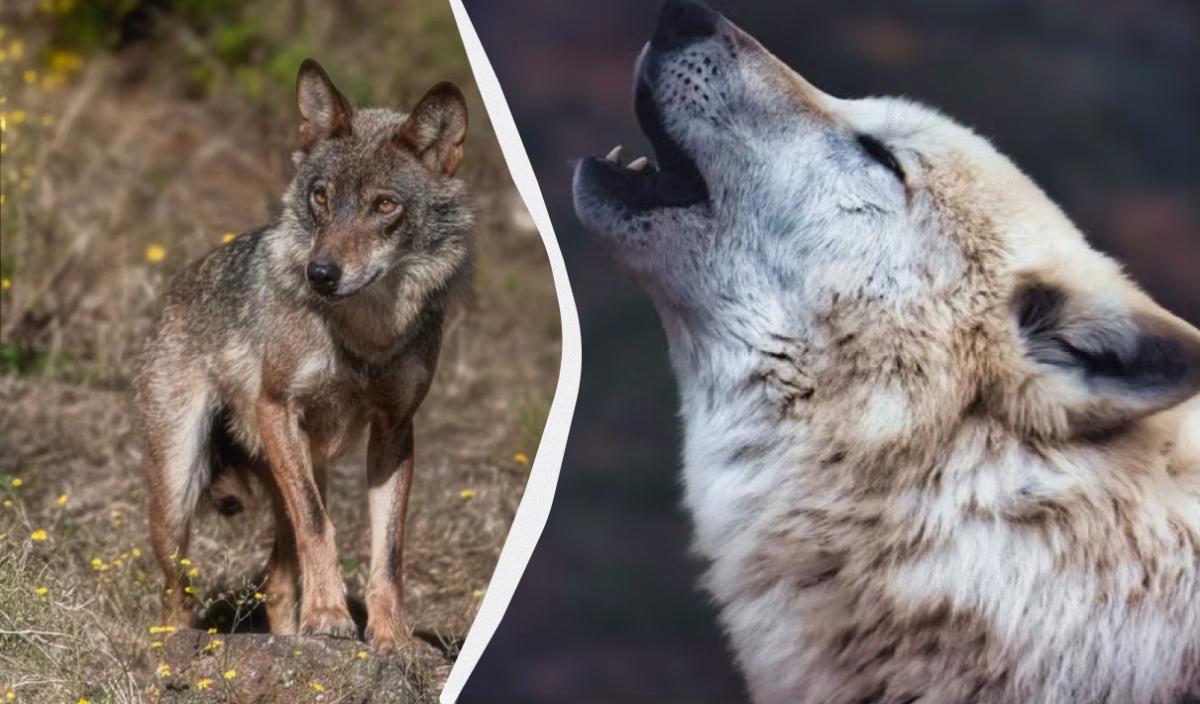
Wolves howl instead of barking because the sound helps them manage a complex social network within their pack, not primarily because of the sight of the moon, according to researchers writing in the science news outlet Live Science. The animals have long been seen as a symbol of courage, loyalty and danger, and live in tightly bonded family groups known as packs.
The animals are capable of barking, whining, growling and even squeaking, but they are best known for their howl. A chorus howl at night can sound especially eerie, and if a neighbouring pack hears its relatives howling, it will often join in, sending the sound travelling over huge distances.
A wolf pack is typically an extended family unit, often led by a breeding pair, that hunts together and defends a shared territory. Keeping in touch with pack members across that territory, researchers say, is central to why wolves rely so heavily on long-range calls like the howl.
Arik Kershenbaum, a zoologist at the University of Cambridge who studies vocal communication across several species, said the behaviour is driven less by moonlight than by the need to keep a complex social network together. When a lone wolf howls, he said, it most likely means the animal has become separated from its pack and is trying to signal its location so it can rejoin the group. A solitary howl can also mean the wolf is searching for a new pack or a mate.
Marking territory
Tamás Faragó is an ethologist and bioacoustician, a researcher who studies animal behaviour and sound, at Eötvös Loránd University in Budapest, one of Hungary's oldest universities. He said that when an entire pack howls together, the behaviour can be a way of marking territory and warning off rival packs.
Faragó said data shows that packs howl more often near the centre of their territory, particularly when pups are nearby or when the pack has a carcass from a recent hunt.
He added that a lone wolf's howl can prompt other members of its pack to respond in support. But a wolf that has strayed onto another pack's territory and hears rival howls will usually stay silent, so as not to give away its position.
Kershenbaum said that in most cases, howling together as a group has a social purpose: it lets wolves feel the comfort and security of being surrounded by their relatives.
A howl for every species
A 2016 study led by Kershenbaum examined 13 species and subspecies of wolves, jackals, coyotes and dogs and found that each has its own howling dialect, with distinct types of howls used at different rates depending on the species or subspecies. The eastern wolf, Canis lycaon, mostly uses low, flat howls, while the red wolf, Canis rufus, favours high, looping howls.
Domestic dogs descended from grey wolves, such as huskies, malamutes, Akita Inus and shar peis, howl differently from wild wolves, and the style varies by breed. A 2023 study by Kershenbaum, Faragó and colleagues found that older dog breeds, which are more closely related to wolves, howl more often than they bark, while modern breeds, especially those developed through selective artificial breeding, tend to prefer barking instead.
Kershenbaum also said a wolf howls at one frequency when it feels threatened during a territorial conflict and at a different frequency when it is calm, though he cautioned that this remains an area of active research.
Why the moon gets the blame
The image of a wolf howling at a full moon is a familiar one in folklore, film and art, but Kershenbaum said the real explanation is rooted in human history rather than animal biology. As for why wolves are so strongly associated with howling at the moon, he said the idea is most likely a myth that took hold before electric lighting existed. He said that in the past, people spent more time outdoors on nights when the moon was bright, which is precisely when they were most likely to hear wolves howling.
Test yourself
According to Arik Kershenbaum, what does it usually mean when a lone wolf howls?
What did Tamás Faragó say wolf packs do more often when pups are nearby?
According to Kershenbaum, why did wolves become linked with howling at the moon?
Have your say
Do you find the sound of wolves howling frightening or fascinating?