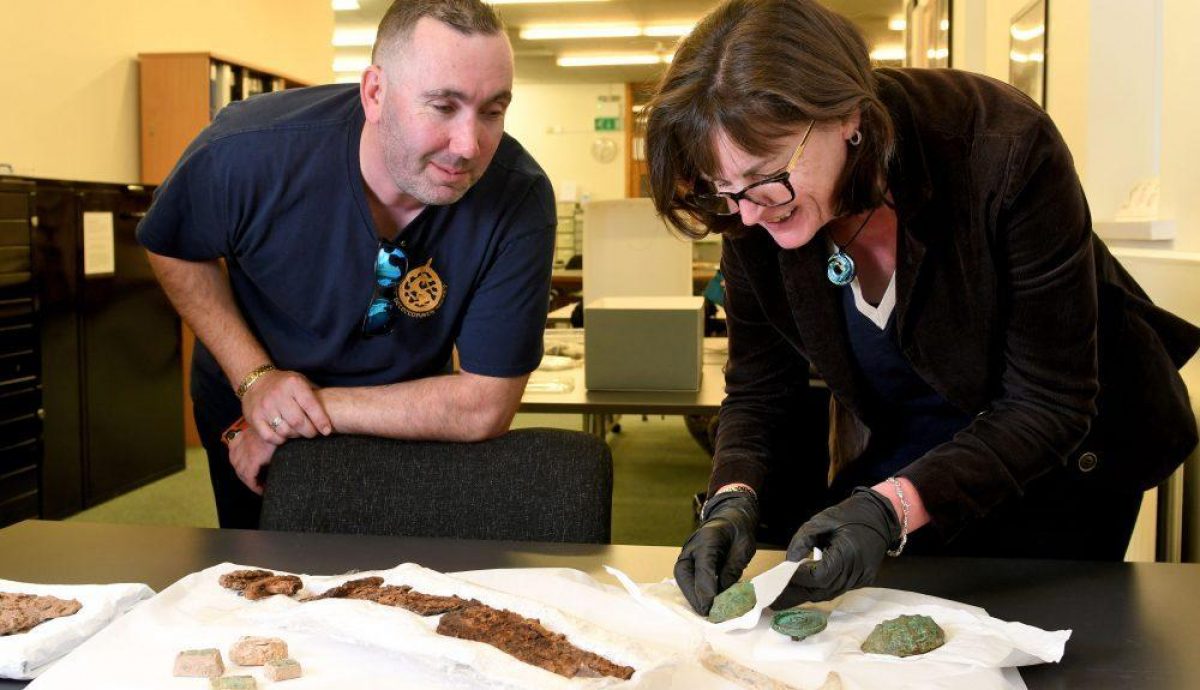
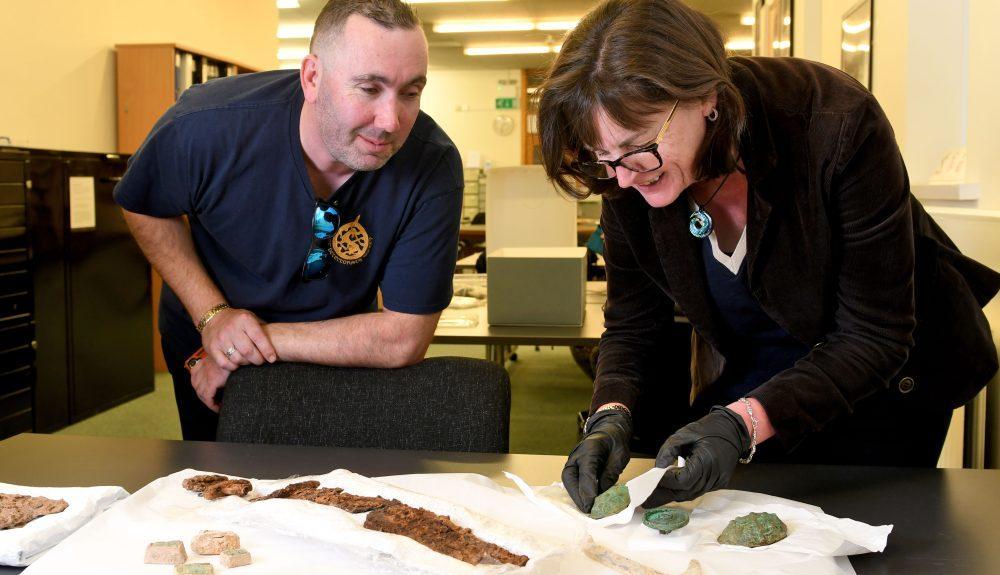
Archaeologists have identified a rare Viking Age burial on the Isle of Man that may turn out to be the earliest known Viking woman's grave on the island. The finds, dated to about 1,100 years old, include a sword with silver decoration, bronze brooches shaped with animal figures, trading weights and other objects that shed light on the lives and connections of the island's earliest Scandinavian settlers.
Manx National Heritage announced the discovery on November 9. The artefacts were found in February 2026 by metal detectorist Daniel Crowe. Because of their historical and archaeological significance, the objects were officially declared treasure.
Bronze brooches point to oldest known Viking woman's grave
Among the most striking finds are two oval bronze brooches decorated with intertwined animal figures. During the Viking Age, women used this type of brooch to fasten the straps of traditional clothing, so researchers believe they may have belonged to the woman buried in the grave.
Only one similar pair of brooches had previously been found on the Isle of Man. The new examples could be roughly 50 years older than that earlier pair. If the dating is confirmed, they would represent the earliest known Viking woman's burial on the island.
The collection also includes a third brooch, which was originally gilded. It features spiral motifs and a glass ornament at its centre. No similar piece had previously been found on the island.
Silver sword may have been deliberately broken
Another significant artefact is a Viking sword, only the 13th such weapon found on the Isle of Man. The sword survives in roughly two-thirds of its original form, and its hilt bears intricate silver inlays and twisted silver wire.
The decoration, hidden under layers of corrosion and soil, was revealed through X-ray examination. According to Manx National Heritage, only two other swords found on the island carry a similar level of ornamentation.
Researchers were also struck by the fact that the weapon had been broken. They suggest this may have been done deliberately as part of the funeral ceremony, though they do not rule out that the sword was damaged by disturbance to the grave over the following centuries.
The combination of women's jewellery with a sword, an object usually found in male burials, has raised questions about the nature of the grave. It is possible that two people, a man and a woman, were buried there. It is also possible that the finds come from two separate graves located close together. Because the burial site had previously been disturbed, it is not currently possible to determine the original position of the objects.
Trading weights reveal links to Britain and Ireland
Alongside the weapons and jewellery, archaeologists found decorative lead weights, bronze scale fittings, a ladle and an axe head. Trading weights of this type had not previously been found on the Isle of Man.
The Vikings used scales and weights to measure precious metals and coins, so the finds help researchers better understand the Isle of Man's trading role and its links with Scandinavian communities, Britain and Ireland.
One of the weights has a bronze decoration that was likely repurposed from a small chest or a religious object. Its artistic style resembles British and Irish traditions of the period, suggesting the Vikings adapted objects from other cultures for their own use.
The collection also includes a bronze ladle that had not previously been documented on the island. Researchers suggest it may have been used during feasts or ceremonies.
Insight into the island's earliest Scandinavian settlers
The Vikings began establishing trading relations with the Isle of Man in the ninth century and later settled there. Thanks to its central location in the Irish Sea, the island became an important maritime hub between Scandinavia, Britain and Ireland.
Allison Fox, curator of archaeology at Manx National Heritage, said the bronze brooches could be evidence of the earliest known Viking woman's burial on the island. She added that the sword and trading equipment offer further insight into the economic activity and contacts of the earliest Scandinavian settlers with neighbouring communities.
The preservation of the artefacts was helped by the fact that Daniel Crowe handed them to specialists without cleaning them himself. Metal detectorist Rhett Britton also contributed to the find, locating an axe head, fragments of scale and other iron objects.
Some of the finds went on display on November 11, 2026, in the Viking gallery of the Manx Museum in Douglas.