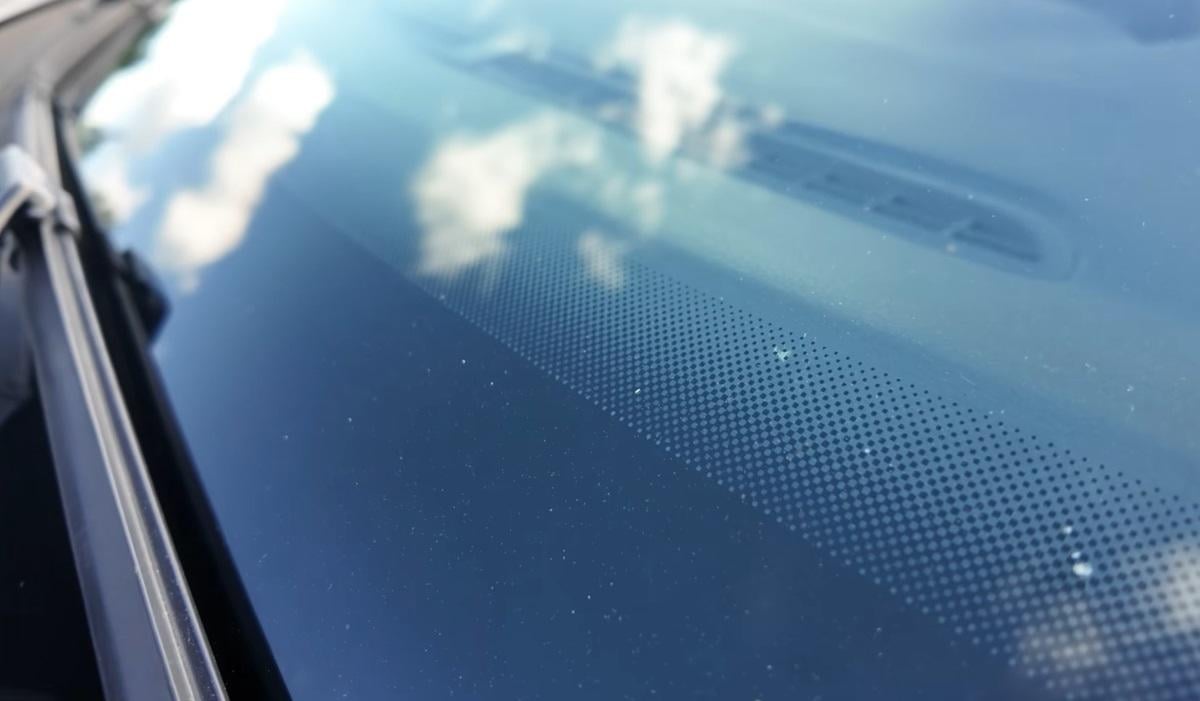
Those black dots, letters and numbers printed on a car's windshield are not just decoration, according to a report by Motor EL PAÍS. The outlet said the small cluster of symbols works as a kind of identity card for the glass, revealing who made it, what type it is and whether it meets current safety standards.
The word "Laminated" printed on a windshield shows that the glass is laminated, Motor EL PAÍS reported. Laminated glass is made of several layers bonded together with a plastic film, which stops the windshield from shattering into dangerous shards on impact.
Decoding the certification numbers
A windshield made by a manufacturer registered with the United States Department of Transportation carries the code DOT 459, the report said. A separate marking, AS1, shows that the glass meets the strictest transparency requirements set for windshields.
The code 43R-011566, paired with the letter E and a number inside a circle, confirms that the windshield complies with the European ECE R43 standard, which governs strength, visibility and how the glass behaves in a crash. The number next to the letter E identifies the country that issued the certificate; E1, for example, corresponds to Germany.
Why the black dots are there
The tiny black dots scattered across the glass are a layer of high-strength ceramic coating, which is why they last so long and cannot be scrubbed off, according to the report. Ceramic coatings are known for their durability, resistance to staining, improved thermal insulation, fire resistance and ability to dampen sound.
The band of small dots running around the edge of the windshield is known as the frit band. Its main job is to mask and protect the urethane adhesive used to fix the glass into the vehicle's frame.
The ceramic coating also plays a role during manufacturing, Motor EL PAÍS reported. Laminated glass has to be placed in a furnace to be shaped, and because the coating heats up faster than standard glass, it helps the windshield bend more easily and spreads heat evenly, which keeps optical distortion to a minimum during firing.
Why condensation builds up in headlights
In a separate report, CarScoops explained why condensation can appear behind a car's headlight lens and how drivers can clear it. The outlet said the moisture forms because headlight bulbs give off a lot of heat, and the hot air inside the housing expands. Vents built into the housing let that hot air escape before it causes damage, but the warm air left inside can turn into water droplets when it meets the lens, a jet of cold water from the washer, or outside air.
According to CarScoops, clearing the condensation can take just a few minutes. Suggested fixes include switching on the high beams for a few minutes, gently warming the lens with a hairdryer on low power, or tucking a silica gel packet behind the bulb access cover for a few minutes.