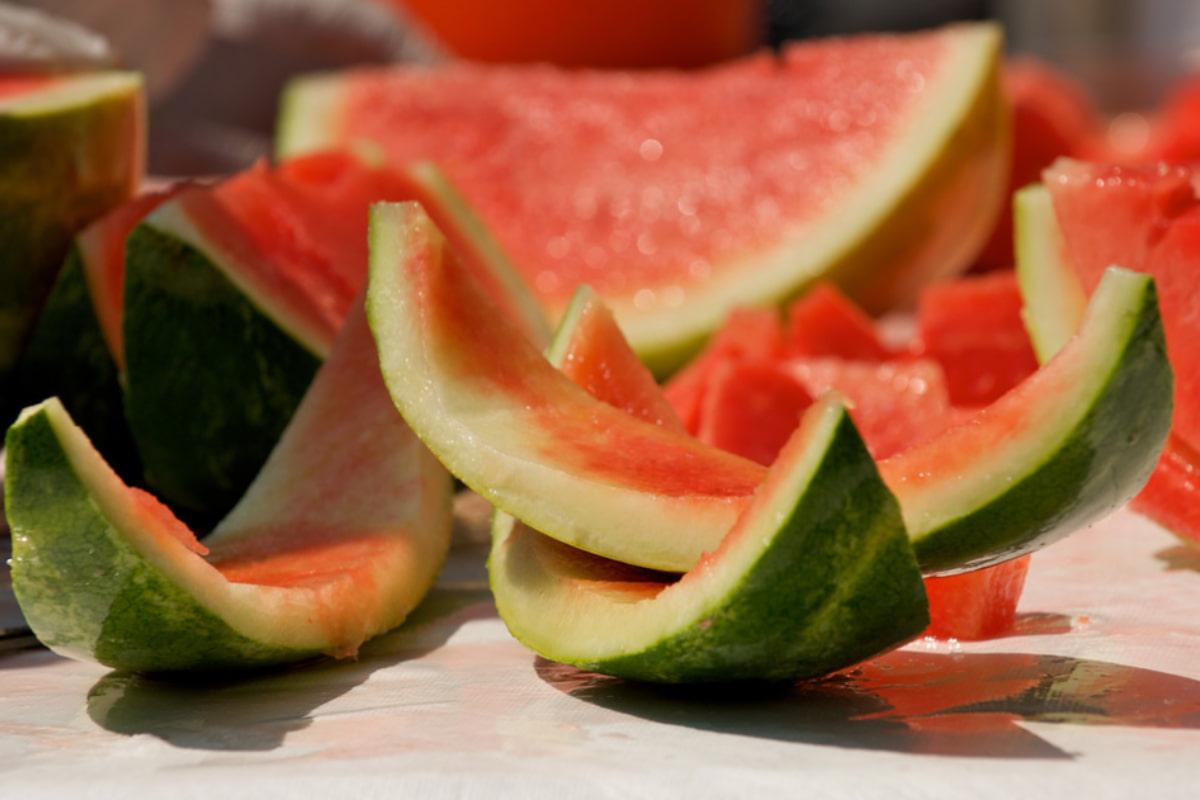
The United States Department of Agriculture (USDA) has for the first time entered watermelon rind into its own nutrient database, according to the health publication Verywell Health. The move means anyone can now calculate exactly how many calories, vitamins and minerals come from eating the white part of the fruit, which is normally thrown away along with the green outer skin.
One cup of chopped watermelon rind, about 150 grams, contains roughly 29 calories, 1 gram of protein, 2 grams of fiber, 408 milligrams of potassium, 11 milligrams of vitamin C and 45 micrograms of folate. By comparison, a cup of watermelon flesh has almost four times less fiber, just 0.6 grams, according to the USDA database.
What nutritionists say about the rind
Dietitian Lauren Manaker said the fiber in the rind supports digestion, while the potassium helps regulate muscle and nerve function.
Researchers have also pointed to citrulline, an amino acid that a review published in the journal Nutrients found can lower blood pressure. According to the publication Trends in Food Science & Technology, the rind contains more citrulline than the flesh of the watermelon does.
There is a practical benefit too. The rind makes up about 30 percent of a watermelon's total weight, so eating it significantly cuts down on food waste.
Five ways to eat what usually gets thrown out
Pickle it. Pickled watermelon rind can be added to salads, sandwiches or meat platters, and keeps in the refrigerator for up to two weeks. Manaker advised always washing the watermelon before cutting it, so bacteria on the rind does not transfer to the flesh.
Stir-fry it. The rind works well in a stir-fry and gives dishes the taste of fresh cucumber. Manaker explained that briefly stir-frying the rind with a little oil and seasoning softens it and improves digestibility, and that the short cooking time helps limit the loss of heat-sensitive nutrients such as vitamin C.
Blend it into smoothies. Fresh or frozen rind can be blended with berries and greens, then the mixture frozen into cubes to create a ready-made smoothie base with extra fiber, potassium and citrulline.
Eat it raw. Raw rind has a taste and texture similar to jicama, sometimes called Mexican potato: crunchy and fairly bland. It is not as sweet as the flesh and carries a slight bitterness, so it does not appeal to everyone.
Add it to soup. Diced rind adds crunch to soups, stews or chili. In summer, it can be blended with the flesh into a refreshing gazpacho, a recipe that uses almost the entire watermelon.
Other fruit skins worth keeping
Watermelon rind is not the only part of a fruit people are used to discarding needlessly. The outlet UNIAN has previously reported on whether peach skin can be eaten. Scientists say peach skin also contains extra fiber and antioxidants not found in the flesh. Unlike watermelon, however, there is a catch: peach skin can accumulate more pesticide residue, so the fruit should be washed thoroughly under running water before eating.