Britain and Ukraine have signed an agreement giving London access to one of the war's most unusual data troves: millions of images gathered from real operations on the Ukrainian front, as the two countries expand their cooperation on artificial intelligence in defence.
The deal was signed in Kyiv by British Prime Minister Andy Burnham and Ukrainian President Volodymyr Zelensky, who has led Ukraine's response to Russia's invasion since it began in 2022. It sets out joint development of new AI tools for defence and security, and makes Britain the first international partner to gain access to Ukraine's Avengers AI Labs.
The arrangement amounts to an exchange of expertise. Ukraine offers the data and experience it has built up through years of real combat operations, while Britain contributes research capacity, technology and the know-how of its own AI industry.
What is Avengers AI Labs
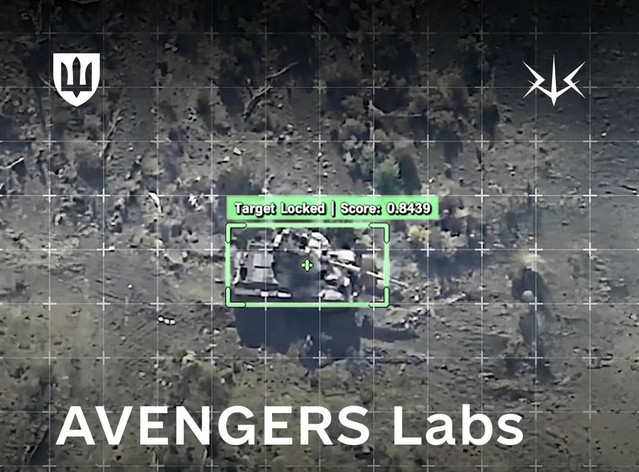
At the centre of the agreement is a database of about 5 million labelled battlefield images that can be used to train AI models.
Much of the material comes from DELTA, Ukraine's digital battlefield management system, which gathers and combines data from sources including drones, cameras and sensors deployed across the front.
The value of the data lies in the fact that it was not produced in a laboratory or a simulation. It comes from real operations, captured in different weather conditions, at different times of day and in different operational environments.
The images can be used to train algorithms to recognise military vehicles and other equipment in footage from drones and surveillance systems. The Ukrainian government has said the Avengers technology can identify and classify about 70% of the enemy vehicles and military equipment that appear in visual material.
More than 100,000 drone videos a month
The scale of the project reflects how the war in Ukraine has changed the use of technology on the battlefield. Citing figures reported by Reuters, Ukraine's system processes more than 100,000 drone video feeds every month, using AI to identify potential targets.
Ukraine's defence ministry said as far back as 2024 that the Avengers platform was automatically detecting about 12,000 units of enemy equipment a week, after analysing footage from drones and fixed cameras.
Kyiv now wants to go further, aiming to more broadly integrate machine vision and AI into the unmanned systems operating at the front.
From Ukrainian trenches to British military sites
The cooperation is not limited to the development of so-called smart drones. One of the first planned projects involves fibre-optic sensors combined with AI, intended to protect military installations. The system would be able to detect movement and activity around sensitive infrastructure and help identify potential threats.
Britain is examining what Ukraine's wartime experience can offer not only for defence but more broadly for the protection of critical infrastructure. According to the Guardian, similar technologies could in future be used at sites such as airports, energy infrastructure and prisons.
Low-power AI chips for drones
A second area of cooperation involves developing low-power AI chips that could be used in drones and other autonomous systems.
Energy consumption is a critical issue for unmanned vehicles: the more computing power required to process images and make decisions, the greater the energy demand. Britain and Ukraine want to develop systems capable of carrying out advanced AI computations while using less power, allowing drones and robotic systems to operate more efficiently and for longer.
Ukraine turns war experience into technological capital
The agreement also points to a broader shift in Ukraine's role among its Western allies. Kyiv is no longer acting solely as a recipient of Western weapons and technology.
After years of war, Ukraine has amassed a huge volume of operational data and experience around drones, electronic warfare, sensors and AI, which it can now offer to its partners. Britain gains access to data that would be extremely difficult to generate through conventional military exercises, while Ukraine gains access to British research institutions, companies and technological know-how.
Storm Shadow missile components included
Burnham's visit to Kyiv also carried a further significant defence dimension. Alongside the AI agreement, Britain gave the green light for manufacturer MBDA, the European missile maker behind the SCALP/Storm Shadow long-range cruise missile, to provide Ukraine with classified technical data on British-made components of the weapon, in order to support the creation of Ukrainian production lines.
The new UK-Ukraine cooperation therefore goes well beyond a data-sharing agreement. From training military algorithms on millions of real combat images to next-generation drones and missile technology, London and Kyiv are seeking to turn the experience of today's war into the technology of tomorrow.