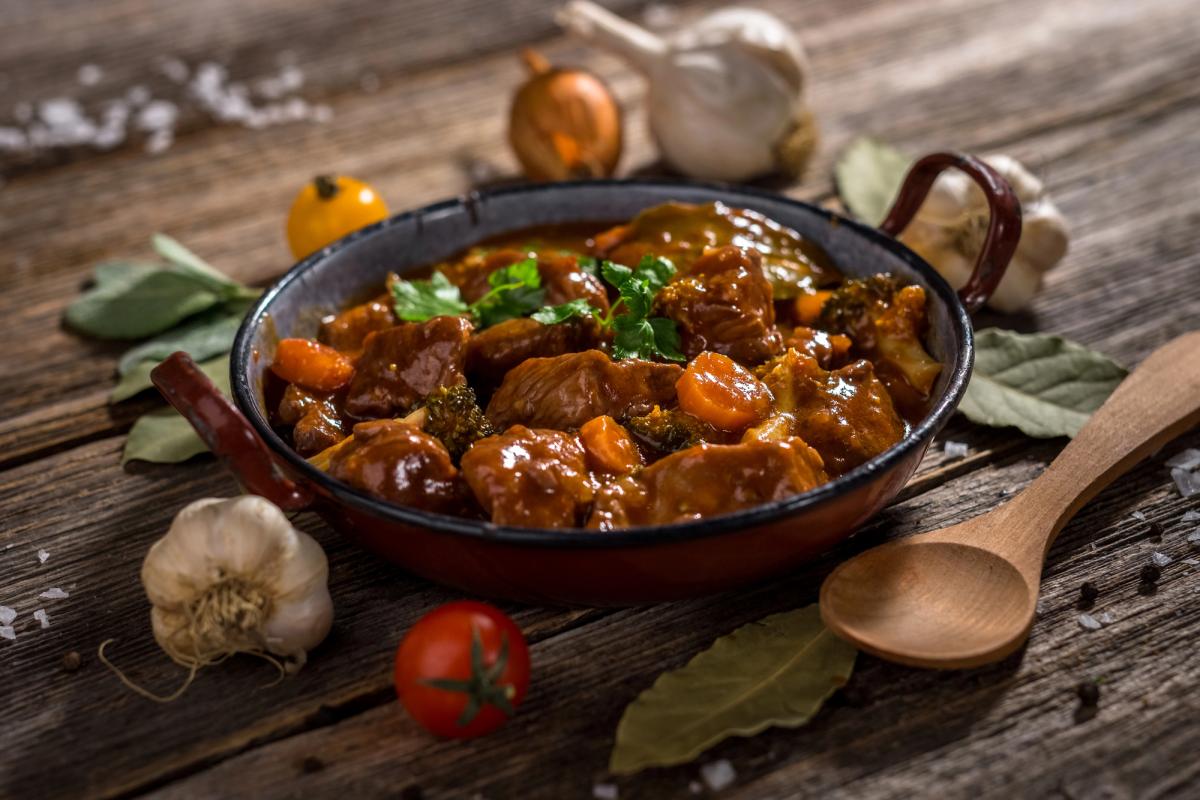
Turkey hearts, a cut most home cooks overlook, make a cheaper substitute for beef or pork in a rich meat gravy or goulash, according to the Polish cooking site Kuchnia.mojegotowanie.pl. The outlet reports that turkey hearts cost less than pork, lack the bitter edge and crumbly texture of liver, and stay dense, firm and meaty when cooked properly, remaining juicy and tender rather than falling apart.
In a goulash, the site notes, turkey hearts do not break down into small fibres the way other offal can. Cut in half or into quarters, they hold their shape and look appealing sitting in a thick, dark sauce.
Food writer Bożena Repecka, the author of the article, said hearts absorb the flavour of added ingredients well, pairing especially well with onion, garlic, marjoram, thyme, and sweet or smoked paprika. She said she sometimes adds a little mustard as well, which lifts the flavour of the sauce. For cooks who prefer something more traditional, she said turkey hearts also work well with bay leaf, allspice and carrot.
Do turkey hearts need cleaning before cooking
According to the article, turkey hearts need some preparation before going into the pot, though the process is simple. Each heart should be inspected and any protruding vessels, tougher fragments and excess fat trimmed from the top. A small amount of fat can be left on, since it adds flavour to the dish.
Repecka said she cuts each heart in half lengthwise, which makes it easy to check for any blood clots left inside. She removes those along with any larger tough fragments, and often cuts the halves into smaller pieces again, especially when preparing a stew. She added that cooks do not need to strip away every thin membrane or scrape out each pale vein; the main thing is to remove the tough parts that could get in the way while eating.
How long to cook turkey hearts
The outlet said turkey hearts are made up of dense muscle tissue, so they need longer cooking than ordinary pieces of turkey meat. Taken off the heat too soon, they can turn out tough and rubbery.
Repecka said she most often braises hearts under a lid for about 60 to 90 minutes, though larger pieces can need as long as two hours. The key, she said, is to let them cook slowly in a small amount of stock or sauce, with the liquid only barely simmering.
For a goulash, she said the onion should be sautéed first, followed by the cleaned, dried hearts, which are briefly seared over higher heat before the spices go in and hot stock is poured over. The pot is then covered and the heat turned down.
She checks from time to time to make sure the sauce has not boiled away, testing tenderness with a fork or by cutting into a piece. Finished hearts should chew easily, with no unpleasant rubbery resistance, and should be fully cooked through in the centre, she said.
What else can you make with turkey hearts
The site said the pronounced flavour of turkey hearts suits both traditional dishes and spicier ones, and suggested several options:
- Goulash with onion and mushrooms: braise the hearts with plenty of onion, mushrooms, garlic and sweet paprika, served with buckwheat.
- Stew with dill sauce: combine cooked hearts with carrot, cream and fresh dill, best served with mashed potatoes.
- Hearts in mustard sauce: stir a tablespoon of brown mustard and a little cream into the sauce left from braising, served with potato dumplings.
- Paprika goulash: combine hearts with red sweet pepper, tomatoes, garlic and a pinch of hot paprika, served with rice or fresh bread.
Repecka said a few dried mushrooms, soaked and briefly simmered beforehand, can be stirred into a hearts dish near the end of cooking, lending a deep, woodland aroma that suits an autumn meal well.
Turkey hearts belong to the category of offal, or organ meat, which in many cuisines is prized for being both inexpensive and dense in protein and iron, though it tends to be used less often in everyday Western cooking than muscle cuts like breast or thigh.
UNIAN has previously reported on another underused cut, beef spleen, describing it as a nutrient-rich offal that many households feed to pets rather than eat themselves, despite its value to those focused on healthy eating.