

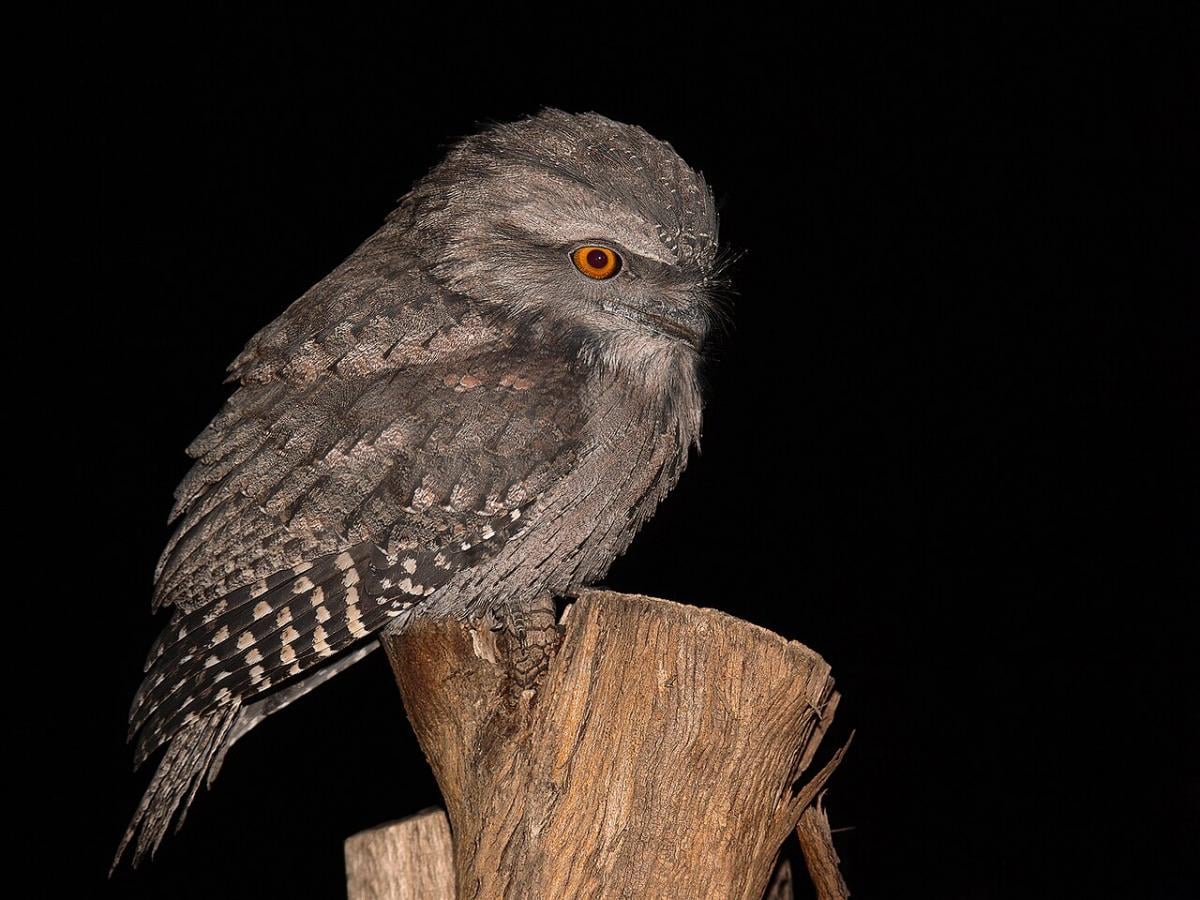
The tawny frogmouth was named bird of the year in Australia in 2025, Discover Wildlife reported. German researchers also identified the unusual nocturnal species as one of the most popular birds on Instagram due to its distinctive facial expression.
The bird features large yellow eyes and a wide beak curved downward, which gives it a constantly dissatisfied appearance. Its mottled plumage helps it hide among tree branches across its native range.
People often mistake the tawny frogmouth for an owl because it is nocturnal, has large eyes, and perches in trees. However, it belongs to the Podargidae family and is a closer relative of nightjars and hummingbirds than owls.
Physical differences also exist in foot structure. Owls possess powerful talons for capturing prey, whereas the tawny frogmouth has short legs and relatively weak feet. It typically waits on a branch before dropping down suddenly to grab prey with its wide hooked beak.
The species measures between 32.5 and 50 centimetres in body length, with a wingspan ranging from 65 to 98 centimetres. Its weight ranges from 200 to 600 grams.
The tawny frogmouth is distributed across all of mainland Australia and Tasmania. It adapts well to diverse environments, inhabiting forests, shrublands, agricultural lands, parks, and suburban gardens.
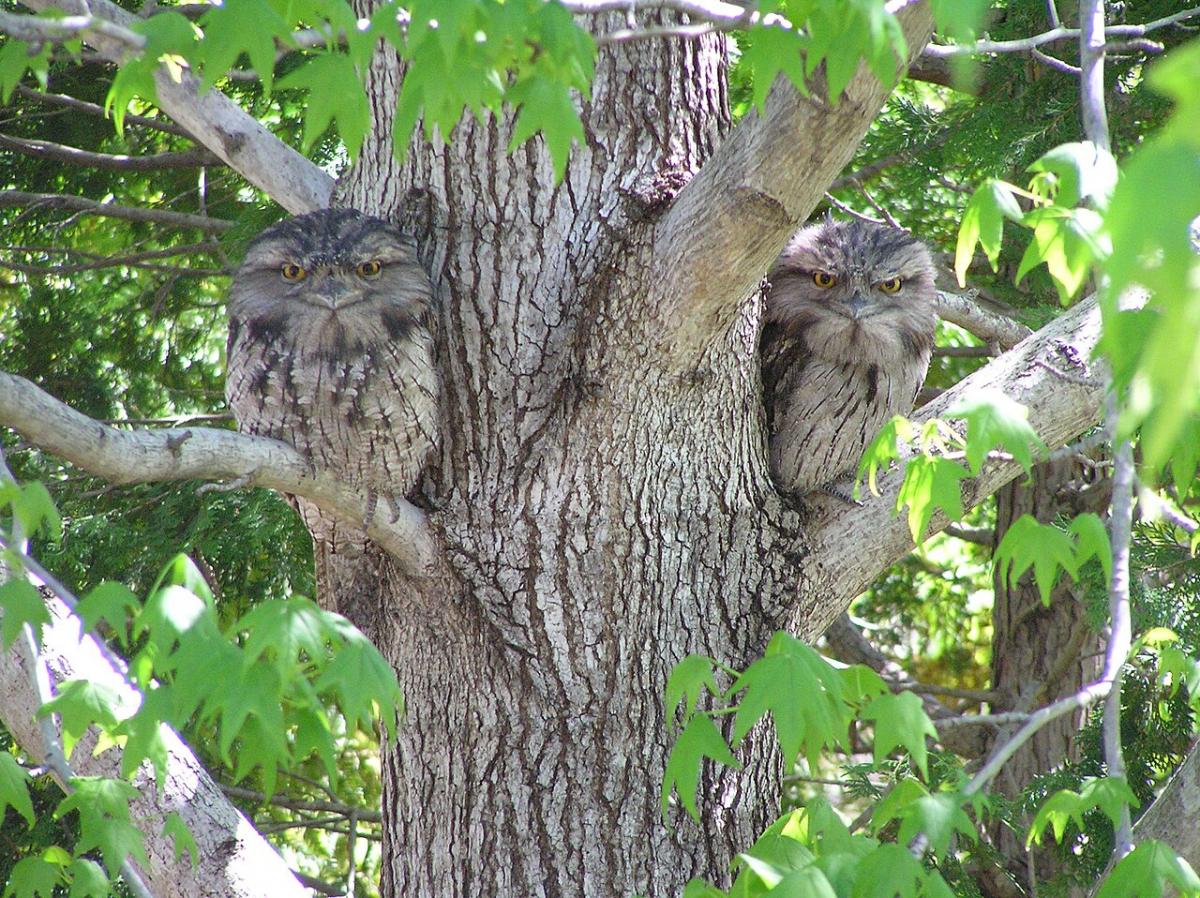
Camouflage and hunting habits
To avoid predators, the bird relies on disguising itself as a tree branch. During the day, it sits vertically, stretches its body, narrows its eyes, and points its beak upward so its grey-brown striped plumage blends into tree bark.
Its main diet consists of nocturnal insects, spiders, worms, slugs, snails, centipedes, and cockroaches. When the opportunity arises, the bird also catches small mammals, reptiles, frogs, and birds.
Breeding and conservation status
Tawny frogmouths usually form long-term pairs and breed from roughly August to December. They build twig nests in tree forks, disguising them with leaves, moss, lichens, feathers, or spiderwebs.
Females lay two to three eggs, which both parents incubate and defend. Chicks hatch after about 30 days and begin flying within 25 to 35 days.
The International Union for Conservation of Nature classifies the tawny frogmouth as a species of least concern, and it remains widespread across much of its range. However, the birds face threats from vehicle collisions, secondary pesticide poisoning, and predators such as cats and foxes that kill adults, chicks, or eggs.
Birdwatching is currently experiencing a global surge in popularity after long being viewed as a hobby for retirees. Many hotels and ecolodges now offer views of native species directly from their grounds.


