Spain's National Health System is facing growing demand for mental health services following the pandemic, alongside structural waiting lists and regional care inequalities.
Mental health care demand has risen sharply among adolescents and young people, driven by increased social awareness and reduced stigma, but system bottlenecks persist across autonomous communities.
Psychiatric Assessment of Care Demand
Dr. Pedro Martínez Alfonso, a psychiatrist who serves as head of the Adult Brief Hospitalisation Unit at the Nuestra Señora de la Paz Clinic, stated that the higher demand reflects a genuine rise in conditions such as anxiety, depression, eating disorders, and suicidal behavior.
Martínez Alfonso explained that several factors contribute to the trend, including pandemic fallout, global uncertainty, social media overexposure, migration, and increasingly precarious socioeconomic conditions.
He noted that lower social stigma, higher public awareness, and improved screening procedures have also made it easier for individuals to seek medical help.
According to Martínez Alfonso, reduced stigma and better screening circuits have increased overall system accessibility, though distinguishing between specialized disorders and non-psychiatric emotional distress remains a critical challenge.
National Strategy and Innovation in Care
The Mental Health Strategy of the National Health System aims to shift care toward a community-focused model that emphasizes patient recovery, personal rights, and continuity of care.
In recent years, health authorities have implemented suicide prevention programs, created alternatives to conventional hospital admission, and introduced measures to reduce coercive interventions.
However, the national transition remains incomplete due to disparities between autonomous communities, professional staffing shortages, and inadequate coordination among Primary Care, Mental Health, and Social Services.
The health system also faces obstacles in integrating peer support agents into socio-sanitary teams, alongside ongoing limitations in assessing treatment outcomes through formal indicators.
Technological and pharmacological advances are opening new pathways toward personalized medicine, including esketamine for treatment-resistant depression, potential psychedelic therapies for select cases, neuromodulation techniques, and digital tools paired with artificial intelligence for clinical decision support.
Martínez Alfonso cautioned that before these innovations are widely adopted, they must demonstrate real-world effectiveness, cost-efficiency, and measurable benefits for patient outcomes.
Psychological Services and Prevention
Raquel Rivero Corihuela, a clinical psychologist at the Adult Psychiatry Day Hospital at the Nuestra Señora de la Paz Clinic, identified waiting lists as one of the primary failures in the health network.
Rivero stressed that extended delays before starting treatment negatively affect patient recovery, particularly when emotional distress persists for months and interferes with personal, family, or professional life.
She advocated for increasing the number of clinical psychologists within the National Health System, alongside improving coordination between Primary Care and specialized Mental Health services.
Rivero also highlighted the need for early detection, evidence-based psychological treatments, and tailoring care intensity to individual needs to make better use of existing resources.
Prevention must play a central role because mental health is shaped outside clinical settings in families, schools, workplaces, and local communities.
Key strategies outlined by Rivero include teaching emotional regulation skills from an early age, establishing healthy environments, and actively reducing social stigma.
Rejecting simplified explanations for deteriorating mental health, Rivero noted that factors such as unwanted loneliness, uncertainty, chronic stress, and the loss of protective elements accumulate to heighten vulnerability.
Regarding social media, Rivero pointed out that the impact on teenagers and young adults depends more on how the platforms are used than on the platforms themselves.
She added that the primary challenge is not identifying a single culprit, but strengthening protective factors while reducing risk factors that can be actively managed.
Specialized Nursing and Post Discharge Follow Up
The transition to community-based care positions specialized mental health nurses as a vital link in the healthcare network.
Pedro Fernández de Velasco, a nurse and Mental Health Nursing Coordinator at the San Juan de Dios Center in Ciempozuelos, explained that nursing duties have expanded beyond hospital walls and symptom monitoring.
Fernández de Velasco stated that mental health nursing now focuses on comprehensive care, promoting individual autonomy, patient recovery, community integration, and stigma reduction.
Specialist nurses provide health education, relapse prevention, treatment compliance management, and direct support for families and caregivers.
He added that nurses play an essential role in detecting early signs of relapse and coordinating the necessary healthcare and social resources to maintain patient stability.
According to Fernández de Velasco, patients most frequently request continuous, accessible, and close care that addresses clinical, social, and emotional needs simultaneously.
Hospital discharge represents one of the most delicate phases, as returning home creates heightened vulnerability if communication between hospitals, Primary Care, community Mental Health, and social services is weak.
Establishing early follow-up and improving communication channels are top priorities, with specialist nurses potentially serving as case managers to guide patients through available services.
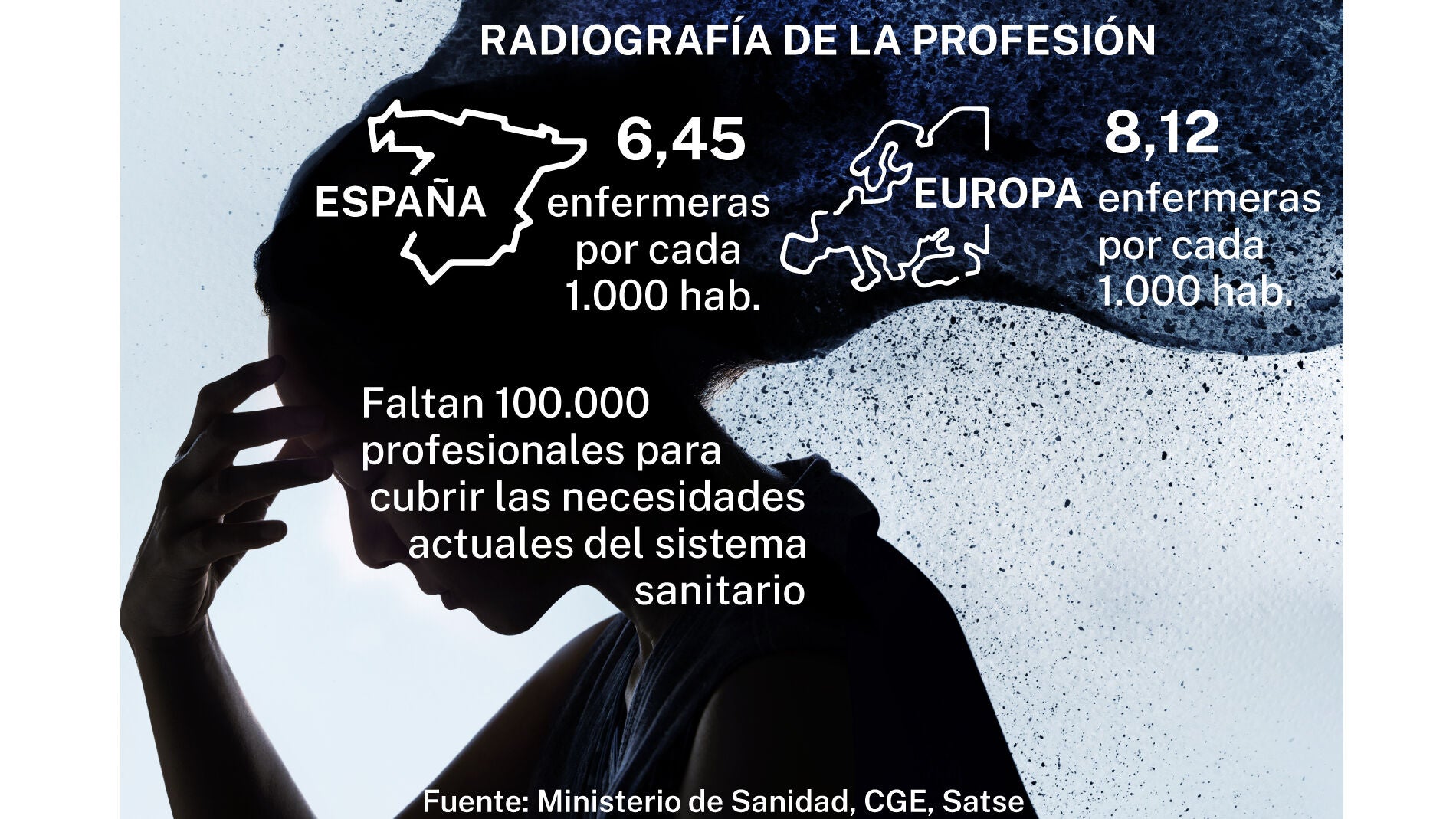
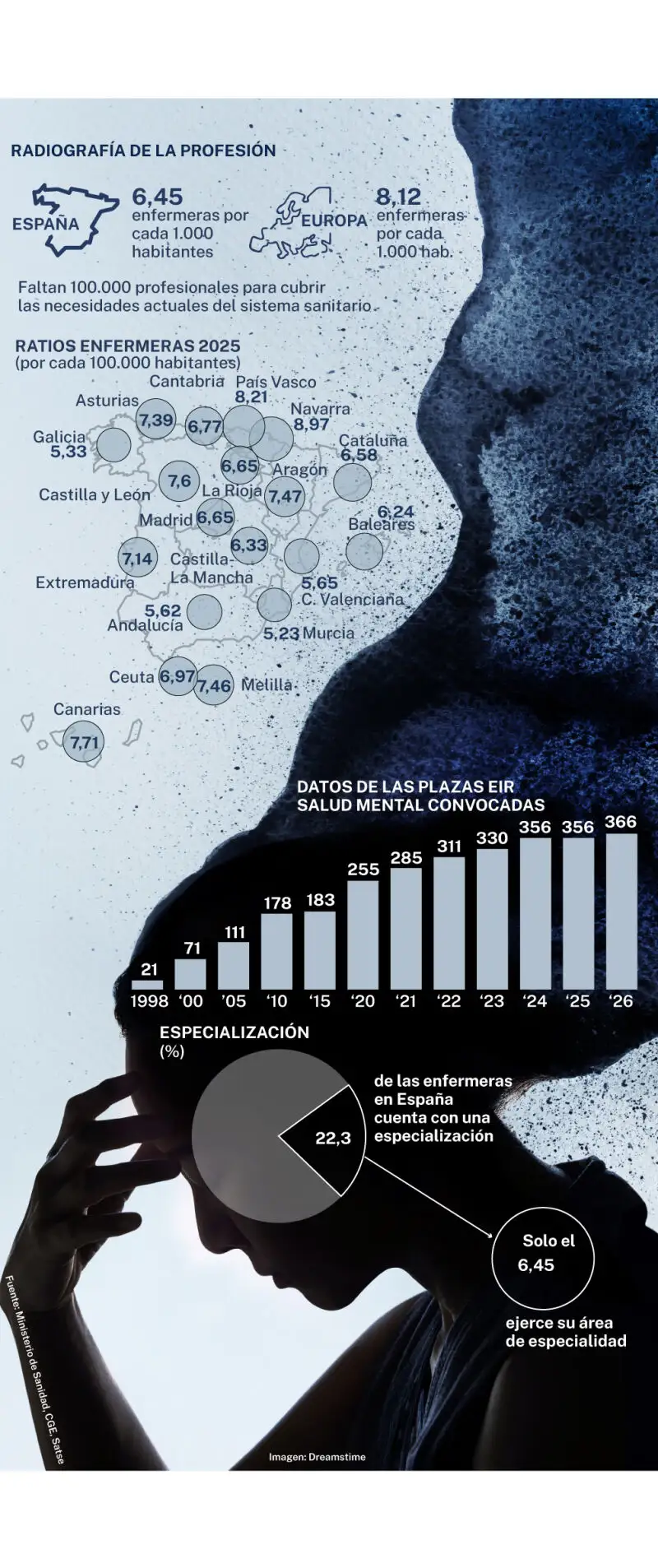
A shortage of specialist nurses increases pressure on healthcare staff, hinders individualized patient tracking, and restricts preventive and educational community programs.
To resolve the shortage, Fernández de Velasco called for increasing specialized Resident Intern Nurse training slots, known as EIR, alongside creating dedicated specialist nursing positions across the health network.
Consensus Across Medical Disciplines
Addressing Spain's mental health challenge requires balancing three priorities: meeting growing care demand, preventing long wait times from causing chronic suffering, and reforming the system toward coordinated community care.
Psychiatrists, clinical psychologists, and specialist nurses agree that expanding routine consultation slots is insufficient to fix the crisis.
The disciplines stress that effective care requires earlier detection, timely intervention, and continuous post-treatment support, noting that recovery continues at home, within families, and throughout the community after hospital discharge.