


Audio brand Shokz has released the OpenFit Pro, bringing noise reduction and Dolby Atmos spatial audio to its wireless open-ear sports earphones.
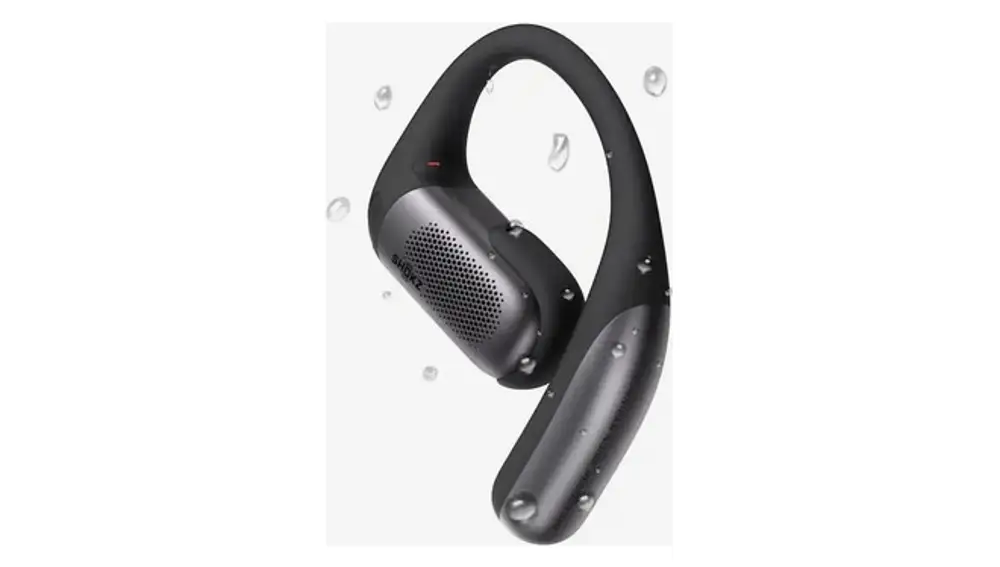
The new earphones rest outside the ear canal rather than plugging it, allowing runners and cyclists to stay aware of traffic and street sounds while listening to music. The model has gone on sale internationally through online retailer AliExpress, where an introductory promotion cuts the price from 265.00 euros to 195.62 euros when buyers enter the discount code FSES20.
Shokz, formerly known as AfterShokz, built its reputation over several years by producing bone-conduction headsets that transmit audio vibrations through the cheekbones to keep ears clear during outdoor workouts. With the OpenFit Pro, the company aims to deliver full musical fidelity without requiring athletes to seal their ears. The product enters an expanding market for open-format listening, following similar open-ear releases from competing audio manufacturers such as Bose Corporation, which introduced its Ultra Open Earbuds to combine spatial audio with situational awareness.
Reporting on the launch for the shopping and technology section of Spanish national newspaper La Razon on September 18, 2026, Murcia-based technology journalist Javier Rosagro evaluated how the hardware handles the competing demands of street safety and sound quality.

Situational Awareness for Outdoor Running
Urban running presents safety challenges that open-ear equipment is designed to solve. Rosagro explained that city runners quickly recognize the danger of being startled by an approaching bicycle bell at the twelfth kilometer or a vehicle pulling out of a driveway.
Athletes who use conventional in-ear monitors often resort to taking one earbud out at every traffic light to hear vehicles. Because the OpenFit Pro rests against the outer ear without entering the canal, the surrounding environment remains audible at all times without requiring physical adjustments.
Rosagro pointed out that this open format provides an unwritten advantage by restoring the runner's attention to their environment. On an easy jog along a cycle path, an athlete can hear nearby traffic, overtaking groups of cyclists, and their own breathing, which serves as a natural indicator that their pace has climbed too high.
SuperBoost Drivers and Dolby Atmos Audio
Acoustic performance has historically been the primary weakness of open-ear audio gear. When a speaker rests outside the ear without a silicone seal, low-frequency sound waves dissipate into the air, especially when an athlete faces a headwind or passes heavy urban traffic such as city buses.
Runners using standard open earphones frequently respond by turning the volume up to maximum, which increases audio distortion. To combat this loss, Shokz developed a dual-diaphragm acoustic driver called SuperBoost, specifically engineered to preserve bass response and prevent distortion at elevated listening levels.
The manufacturer has also added support for Dolby Atmos spatial audio, a technology created by Dolby Laboratories that places sound elements in a virtual three-dimensional field for compatible media tracks.
Rosagro noted that consumers should maintain realistic expectations about audio fidelity. An earphone that does not physically seal the ear canal cannot deliver the exact sound profile of a sealed in-ear monitor, regardless of digital processing. Even so, he concluded that the acoustic compromise remains worthwhile for outdoor road runs, indoor treadmill workouts, and daily commutes.
Gym Performance and Open Noise Reduction
Beyond outdoor roads, Shokz designed the OpenFit Pro to handle indoor fitness environments. In weight rooms, runners have little need to hear surroundings, and competing against loud gym sound systems during early-morning squats can prove frustrating.
To address indoor noise, Shokz installed an open-ear noise reduction system. The company stated that the technology dampens background environmental noise without requiring an airtight seal in the ear canal.
This dual setup allows athletes to use a single pair of earphones for both road running with open awareness and indoor strength training with reduced distractions. Rosagro observed that fitness enthusiasts who split their weekly training between pavement miles and bench press sets can rely on one device rather than keeping two separate pairs in a drawer.
Battery Life and Power Management
Battery capacity is a vital consideration for runners heading out early in the morning. Shokz reported that the OpenFit Pro delivers up to 50 hours of total playback when pairing the earbuds with recharges from their carrying case, provided the noise reduction feature remains switched off.
Turning on the noise reduction system reduces that total battery estimate to 24 hours with the case. Because of the higher power consumption, Rosagro recommended saving noise reduction for indoor gym workouts and leaving it switched off during long outdoor training runs.
For an athlete running four one-hour sessions each week, the charging case can sit inside a gym bag for several weeks before requiring a connection to a wall outlet.
Hardware Durability and Onboard Controls
The OpenFit Pro carries an IP55 ingress protection rating under standards established by the International Electrotechnical Commission. The rating certifies that the hardware resists dust deposits that could interfere with operation, as well as low-pressure water jets from any direction.
This protection shields the device against heavy summer sweat, fine drizzle during an autumn run, and dust from unpaved dirt trails. However, Rosagro stressed that the IP55 rating applies only to the earbuds themselves, while the charging case has no water resistance rating and must be kept away from water and moisture.
The earphones also feature an integrated voice assistant. The hands-free control enables athletes to switch songs or return phone calls during workouts without unzipping a running belt to access their mobile phones.
Practical Limitations and Real-World Testing
The open-ear design does not suit every sports activity. Rosagro noted that the product offers little benefit to swimmers who need dedicated underwater gear, or to athletes who train exclusively with over-ear headband headphones and refuse to switch.
The genuine test of the hardware will occur during autumn workouts into direct headwinds. Rosagro wrote that if music remains audible when finishing the fifteenth kilometer and approaching cyclists do not catch the runner by surprise, the OpenFit Pro will have resolved the long-standing conflict between hearing the street and hearing the music.
The source report appeared in the commercial shopping section of La Razon, which noted that affiliate links on product recommendations may generate small merchant commissions without altering consumer prices or editorial independence.


