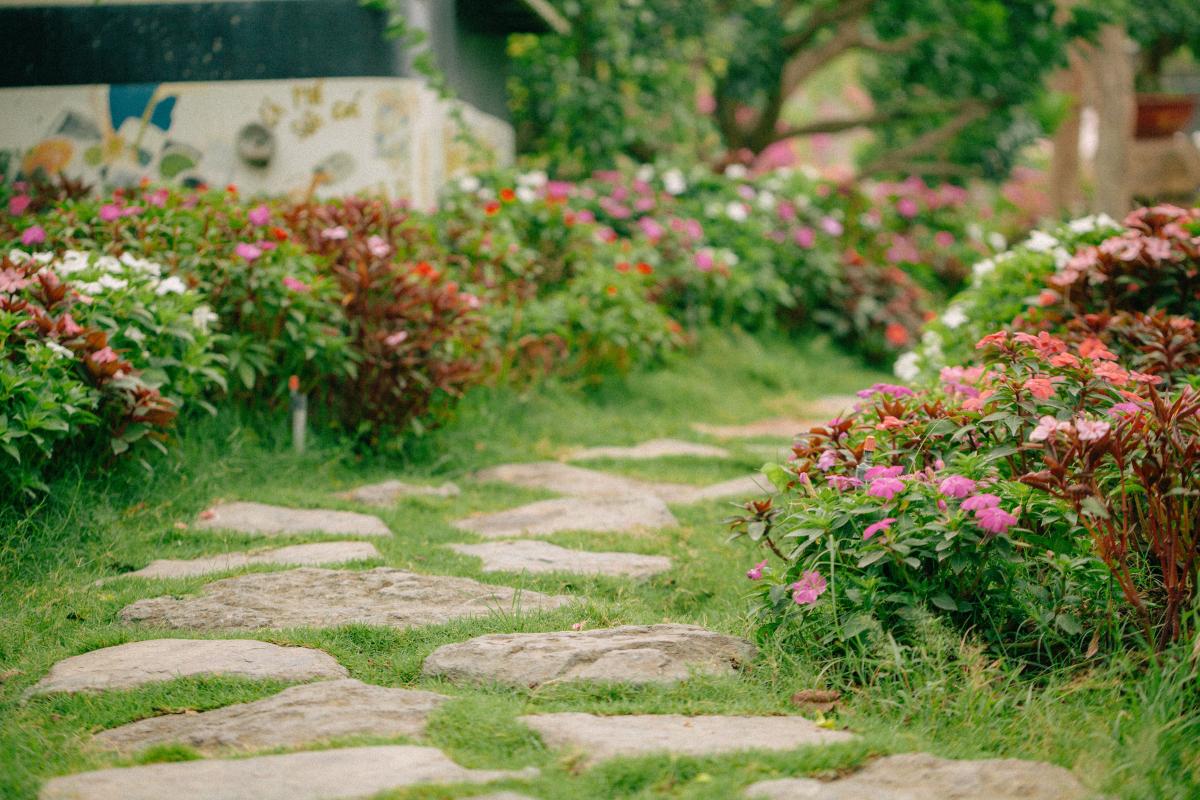
Homeowners are tearing out sections of paving stones in their gardens and replacing them with permeable grass grids, surfaces that let rainwater drain into the soil instead of running off into drains, according to the gardening website Kerteszkedj, which cited Britain's Royal Horticultural Society (RHS).
Gardens once featured large lawns where children could play and families could picnic, Kerteszkedj noted. Over time, homeowners paved over much of that space because it cut down on mud and meant less mowing. Now, many are removing that paving and installing a water-permeable grass grid that can even be driven on.
Why experts favour permeable surfaces
The RHS said impermeable, solid surfaces can increase the volume of rainwater runoff by as much as 50%. That extra water flows into street sewers, which cannot always cope with the added load, the organisation said.
Permeable grass grids help cool cities and benefit wildlife, according to the RHS, which encourages homeowners to swap hard surfaces for plants that can tolerate both drought and heavy downpours where possible. The RHS is Britain's leading gardening charity and organises the Chelsea Flower Show, and it regularly promotes sustainable, climate-resilient gardening practices to the public.
Which materials work best
Gravel is the cheapest option, Kerteszkedj reported. Shaped paving tiles are another choice, since their gaps let water pass through if they are laid on a compacted base of crushed stone.
The best solution, according to the material cited by Kerteszkedj, is a cellular grid made from recycled plastic and filled with gravel, commonly called a grass grid or lawn grid. It comes in both concrete and plastic versions and is designed so the grassed surface can be driven on, even by cars.
When grass grids are not the right choice
The guidance warned that grass grids are not always suitable. In places with heavy shade, such as beneath large trees or against tall walls, grass struggles to establish itself within the grid.
Where a car is parked in the same spot every day, grass under the wheels can die off, and the patch beneath the vehicle can turn yellow from lack of light. On dense clay soil with poor drainage, water can become trapped beneath the grid if it is not laid on a proper base.