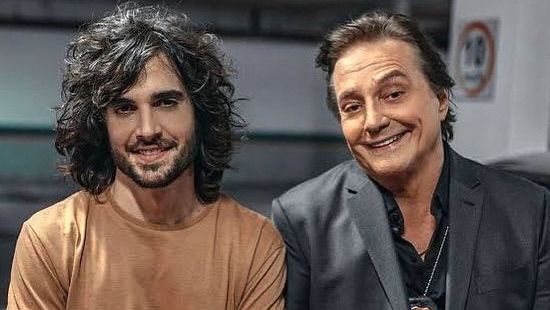
Brazilian singer and actor Fiuk, 35, said on Monday that he had been "disinherited" by his father, veteran singer and actor Fábio Jr., 72, and admitted he is now trying to rebuild his own finances.
The comments reignited public speculation about the two men's strained relationship and prompted questions over how disinheritance actually works under Brazilian law.
What the law says about disinheriting a child
Otavio Pimentel, a lawyer specializing in family and inheritance law, said Brazilian legislation does allow the disinheritance of so-called necessary heirs, a category that includes children, but that it cannot happen simply because a parent wishes it.
Pimentel said disinheritance does not work as a simple expression of will by a father or mother who does not want to leave assets to a particular child. He said it requires a valid will that expressly names one of the causes for disinheritance set out in Brazil's Civil Code, and that a family conflict on its own is not enough to remove an heir from succession.
According to Pimentel, the first requirement is the existence of a valid will in which the person leaving the estate states their intention to disinherit a specific heir and identifies the legal cause behind that decision. He said the Civil Code's list of valid causes includes acts committed against the life or honor of the person leaving the estate, as well as certain serious conduct within family relationships.
Pimentel said the law sets out a specific list of situations that can justify disinheritance, and that a new cause cannot be invented simply because a relationship between a parent and child has deteriorated.
Is disinheritance automatic once it's written into a will?
Pimentel said that even when a will includes a disinheritance clause, it does not become final automatically when the person who made the will dies. He said the cause cited by the person must still be proven in court, and that it is important to separate a declaration made in a will from the actual loss of inheritance rights, since exclusion depends on proving in a judicial process that the fact named by the testator actually happened.
Disinheritance versus unworthiness
Pimentel also pointed to a distinction that often causes confusion: the difference between disinheritance and what Brazilian law calls "unworthiness." Both can result in someone being excluded from an inheritance, he said, but unworthiness is tied to the situations listed in Article 1,814 of the Civil Code, which include intentional homicide or an attempt on the life of the person leaving the estate or certain family members, crimes against that person's honor, and acts that prevent or obstruct the free disposal of the inheritance.
Disinheritance, by contrast, requires an explicit statement from the person leaving the estate in a will and is tied to specific legal causes that apply to necessary heirs such as children.
What it could mean for Fiuk and Fábio Jr.
Pimentel said that in the case involving Fiuk and Fábio Jr., whether any disinheritance exists and what legal effect it would have would depend on an analysis of any will that may exist and the concrete circumstances said to have motivated the move.
He said that when a situation like this becomes public, caution is needed not to confuse a personal statement with a legally finalized exclusion from an inheritance, since the validity of disinheritance depends on meeting formal requirements and proving the legally recognized cause.
Fiuk, whose full name is Felipe Cristiano Zady Ronchi, built his public profile as a singer and actor and later widened his fan base after appearing on the reality show "Big Brother Brasil." Fábio Jr. is one of Brazil's best-known singers and actors, with a career spanning decades.