Spain is marking the 25th anniversary of the death of Paco Rabal, one of the most prominent and versatile Spanish actors of the 20th century, who died on August 29, 2001.
Rabal died at the age of 75 aboard a commercial flight returning to Spain after receiving a lifetime tribute at a film festival in Montreal, Canada.
A lifelong Communist Party member who remained deeply patriotic, Rabal built a career spanning six decades that took him from a youthful dandy to a scarred screen icon capable of playing peasants, rogues, aristocrats, and criminals.
Early life and entry into cinema
The actor was born Francisco Rabal Valera on March 8, 1926, in Cuesta del Gos, a small village in the municipality of Águilas in the southeastern Spanish region of Murcia. The son of a miner, he moved with his family to Madrid as a child during a period of economic hardship.
In the Spanish capital, Rabal found work as an electrician's apprentice at Chamartín Studios, one of Madrid's principal film production facilities. His daily work on set introduced him directly to the film industry, launching an acting career that would connect him with leading European directors.
As he matured, Rabal transitioned from early romantic leading roles into a distinctive character actor. A scarred face, a broken nose, and a deep voice became his trademark attributes, allowing him to portray complex figures ranging from impoverished rural laborers to high-society aristocrats without losing his personal identity.
Major film roles and international recognition
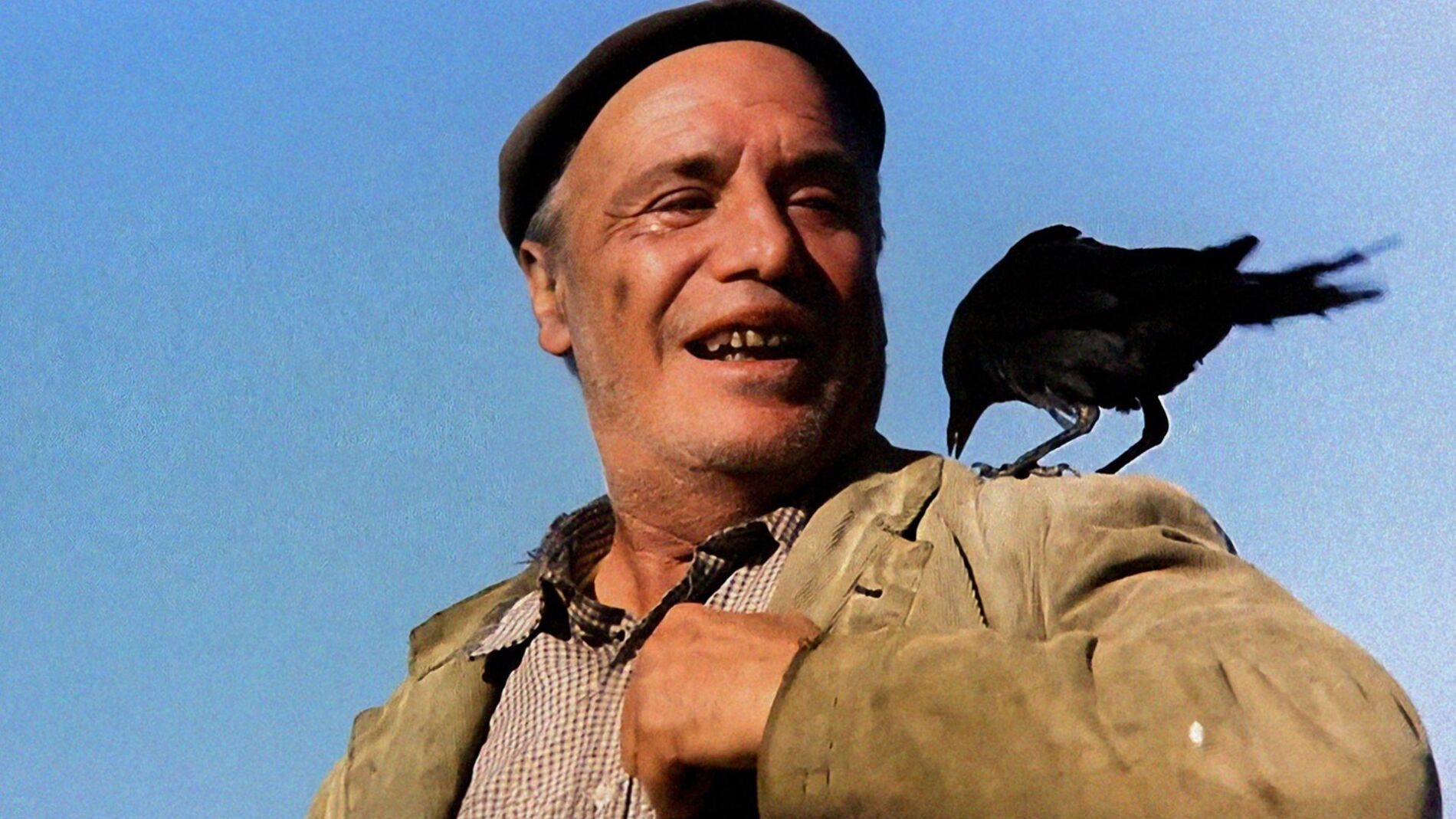
In 1984, Rabal delivered one of his most famous performances as Azarías in Los santos inocentes (The Holy Innocents), director Mario Camus's film adaptation of the novel by Miguel Delibes. The role depicted an Extremaduran peasant living in rural Spain under conditions of poverty and social inequality.
Rabal's portrayal of Azarías became permanently associated with his repeated line calling his beloved pet bird his beautiful milana. The performance earned Rabal international acclaim when he shared the Best Actor award at the Cannes Film Festival in France ex aequo with his co-star Alfredo Landa.
Throughout his career, Rabal collaborated with several of the most influential filmmakers in European cinema, including acclaimed directors Luis Buñuel, Carlos Saura, and Pedro Almodóvar, cementing his position in Spanish film history.
Television success with Juncal
Five years after his recognition at Cannes, Rabal achieved widespread television popularity in 1989 as the star of Juncal, a hit series broadcast by Spain's national public network Televisión Española. Directed by Jaime de Armiñán, the series cast Rabal as an aging former bullfighter, womanizer, survivor, and master of conversation.
The role turned Rabal into a major television phenomenon, highlighted by his memorable dialogues with actor Rafael Álvarez, known as El Brujo, who played the character Búfalo. Their onscreen exchanges showcased Rabal's gift for sharp retorts, irony, and picaresque humor, proving that his vocal delivery could turn simple conversation into a dramatic spectacle.
Politics and personal relationships
Rabal was an active member of the Spanish Communist Party and never concealed his political convictions. Despite his firm left-wing stance, his personality escaped simple political classification, combining a commitment to leftist politics with a deep affinity for Spanish culture.
The actor publicly championed the work of left-wing poet Federico García Lorca while maintaining a close relationship of affection and admiration with writer José María Pemán, a figure situated at the opposite end of the political spectrum. Rabal had first met Pemán during his early years in the theater.
In 1997, Rabal dedicated a sonnet to Pemán in which he wrote that he loved Pemán for being a liberal. The gesture demonstrated an era in Spanish cultural life when personal ties could span ideological divides, showing that an actor did not need to turn every aspect of his life into a political declaration.
Legacy after a quarter century
Twenty-five years after his passing, critics and cultural commentators note that Rabal remains a remarkably modern figure because he resisted being pigeonholed. Neither as an actor, a man, nor a Spaniard could he be contained within a single label, leaving behind a legacy that remains central to the memory of Spanish film and television.