

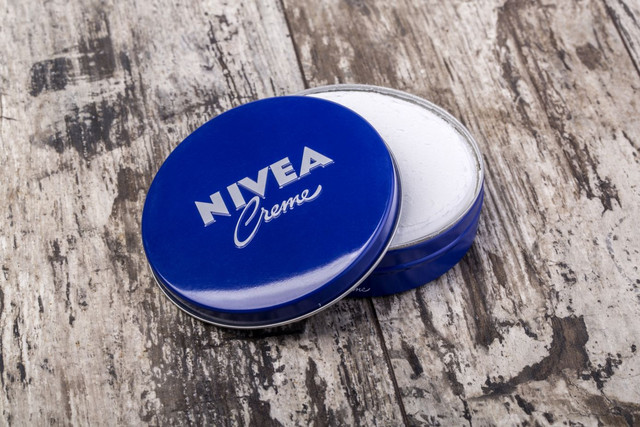
A beauty reviewer successfully restored dry, tight skin after returning from summer holidays by relying on a classic blue tin of Nivea Creme. The author reported that exposure to sun, sea water, frequent showering, air conditioning, and shifting temperatures had left the outer layer of the skin noticeably dehydrated at the end of the season.
According to the review, the post-holiday tight feeling occurred as elevated temperature variations and environmental stress accelerated moisture loss from the surface layer of the skin. Hydration during this recovery phase is essential not only for immediate comfort, but also to help preserve the natural epidermal barrier and keep skin feeling soft, flexible, and uniform.
Faced with a modern cosmetic market filled with targeted serums, active ingredients, and complex formula promises, the writer chose to return to a long-established staple. The rich texture of classic Nivea Creme proved particularly effective when applied directly to body parts experiencing the most severe dryness and thirst.
Formulation and Hydration Mechanics
The product formula relies on key functional components, including glycerin, a humectant ingredient that attracts and retains water within skin tissues, alongside emollient and protective agents. The principle behind the formulation is straightforward: when skin demands comfort and defense against water loss, a thicker cream provides an effective moisture shield.
First created in 1911 by German skincare manufacturer Beiersdorf, Nivea Creme is one of the oldest emulsion moisturizers in global cosmetics. Its iconic blue tin, introduced in 1925, houses a water-in-oil formula designed to shield skin against environmental evaporation. Glycerin acts by attracting water up from deeper dermal layers and holding it within the stratum corneum, the outermost protective layer of the epidermis.
Application Routine and Dermatological Guidance
To maximize the cream's effectiveness, the writer adopted a simple beauty technique of applying the product immediately after showering while the skin was still slightly damp. Dermatologists widely recommend applying moisturizers shortly after bathing, as this timing helps seal in a portion of the surface moisture the skin has just absorbed.
The application technique was adjusted depending on the body area. For facial skin, the reviewer used a small quantity, primarily during nighttime routines, whereas dry areas such as hands, elbows, and knees received a more generous layer. The dense texture created a protective surface film that provided increasing relief during the initial days after returning from vacation.
Dermatological science indicates that prolonged exposure to ultraviolet sunlight, salt water, and dry air conditioning degrades natural lipid structures in the epidermal barrier. When these natural protective oils are stripped away, transepidermal water loss increases rapidly. Occlusive creams form an external mechanical layer, allowing the damaged skin barrier time to replenish naturally.
Simplicity in Post-Summer Skincare
Reflecting on the experience, the author noted that the primary advantage of returning to classic Nivea was its simplicity. Rather than viewing the cream as a universal solution for every skin concern, the writer relied on it specifically as a rich moisturizing treatment to support dry and stressed skin.
After a full summer of sun, salt water, and continuous environmental changes, the skin did not require another complex addition to a skincare routine. Instead, it required fundamental hydration, physical comfort, and protection against moisture depletion, a role the classic blue tin fulfilled better than expected.


