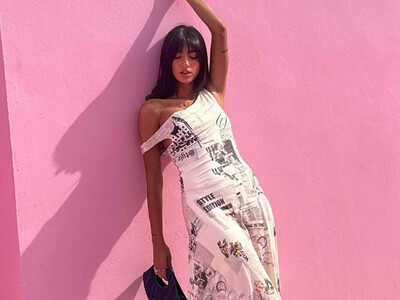
The newspaper print pattern popularized by Dior and Sex and the City has returned to fashion runways and celebrity wardrobes 25 years after its turn-of-the-millennium peak. The distinctive motif mimicking daily news pages is making a major comeback across luxury runways and contemporary collections, re-establishing one of the most recognizable icons of Y2K style.
Luxury fashion houses Chanel and Dior have recently reinterpreted the print on the runway, while American actress Jenna Ortega has brought back John Galliano's iconic archive dress. Spanish fashion brand Desigual has also kept the newspaper print at the center of its latest collections, featuring it on dresses, skirts, tops, and matching trousers.

The sudden resurgence reflects a broader wave of interest in early 2000s aesthetics and vintage fashion archives. Observers and industry experts note that younger consumers are discovering turn-of-the-millennium garments for the first time, driving demand for items that feature unique visual storytelling.
Origin of the newspaper print
Although many fashion enthusiasts associate the pattern with the famous autumn-winter 2000 collection by French fashion house Christian Dior, the history of newspaper print began nearly a century ago. In 1935, Italian avant-garde designer Elsa Schiaparelli first transformed real press clippings into fabric prints for her garments.
Schiaparelli, known for her surrealist creations in Paris, drew inspiration from Danish fisherwomen who wrapped themselves in old newspapers to protect against the cold sea winds. Her ironic and radical concept established the first formal bridge between journalism and high fashion.
Decades later, British designer John Galliano revived the concept during his tenure as creative director at Dior. Galliano created a customized fictitious newspaper titled The Christian Dior Daily, featuring headlines and branding associated with the French house for Dior's autumn-winter 2000 collection.
Cultural icon status and TV fame
The pattern achieved legendary status when American actress Sarah Jessica Parker wore a tight newspaper print dress on screen as character Carrie Bradshaw. Appearing in the third season of the hit HBO series Sex and the City, Bradshaw strutted through the streets of Manhattan carrying a Fendi Baguette handbag.
The television scene transformed the garment into one of the most celebrated outfits in pop culture history. It defined the eclectic, confident aesthetic of early 21st-century fashion and cemented the dress as a permanent piece of fashion history.
The current revival has brought those archival garments back into the spotlight. Celebrity appearances, including Jenna Ortega wearing Galliano's original Dior piece, have reignited interest among vintage collectors and digital audiences worldwide.
Industry response and modern styling
Spanish fashion brand Desigual, recognized for its playful and unconventional designs, has continued to champion the newspaper motif across a wide range of garments. Sources from Desigual told Spanish news agency EFE that while many 2000s trends are returning, the appeal of newspaper print extends well beyond simple nostalgia.
Desigual sources explained that there is a growing demand for clothes with character and a clear story that step outside conventional fashion boundaries. The Barcelona-based brand noted that it has always held a preference for prints that provoke conversation and give a garment its own life.
For Desigual, the newspaper print is not a temporary trend but a core design code that has formed part of the brand's identity for years. The company stated that the print reflects its approach to fashion as creative, expressive, and full of personality.
Appeal to new generations
While fashion analysts group the revival within the broader Y2K aesthetic trend, Desigual sources emphasized that the design's attraction transcends generational boundaries. The brand reported that younger consumers who did not live through the original television era are discovering the pattern with complete naturalness.
Desigual highlighted that the versatility of the print allows wearers to customize their look according to personal style. Some fashion enthusiasts choose to make the pattern the hero element of an outfit through a dress or shirt, while others incorporate it in subtle accents alongside basic wardrobe pieces.
Desigual sources added that younger buyers are approaching the Y2K imagery from a fresh perspective rather than nostalgia alone. Almost 100 years after Schiaparelli first printed headlines onto fabric and 25 years after Carrie Bradshaw made it a television phenomenon, the newspaper print is proving that some headlines never stop making news.