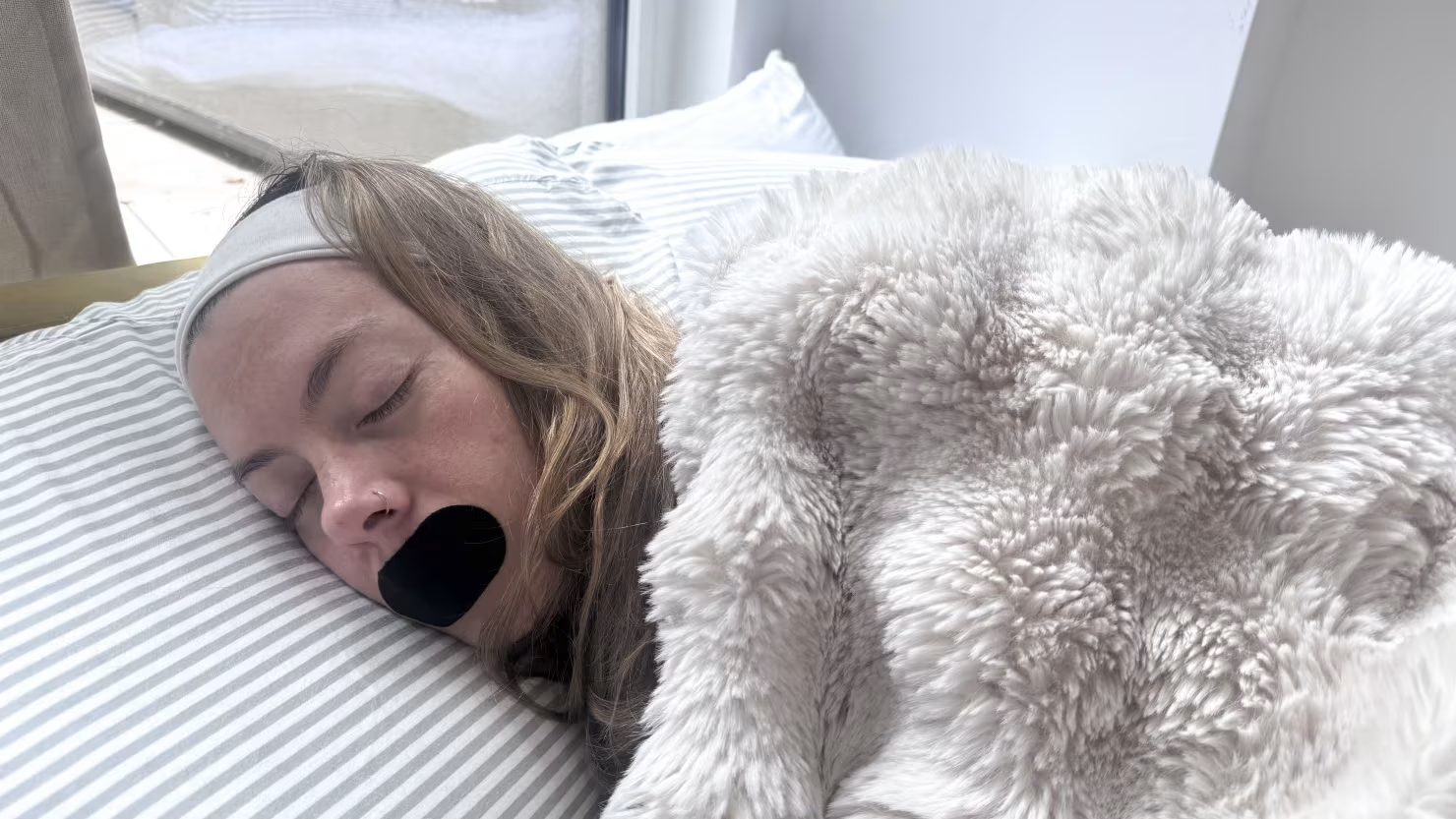
Mouth taping, the viral habit of sealing the lips shut with tape before bed to force nasal breathing, has spread widely on social media in recent years, drawing attention from doctors, dentists and aesthetics professionals. The practice is meant to help people who breathe through their mouths at night, a habit linked to snoring and bad breath, switch to breathing through the nose instead.
The image many people picture, a strip of tape stretched across the mouth as though the sleeper were being restrained, is not far from reality. Health experts caution against using ordinary adhesive tape directly on the skin, since it can irritate the skin and cause pain when removed. Several gentler, purpose-made products now seal the lips in a similar way without the same risks.
What the research actually shows
Despite the claims circulating on platforms such as TikTok, most of the benefits attributed to mouth taping are anecdotal, according to Dr. Hemalee Patel, a primary care physician and senior director of chronic disease management at One Medical. She said that while the value of nasal breathing is well documented when it comes to preventing dental problems, specifically cavities, gum disease, jaw misalignment and bad breath, the studies on mouth taping itself remain limited and inconclusive.
Breathing through the mouth at night dries out the oral cavity, which orthodontist Dr. Erin Fraundorf said can contribute to bad breath, cavities, hoarseness and dry lips. Dr. Brian Orcutt, a cosmetic dentist at Orcutt Family Dentistry, added that keeping the mouth closed as much as possible, both during the day and at night, brings real benefits for oral health and helps stop saliva, which protects teeth and gums, from drying up. Taping the mouth may also reduce mild snoring and improve sleep quality, though how much it helps varies widely from person to person.
Who should try it
Dr. Yenile Pinto said mouth taping works best for adults who can already breathe comfortably and clearly through their nose during the day but who quietly slip into mouth breathing once they fall asleep at night.
Dr. Renee Moran, a board-certified orthodontist at Foundations Orthodontics, said mouth breathing is a symptom rather than a full diagnosis, and she recommends seeing a health professional to rule out any underlying issues before following the trend. She warned that if someone has a genuine airway obstruction, they should not block their only usable airway with tape. Pinto added that people with sleep apnea, a deviated septum, chronic congestion or any allergy that blocks the nose should avoid mouth taping altogether. Orcutt said people with acid reflux problems should also be cautious about using it.
How to try it safely
For anyone worried about discomfort, Fraundorf and Dr. Michael J. Wei recommend easing in slowly, first practicing during the day to get used to the sensation. Fraundorf said to start by placing tape over the mouth for around 10 minutes at a time, adding 10 minutes a day for about a week, and only trying it overnight once it feels comfortable.
Wei said consistency matters, since it helps the body adapt to the new breathing pattern, and staying consistent afterward is what allows people to gain any long-term benefit.
Pinto similarly recommended wearing the tape for about 30 minutes while watching television as a way to test breathing beforehand. If someone feels short of breath or anxious during that test, she said it is best to remove the tape and consult an ear, nose and throat specialist or a dentist before trying again. Orcutt added that this trial period is also a good time to check for any allergic reaction or skin sensitivity to the adhesive.
Warning signs to watch for
According to Pinto, the first night of sleeping with tape on the mouth should be the calmest one. She suggested starting with a thin strip of medical tape placed vertically down the center of the lips before trying products that cover both lips completely.
Moran said that if someone wakes up in the middle of the night to find the tape has come off, it likely means they were struggling to breathe and removed it themselves without realizing it. Pinto said waking up feeling tired, having morning headaches, noticing more frequent teeth clenching or grinding, or waking up gasping are all warning signs that mean someone should stop using mouth tape immediately.