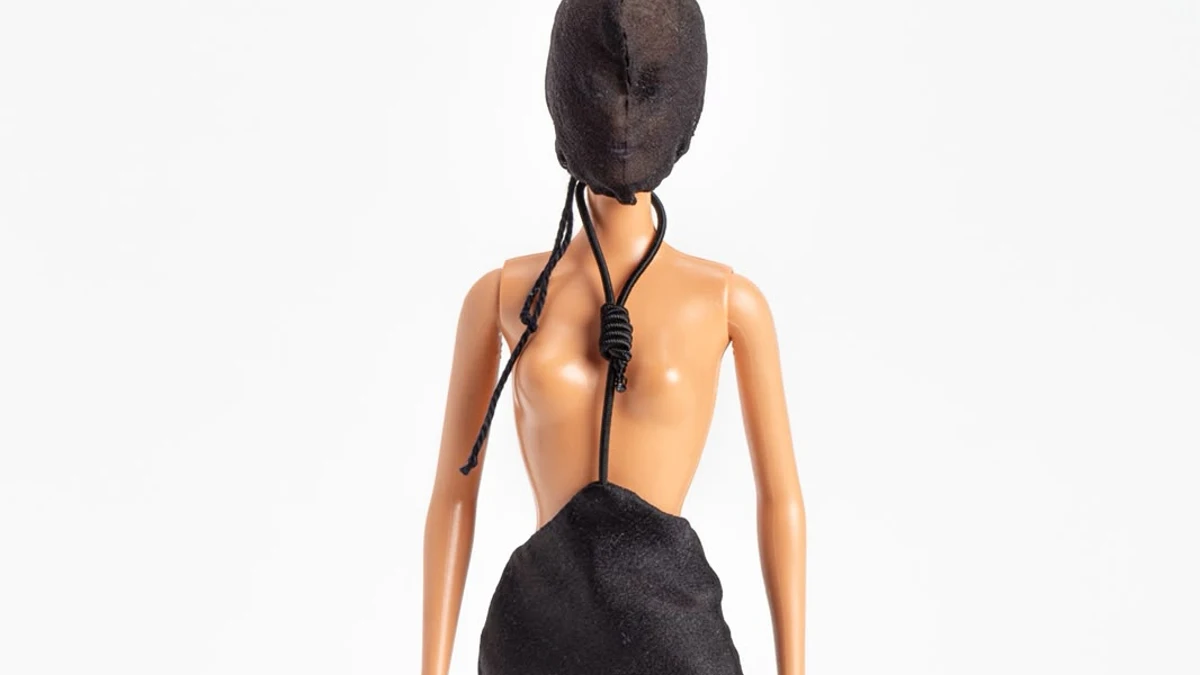
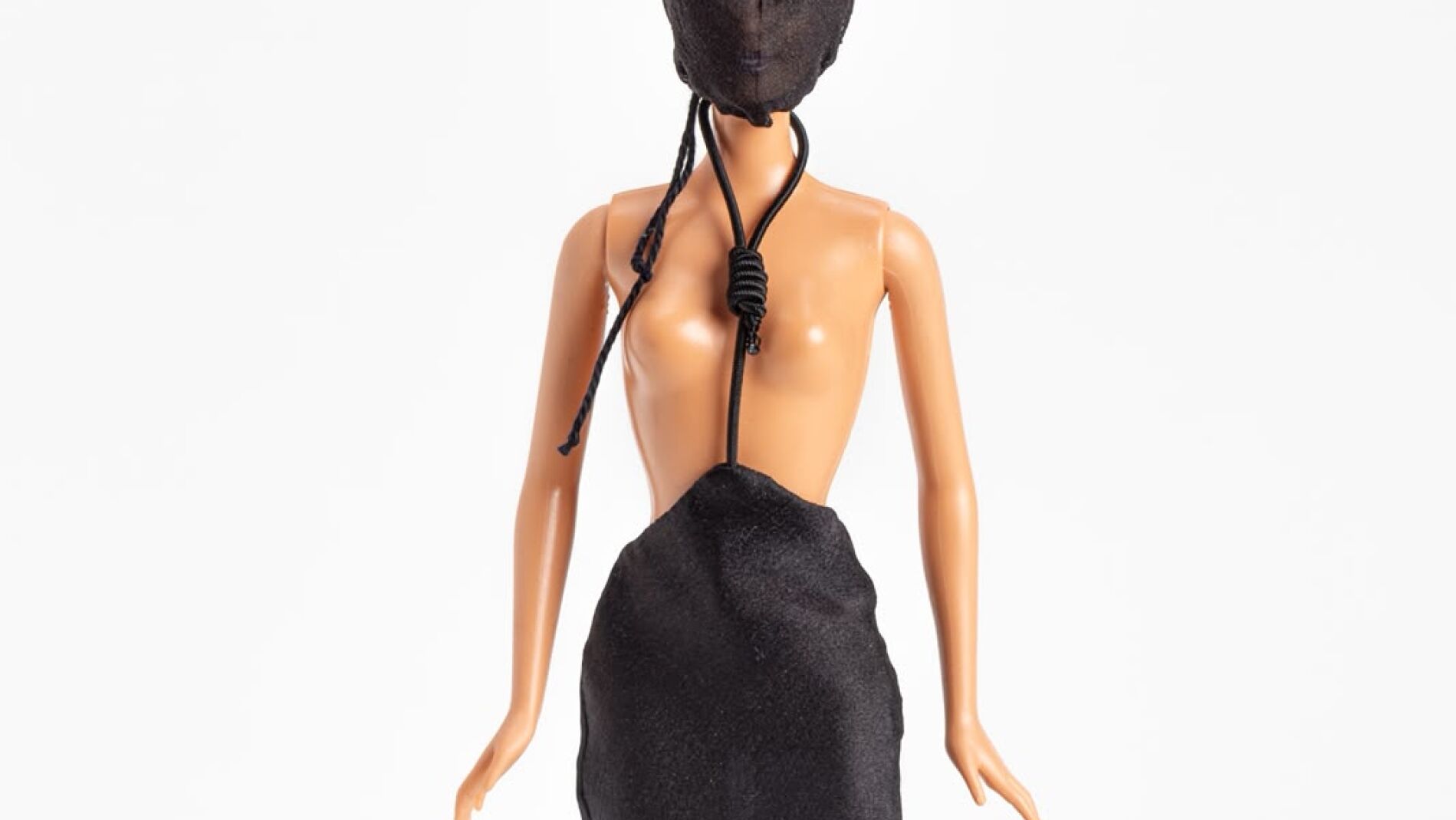
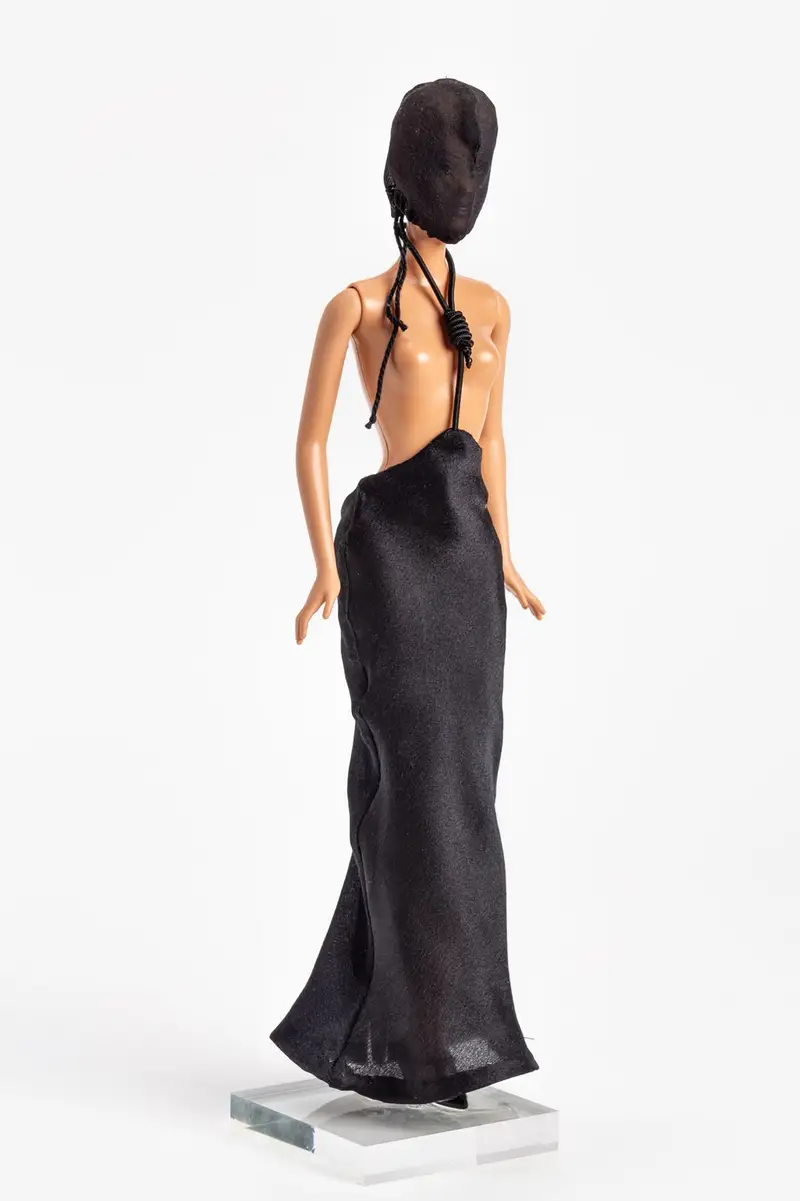
Madrid's Museo del Traje is spotlighting the late Spanish designer David Delfín this November, dressing a Barbie doll in one of his most controversial creations as part of the museum's monthly "Model of the Month" feature.
Next year will mark ten years since the death of David Domínguez, known professionally as David Delfín. Along with the model and performer Bimba Bosé, and collaborators Gorka, Diego and Devorah Postigo, he built one of the most influential Spanish fashion labels of the early 2000s. The group commanded a level of cultural influence comparable to today's trendsetters, turning whatever they touched into an icon.
A collection that divided opinion
In 2002, Delfín presented "Cour des miracles" at Madrid's Cibeles fashion week, a show in which several models walked with their faces covered. The reaction from the press and public was immediate, amounting to what would now be called a cancellation campaign against a brand that had only just launched.
Ana Esther Santamaría, who led the museum's research into the project and teaches at Rey Juan Carlos University, said the controversy of the time was tied to a very specific social, cultural and media context. She said Spanish society, its sensibilities, and the way images circulate have all changed a great deal since then.
That shift, she suggested, may help explain what happened on the runway that day. Where some saw an affront to women, others detected echoes of René Magritte's paintings or of Maison Martin Margiela's debut collection, which also sent out models with their heads covered. Santamaría said some observers interpreted the show as a deliberate provocation rather than an innocent artistic statement.
"Cour des miracles" reworked ideas drawn from Surrealism, according to Santamaría, who said it was not, as critics claimed at the time, trivializing violence against women. She noted that when some of the models lifted the hoods covering their faces during the show, it was read as a small rebellion, since they simply wanted to get through the catwalk without risking injury.
A tribute doubling as a love letter
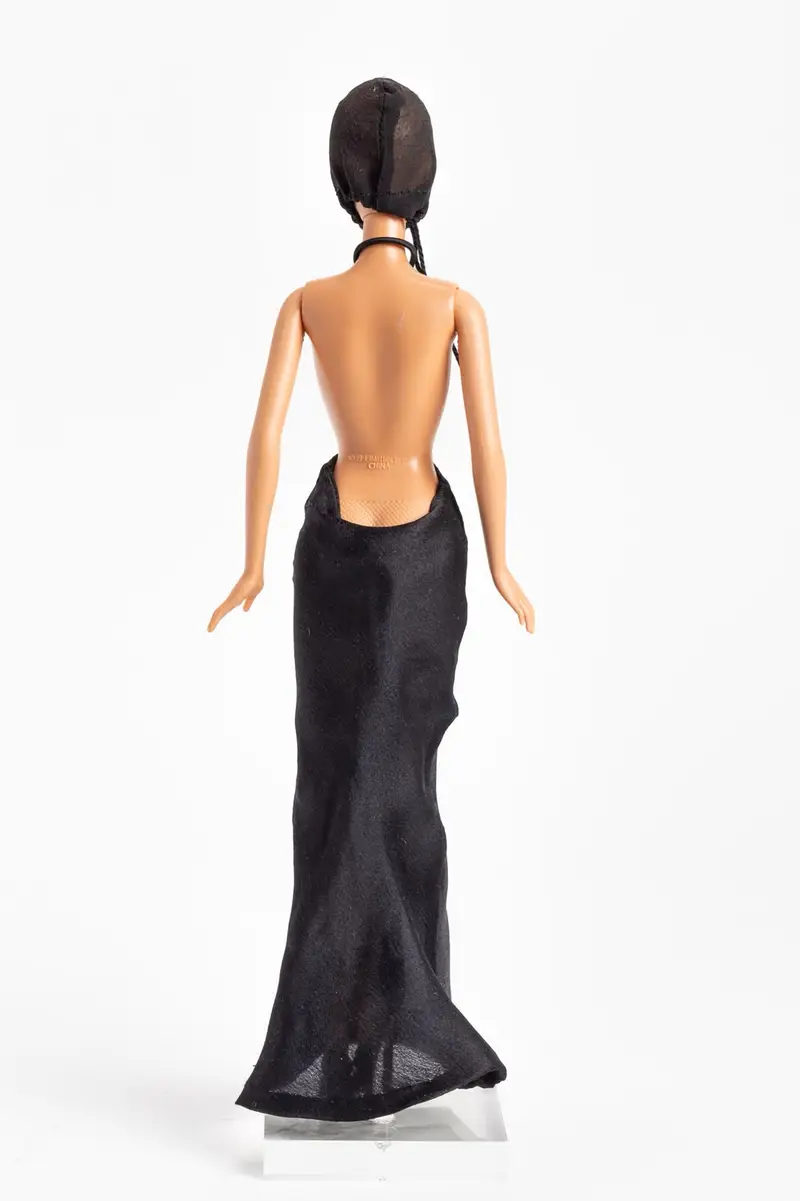
Years after the "Cour des miracles" show, Delfín's label was invited to take part in a project marking the 45th anniversary of Barbie's creation. The brand chose to dress the doll in one of its signature pieces, the "Gorka" design, which echoed the same formula as the controversial 2002 show.
Santamaría said the doll speaks to a particularly creative moment in Spanish fashion, when designers such as Delfín questioned the boundaries between fashion, art and visual culture. She added that the piece can also be read as a love letter on two fronts: to Gorka Postigo, the photographer who was Delfín's partner at the time, and to Bimba Bosé, who originally wore the "Gorka" design on the runway. Santamaría said the garment has gone on to rank alongside creations such as Sybilla's "España" dress among the landmark pieces of Spanish fashion.
What Delfín left behind
The Barbie wearing the "Gorka" design is on display at the Museo del Traje in Madrid, with the "Model of the Month" presentation taking place on Sundays at 12:30pm. Santamaría said the exhibit is not meant as a tribute but as a reflection on fashion and toys.
She said what remains is the imprint of a creative attitude from someone who helped establish the idea that fashion could engage with contemporary art, not as an institution, but as a way of understanding life.
What happens next
Next year will mark the tenth anniversary of David Delfín's death, and the Barbie display continues at the Museo del Traje on Sundays at 12:30pm.
Test yourself
What design does the Barbie at the Museo del Traje wear?
Who originally wore the "Gorka" design on the runway?
What controversial show did David Delfín present in 2002?
Where it happened
Madrid, Spain