Katy O'Malley, a policy officer from Liss in Hampshire, was diagnosed with Parkinson's disease at age 42 following persistent left big toe pain.
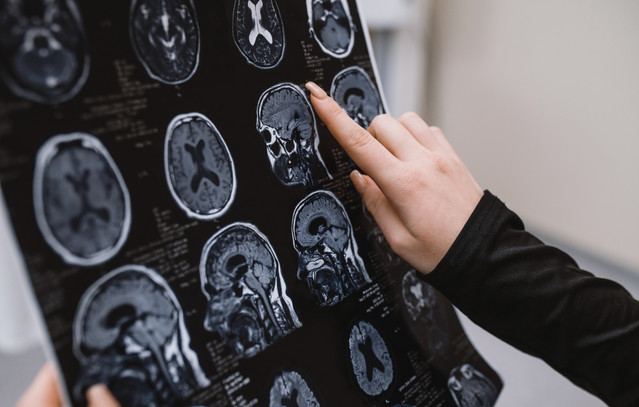
O'Malley initially attributed the discomfort to a routine running injury during an early morning jog, but detailed brain imaging 20 months later revealed a significant loss of dopamine-producing cells.
"It started to affect my big toe and the two toes next to it, but I just hoped it would sort itself out," O'Malley said.
When the discomfort persisted after six weeks, she consulted a physiotherapist who suspected a neuroma, a thickening of tissue around a foot nerve. A subsequent referral by her GP to an NHS orthopaedic consultant also failed to identify the underlying cause.
O'Malley, now 48, later developed a tremor in her left forefinger, prompting a further GP visit and a referral to a neurologist. During the examination, the specialist stated she did not believe the condition was benign, leading to MRI scans and six months of waiting for results.
"Hearing that was terrifying," O'Malley recalled. "You never want a neurologist to say that. She sent me for an MRI and other brain scans, and while waiting for the results, I thought I was dying of something."

By the time O'Malley returned to the neurologist in October 2020, her symptoms had worsened, and her left arm no longer swung when she walked. While the MRI scan showed no abnormalities, a DaTscan using radioactive dye confirmed a lack of dopamine-producing cells in key movement areas of the brain.
Specialists explained that her initial foot symptoms were caused by dystonia, a painful muscle spasm common in young-onset Parkinson's disease. O'Malley had researched her symptoms online prior to the consultation and felt initial relief at receiving an explanation, despite the overwhelming fear and uncertainty.
"My children were so young, that for two years I didn't tell them about the diagnosis," O'Malley said. "It was important for me to continue to live as normally as possible." Her children were aged ten and seven at the time of diagnosis.
Diagnosis challenges in young-onset cases
Parkinson's disease is a progressive neurological condition affecting approximately 166,000 people across the United Kingdom. The disease develops when misfolded protein accumulations destroy brain cells responsible for producing dopamine, a chemical transmitter that controls movement, motivation, and reward centres.
Main symptoms include tremors, muscle stiffness, and slow movement, alongside psychological effects such as anxiety, depression, and insomnia. Young-onset Parkinson's, defined as diagnosis before age 50, accounts for roughly 6 per cent of total cases.
A study published in the journal npj Parkinson's Disease reported that young-onset cases more than doubled globally between 1990 and 2021. Researchers suggest the increase may stem from improved diagnostic tools and stronger genetic links among younger patient groups.
Professor Roger Barker, a consultant neurologist at Cambridge University Hospitals NHS Foundation Trust, noted that young-onset Parkinson's exhibits distinct causes and treatment responses. "The younger you are when you get Parkinson's, the more likely it's caused by genetics rather than a mix of more complex genetic and environmental factors, which is the best explanation we have for Parkinson's seen in older people," Barker said.
Barker added that young patients face diagnostic delays because primary care physicians rarely check for Parkinson's in younger individuals. "If you're 35 and see your GP with an odd pain in your foot, a classic early sign, they're not going to think about checking for Parkinson's. Whereas if you're 75, they will," he explained.
Daily management and treatment side effects
To control her movement symptoms, O'Malley takes levodopa, a medication converted into dopamine by the body. While levodopa remains the most effective available drug, Professor Barker explained that treating younger patients presents specific clinical challenges.
"Often patients with young-onset Parkinson's don't want to take levodopa because over the years it leads to a side-effect of dyskinesia," Barker said, referring to involuntary muscle movements. "So they want to start the clock on developing these as late as possible."
Levodopa provides O'Malley with a temporary two-hour window during which her mobility improves sufficiently to go for a four-mile run or walk her dog, Simon. However, the side effect of dyskinesia causes involuntary movements that compromise her balance, increase fall risks, and create public embarrassment.
O'Malley lives in Liss with her husband Ben, 52, a market research director, and their children, now aged 15 and 13. She works three days a week from home and must plan all daily activities around medication windows to avoid being stranded when drug effects wear off.

In addition to movement difficulties, O'Malley experiences insomnia, slurred speech, and severe morning toe clawing that requires manual uncurling after waking. "Parkinson's now governs my life," O'Malley said. "But I'm very lucky to have supportive family and friends."
Clinical trials and the search for a cure
Research priorities for Parkinson's disease have increasingly shifted toward finding a cure, as highlighted in a recent paper in the Journal of Parkinson's Disease. An analysis by the charity Cure Parkinson's evaluated 444 global clinical trials conducted between 2015 and 2024, finding that half focused on drugs intended to slow, stop, or reverse disease progression.
A £26 million initiative across 40 NHS sites is accelerating cure research by testing multiple candidate drugs simultaneously within a single infrastructure. Dr Simon Stott, director of research at Cure Parkinson's, explained that traditional clinical trials test single drugs against placebos individually.
"It's like building a football stadium to play a single match and then dismantling it, only to do it again for the next one," Stott said. "So this is a very different approach which is already proving successful for cancer drug research, for instance."
Professor Barker highlighted that the strong genetic contribution in young-onset cases makes the subgroup ideally suited for precision therapies, including direct gene modification in the brain. O'Malley sought out clinical trial opportunities through Cure Parkinson's to regain a sense of active control.
Her first trial evaluated exenatide, a GLP-1 receptor agonist commonly prescribed for type-2 diabetes that had shown potential to improve motor function and slow disease progression. Although that two-year trial did not reach its hoped-for conclusion, O'Malley subsequently applied for three additional drug trials, participated in psychological studies, and donated blood samples for research into inherited Parkinson's.
O'Malley carries both LRRK2 and GBA1 gene variants, giving each of her children a 75 per cent chance of carrying at least one variant. Children are not tested during childhood but may choose to undergo genetic testing upon reaching adulthood.
"I want to be able to look my children in the eye and say that I've done everything I can to help further research," O'Malley said. Information regarding active clinical trials can be found at cureparkinsons.org.uk.