

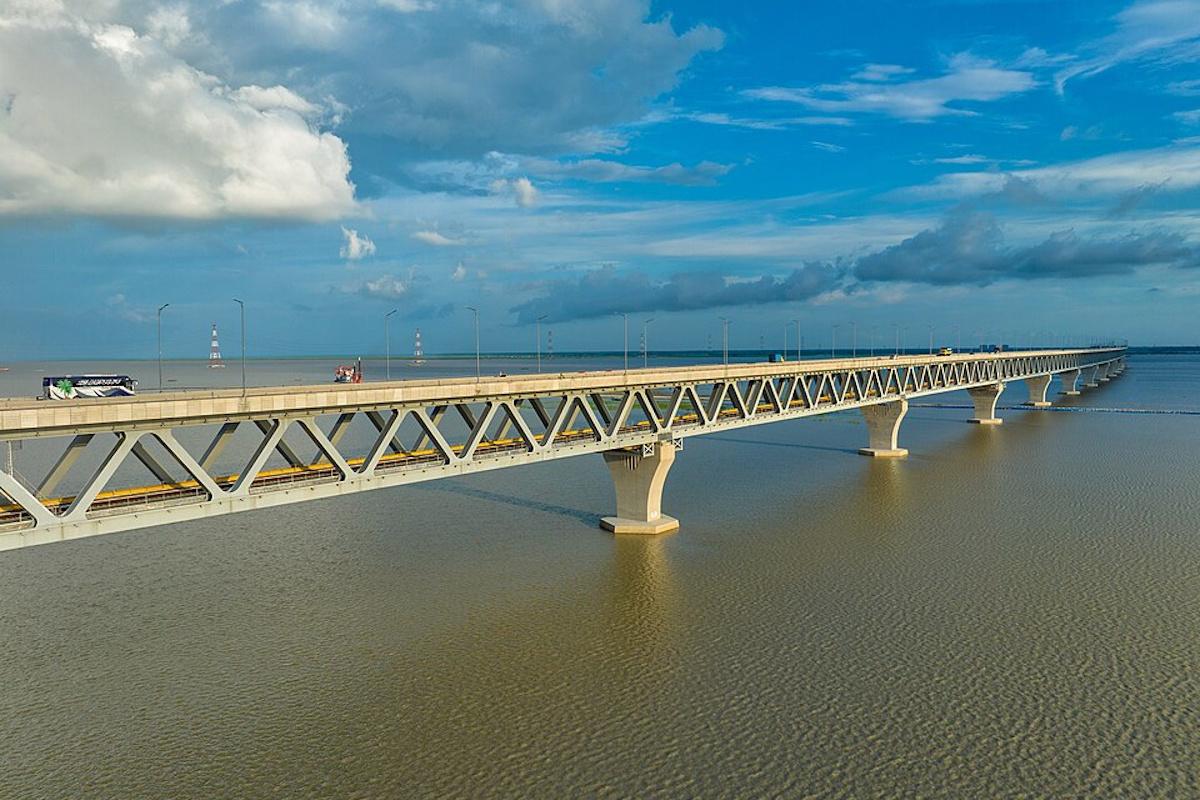
Italy has hit renewed delays on its long-planned project to build the world's longest suspension bridge across the Strait of Messina, with no construction work underway despite promises that building would begin this summer. Transport Minister Matteo Salvini made the 13.5 billion euro infrastructure project a central priority in 2022, aiming to create a fixed link between Sicily and the Italian mainland. However, in Torre Faro in northeastern Sicily, where the island end of the structure is designated to stand, there are still no physical signs of initial development.
Under official plans, the proposed suspension bridge will connect Torre Faro with Villa San Giovanni in Calabria, spanning a central distance of 3.3 kilometres. The massive structure is designed to carry six lanes of vehicular traffic, two service lanes, and two railway tracks. According to reports by The Guardian, no suspension bridge of comparable scale currently exists anywhere in the world. Italian authorities have repeatedly pushed back the timetable for starting construction, moving the initial target date from 2024 to early 2025, then to early 2026, before Salvini declared in February that ground would break in the summer.
Despite official ambitions, leading engineers, seismologists, and environmental experts interviewed by reporters have raised severe doubts about whether the bridge can be operated safely. Antonino Risitano, the former dean of the engineering faculty at the University of Catania, stated that modern technology is incapable of properly testing the structural integrity and reliability of suspension cables of such length. Risitano said that if engineers cannot test the main suspension cables, the structure cannot be built, adding that the current design remains technically unfeasible under existing scientific knowledge.
Engineering and Seismic Safety Debates
Webuild, the Italian construction group contracted to erect the bridge, stated that technical objections regarding cable reliability were previously examined and refuted in a 2025 technical report. Nonetheless, safety concerns remain central to the ongoing dispute surrounding the project. Geologist Carlo Doglioni noted that scientists have recorded more than 5,000 low-magnitude earthquakes within a 40-kilometre radius of the proposed construction site over the past 40 years. Geologists also note that the island of Sicily is gradually drifting away from the Italian mainland, introducing long-term tectonic movement into the bridge foundation area.
Proponents of the project maintain that the bridge is engineered for extreme environmental conditions and is built to withstand earthquakes up to a magnitude of 7.1. However, Italy's High Council of Public Works stated in early August that implementation can only proceed after developers satisfy more than 100 specific technical requirements. These stipulations focus heavily on mitigating seismic hazards and completing rigorous physical testing of primary building materials before any major structural work commences.
Environmental Risks and Local Disruption
Environmental groups have launched strong opposition against the project, warning that the huge overhead structure could disrupt a vital migration corridor used by marine mammals and wild birds. Conservation organisations warned that millions of birds fly through the narrow airspace above the strait during just six weeks of spring migration, putting avian populations at risk from tall cable towers and heavy transit infrastructure.
Local residents facing the expropriation of more than 400 real estate properties in Torre Faro fear that initial earthworks will permanently degrade the coastal area even if the bridge itself is never completed. Activist Mariella Valbruzzi, who has campaigned against the development for over a decade, said her primary fear is not limited to the finalized bridge design. Valbruzzi said she is deeply concerned that construction work on surrounding roads and viaducts will begin regardless, leaving the protected local landscape buried under concrete whether the bridge is finished or not.
Two Millennia of Unfinished Infrastructure
The concept of bridging the Strait of Messina dates back to classical antiquity. According to records by the Roman author Pliny the Elder, Roman military commanders constructed a temporary floating bridge made of boats and wooden barrels in 251 BC. The improvised crossing allowed Roman forces to transport 140 war elephants captured from Carthaginian troops during the First Punic War. Over two millennia later, Italian leaders including Benito Mussolini and Silvio Berlusconi championed modern bridge designs, though technical hurdles and political debates consistently stalled development.
Global Projects Repurposing Historical Sites
In other international developments regarding landmark infrastructure and tourism, Bahrain established a novel underwater attraction in 2019 by submerging a decommissioned Boeing 747 aircraft in the Persian Gulf. The retired airliner was decontaminated of all environmental pollutants and sunk to a depth of 20 to 22 metres to serve as the centerpiece of the Dive Bahrain underwater park. The submerged aircraft now functions as an artificial reef supporting fish populations and coral growth, serving as both a research site for marine oceanographers and a symbol of national cultural heritage.
Meanwhile in Great Britain, Drake's Island in Plymouth Sound has been placed on the property market by London estate agency Carter Jonas. The historic island features 400 years of military fortifications and holds existing planning permission for redevelopment into a 43-room luxury hotel. Property owner Morgan Phillips stated that he hopes to sell the site to a new investor capable of realizing its commercial potential while preserving its rich historical heritage.


