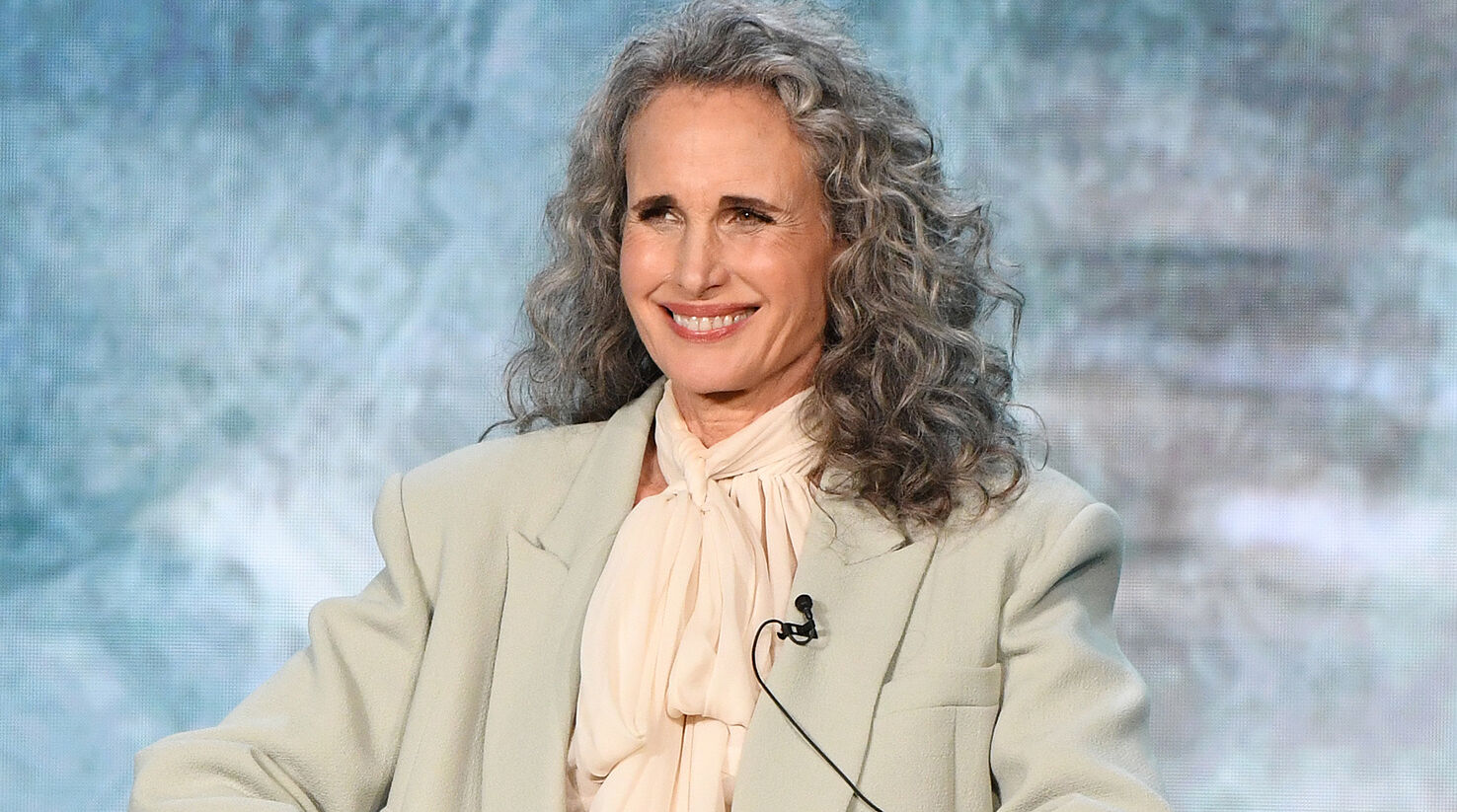
Spanish actress Toni Acosta recently decided to stop dyeing her curly hair and let her natural gray grow out, joining a wave of women including Andie MacDowell, Ángela Molina and Salma Hayek who wear gray curls as a signature look. Hairdresser Conchi Arias, a curly hair specialist, says the key to making gray curls look elegant and luminous is integrating the white strands rather than hiding them.
Arias said she loves the image of MacDowell, whose silver curls frame her face and give her incredible strength. She also pointed to Molina's long, natural, movement-filled hair, where different tones of gray and white are part of her beauty, and praised Acosta's freshness, saying it represents living maturity without giving up feeling attractive, modern and feminine.
For Arias, these women share one message: that age should not determine how a woman wears her hair.
The secret is integrating grays, not hiding them
Arias said the first thing a woman with curly hair should do when gray strands appear is notice where they are growing. Some women develop grays around the face, others at the temples, and others get a mix of dark and white hair throughout, she said, adding that this natural distribution can become an advantage.
In curly hair, grays can also create striking reflections. Each curl faces a different direction, so when light hits it, it produces nuances that add depth and movement, Arias explained. Before deciding to dye or lighten gray hair, she recommends studying how to make the most of it.
Negative highlights help curls keep their grays
One of the most effective techniques for leaving grays in curly hair is "mechas en negativo," or negative highlights, Arias said. Rather than continually lightening the hair, the technique works strategically on some darker strands to add depth and help the white hairs blend in more harmoniously.
Arias said she likes negative highlights because they let a stylist play with light and shadow without turning the whole head a uniform gray. The result can look especially elegant on wavy and curly hair, where different tones naturally mix, she said, adding that the whole head does not need to be bleached to achieve pretty-looking grays.
Why full bleaching can be risky for curls
Many women who stop dyeing their hair assume the solution is to bleach the entire head to match the grays. Arias warned that curly hair needs special care here, since overly aggressive bleaching can alter the shape of the curl, its elasticity and its ability to spring back.
There is no point achieving a pretty color if the hair gets ruined along the way, Arias said. She recommends a gradual transition that works with the grays already present, adding nuance only when necessary and keeping the look flattering throughout the process.
Mixing tones instead of going fully white
Hair does not need to turn completely white overnight, Arias said. The beauty, in cases like MacDowell and Molina, lies precisely in mixing grays, whites and darker tones, which gives the hair real depth, while the natural volume of the curls keeps the look elegant and fresh, she said. Women do not need to change their whole style when grays appear, Arias added, since they can keep their curls and personality and simply learn to make more of them.
Getting shine without frizz
With age, some women notice their curly hair grows rougher, frizzes more easily or loses some of its former softness, and gray hair needs shine for its white and silver tones to look their best. Arias said she focuses on shampoo, conditioner and a very hydrating leave-in to keep the hair surface smooth and well lubricated, adding a few drops of dry oil when the hair fiber is especially rough.
Keeping the hair hydrated and the cuticle lubricated helps the surface reflect light better, Arias said, describing it as a change she loves: white curls that once looked dull start to look juicier, more defined and more luminous.
Dealing with yellowing grays
Yellowing is a common problem that can take away from silvery tones, Arias said. Sun exposure, excessive heat and certain residues can trigger yellowish tints, so keeping the hair clean and using the right products matters.
When yellowing needs correcting, a violet toner can neutralize the tint, Arias said, but she cautioned against overusing it, since not all grays look good ending up blue-gray or artificial. She said she prefers keeping the hair's natural nuances and luminosity, adding that grays do not have to be snow white to look elegant.
Why the right haircut still matters
Arias also stressed that haircuts matter, particularly once hair starts losing density. She recommends studying how volume is distributed and where more hair needs to be kept, warning that heavy layering is not always wise on thinner hair since it can leave the ends looking sparse. A well-balanced cut that respects the curls' natural movement can make the hair look far better, she said.
Summing up, Arias said there is nothing more flattering than curly hair showing different tones of gray, white and silver, with each curl reflecting the light in its own way.
Test yourself
Who is the curly hair specialist quoted throughout the article?
What technique does Arias recommend for integrating grays into curly hair?
What does Arias suggest using, in moderation, to fix yellowing grays?
Have your say
Would you consider letting your natural gray hair grow in?