

A missing hammer in Suffolk, England, led to the discovery of one of the richest hoards of Roman treasure ever found in Britain, after farmer Peter Whatling asked a friend for help searching for the lost tool in a field in November 1992.
Whatling turned to Eric Lawes, a former gardener who owned a metal detector, to help him track down the hammer. The detector signalled almost immediately, but when Lawes began digging, he uncovered gold coins and silver spoons instead of the missing tool.
Lawes stopped digging after only a few spadefuls of earth and reported the find to police and local archaeologists. That decision allowed experts to examine the hoard in the exact spot where it had lain undisturbed for nearly 1,600 years.
What was buried in the field
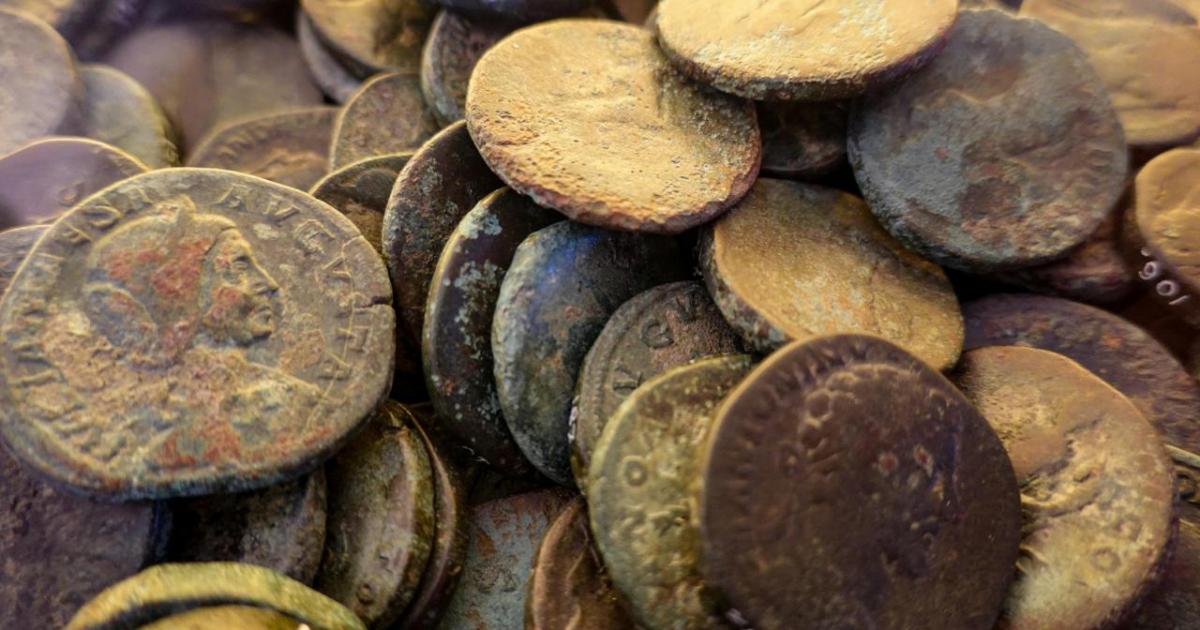
Archaeologists went on to recover 14,865 gold, silver and bronze coins, along with about 200 gold and silver objects. Among the finds were a gold body chain set with amethysts and garnets, 19 bracelets and four silver pepper pots.
Part of the hoard had been stored inside an oak chest containing smaller wooden boxes. Some of the silver items were found wrapped in linen and packed on wheat straw.
The latest coins in the hoard date from after the year 407, a period when Roman authority in Britain was collapsing. Researchers still do not know who buried the treasure or why its owner never returned to claim it.
The following year, the field was ploughed again, turning up four more gold coins and 81 silver coins from the same spot, which were added to the overall total.
A reward worth millions
In 1993, the hoard was officially declared treasure under British law at the time and valued at £1.75 million. As the person who found it, Eric Lawes received the reward.
Under the law, Lawes was not required to share the payout with Whatling, whose lost hammer had started the search. He chose to split the reward with him anyway. The hammer itself was eventually found too, and it now sits in a museum alongside the treasure it helped uncover.
The hoard is regarded today as the richest collection of Roman-era treasure ever discovered in Britain.


