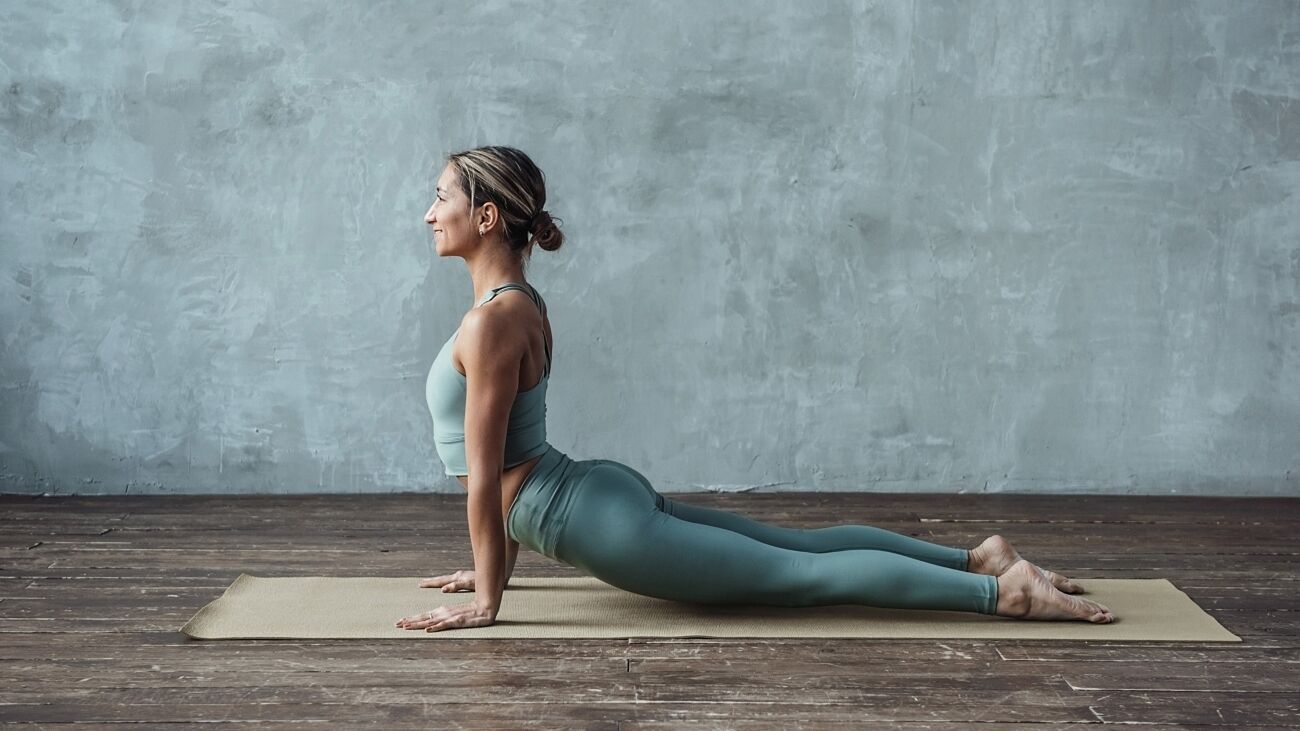
Javier Abreu, a trainer who specialises in high-intensity training, is recommending a Pilates stretch called the half swan for people who finish the workday with rounded shoulders after hours at a computer.
Ending the day in a hunched posture, with the shoulders pulled forward, is common among desk workers, according to Abreu. To correct it, he suggests the half swan: lying face down, lifting the chest slightly, and working the muscles between the shoulder blades and along the spine.
Abreu said most people have limited mobility in the upper back, known as the thoracic area, and compensate by over-arching the lower back, or lumbar area, instead. He advises starting with only a short lift of the chest rather than straining for height.
To begin, he recommends lying face down on a mat with the legs extended and spaced hip-width apart, the insteps resting on the floor, and the hands placed beside the shoulders. From there, the legs stay on the mat while the chest lifts just a few centimetres. Abreu said the aim is not to push up toward the ceiling but to lengthen the crown of the head forward and slide the chest toward the opposite wall, as if trying to make the body longer along the mat.
How high to lift the chest
With the forearms resting on the mat and the elbows close to the ribs, Abreu advises letting the shoulders drop away from the ears. Before lifting the chest, he said to gently press the pubic bone into the mat and draw the abdomen in slightly, as though creating a small hollow beneath the navel.
To find where to look, he suggests locating the far edge of the mat. The exercise should begin with the forehead almost touching the mat, with the gaze shifting toward the far end of the mat as the chest rises. Abreu said the head should remain a natural extension of the back throughout the movement.
If the lower back feels overly strained when the chest lifts, Abreu recommends rising only half as high on the next repetition, and stopping altogether if there is any pinching sensation. For anyone whose lower back already hurt before lying down, he suggests starting with simpler exercises before attempting the half swan.
The two-second test
Once the chest is lifted, Abreu advises trying to raise the palms just one or two centimetres off the floor and holding that position for two seconds. If the height can be held without collapsing, he said, the back is doing the work.
If the chest drops as soon as the hands lift, it means the exercise was being powered by the arms rather than the back. To fix this, Abreu suggests lifting the chest a little less on the next repetition and checking whether that height can be sustained.
When to lift a little higher
For the first sessions, Abreu recommends two sets of six to eight slow, deliberate repetitions, done two or three days a week. He suggests taking about two seconds to rise, pausing briefly at the top, and counting three seconds to lower back down, while breathing continuously through the movement, including while the chest is held up.
The hand-lift test should be saved for the end of the set. If it can be done without hunching the shoulders, and the effort is felt mainly between the shoulder blades and along the middle of the back, Abreu said that is the signal to lift the chest a bit higher in the next session.
Test yourself
What posture problem is the half swan stretch meant to correct?
How many sets and repetitions does Javier Abreu recommend for beginners?
What does the two-second hand-lift test reveal?
Have your say
Do you do stretches or exercises to counter the effects of sitting at a computer all day?