Jaime Núñez, technical director of Abada Club, a wellness club in Madrid's Salamanca neighbourhood, and a personal trainer and physical conditioning technician, says the real fix for painful knees is not choosing between cycling and running. It is building strength in the quadriceps, glutes and hip.
Núñez often starts women over 45 with sensitive knees on indoor cycling, since running strikes the knee with several times the body's weight on every stride, repeated thousands of times in a single session, while a bike seat bears the load with far less force and no impact at all.
But he is clear that the choice between the two is not the real solution. "Neither one is the solution on its own," he said, according to Sandra Hernández's report. A woman with strong legs can return to running without pain, he said, while one with weak legs can feel discomfort even on a bike.
Núñez also pushed back on a common assumption: well-paced running does not wear down a healthy knee, and moderate impact is actually good for bone and cartilage. For anyone with discomfort, he recommends combining cycling with strength work and, later on, gradually returning to running if they want to.
Before choosing a workout
Before recommending anything, Núñez first asks where the pain is, when it happens and how long it has been going on. Pain at the front of the knee when climbing stairs or after sitting for a long time usually comes from the kneecap, he said, while pain deeper inside accompanied by swelling can point to osteoarthritis or a meniscus problem.
He also wants to know whether there is already a medical diagnosis, what activity the person did before, whether their weight has changed, and what their goal is. If someone has intense pain, swelling or locking in the knee, Núñez said the first step should always be seeing a doctor or physiotherapist, not adjusting a training plan.
When cycling hurts the knee
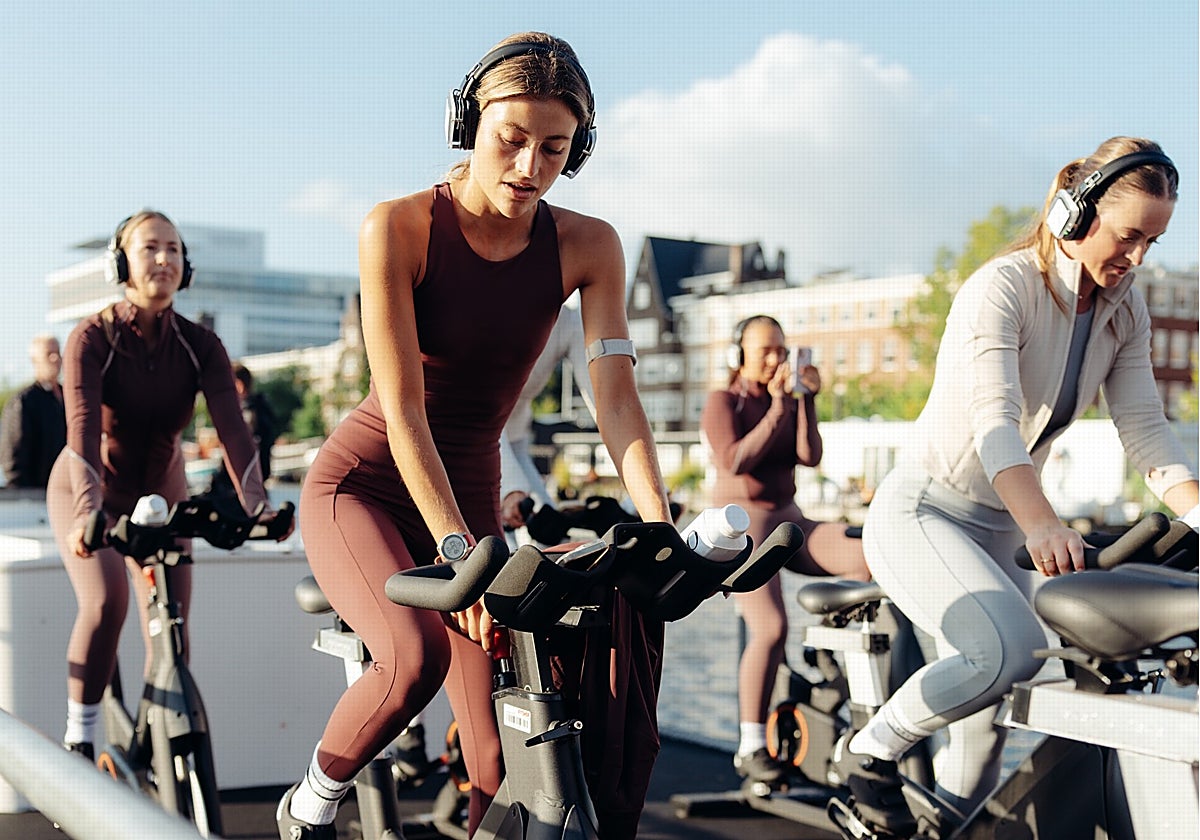
Spinning can punish the knee too, according to Núñez. The most common causes are a saddle set too low, which forces excessive knee bend and loads the kneecap, or set too high, which strains the back of the knee.
Other culprits include heavy resistance at low cadence, such as simulating a hill climb at 50 to 60 pedal strokes a minute for long stretches, knees that splay in or out while pedalling, and spending too much time standing on the pedals.
To set up a bike correctly, Núñez said the knee should be only slightly bent, between 25 and 35 degrees, when the pedal is at its lowest point, and never fully straight. The most frequent mistake he sees in class, he said, is skipping that check altogether: riders hop on the same bike as the week before, leave the saddle wherever the last person set it, and crank up the resistance to "burn more."
Running while protecting the knees
Among runners, Núñez said the most common errors are ramping up distance or pace too quickly and doing no strength training at all. Overly long strides, with the heel landing well ahead of the body, also brake each step and load the knee.
Whether on a bike or on a run, Núñez pointed to one error shared by both groups: pushing through pain and assuming it will pass on its own.
For runners who have kept at it for years and do not want to stop, Núñez suggests training smarter rather than quitting. He recommends two strength sessions a week, slightly shorter and quicker steps, since raising cadence by 5 to 10 percent cuts the load on the knee, running on dirt paths when possible, replacing worn-out shoes on time, and never increasing weekly mileage by more than 10 percent.
Combining cycling and running
According to Núñez, mixing in indoor cycling makes sense when soreness lasts more than 24 to 48 hours after a run, when someone is training for a race and needs volume without added impact, or when pain is forcing changes to running form.
He said that swapping one or two weekly runs for cycling is usually enough to maintain fitness while giving the knees a rest.
Test yourself
According to Jaime Núñez, what truly protects the knee?
What knee angle does Núñez recommend at the bottom of the pedal stroke on a bike?
How many strength sessions a week does Núñez suggest for runners who want to keep running?
Have your say
Which do you rely on most to stay fit while looking after your knees?
Where it happened
Madrid, Spain