

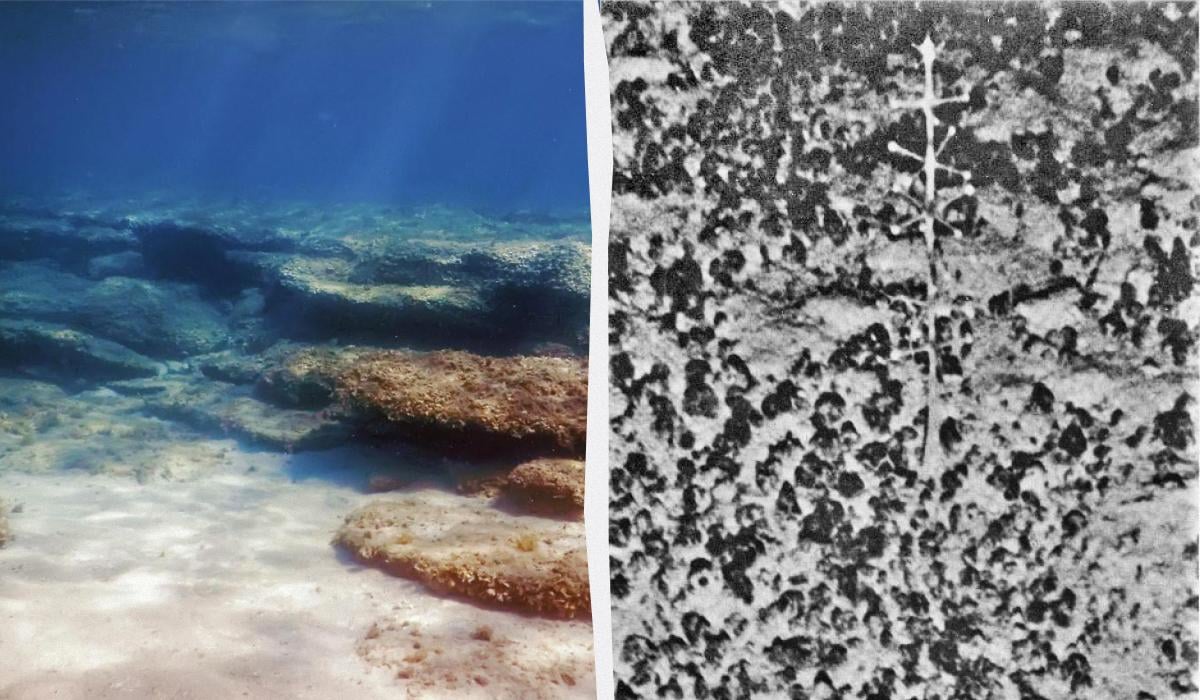
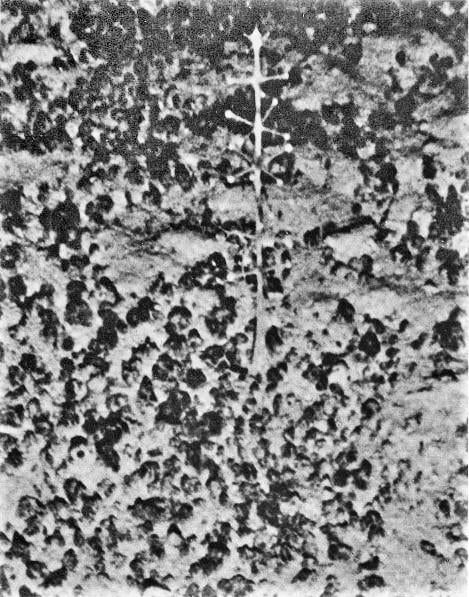
A mysterious antenna-like object photographed on the Antarctic seabed by the research vessel Eltanin in 1964 was actually a carnivorous sea sponge.
Popular Mechanics reported that the enigma surrounding the symmetrical structure was resolved after researchers linked the photograph to a marine species documented in the late 19th century.
The black-and-white image was taken during a 1964 oceanographic mission roughly 1,000 miles south of Cape Horn in Chile. It captured an object featuring twelve rays radiating from a central stem, each ending in a small sphere.
Its unusual symmetry led expedition scientists to question whether the structure could be natural. Thomas Hopkins, a senior marine biologist on the expedition, told the New Zealand Herald at the time that no light reached such ocean depths, making photosynthesis impossible and preventing plant life.
Hopkins noted that if the object were a strange coral formation, nobody on board the research vessel had ever seen anything like it. He added that while he was reluctant to claim it was man-made because of the difficulty of placing it on the sea floor, the structure was remarkably symmetrical, with branches positioned at 90-degree angles to one another.
Alien theories and cold war speculation
The object soon gained widespread fame among UFO enthusiasts as the Eltanin antenna. Speculation grew that the structure was part of a secret military operation or an extraterrestrial monitoring device planted on the ocean bed.
A 1968 article remarked that one involuntarily felt anxiety knowing that someone, whether aliens or a secret terrestrial organisation, knew far more about Earth's measurements and physical phenomena than leading scientists did.
Scientific discovery of Chondrocladia concrescens
The mystery was eventually dispelled when marine biologists identified the object as Chondrocladia concrescens, a species of carnivorous sea sponge. Swiss-American marine biologist Alexander Agassiz had first described the organism in the late 19th century.
Agassiz recorded the species during an Antarctic expedition aboard the research ship Blake. He wrote that the specimen featured a long stem ending in branched roots deeply embedded in mud, with nodes along the stem carrying four to six club-shaped appendages.
Deep-sea exploration has routinely revealed unusual structures on the ocean floor. Researchers previously discovered the Lost City hydrothermal field, an underwater site located more than 700 metres below the surface that features a jagged array of tall carbonate formations.


