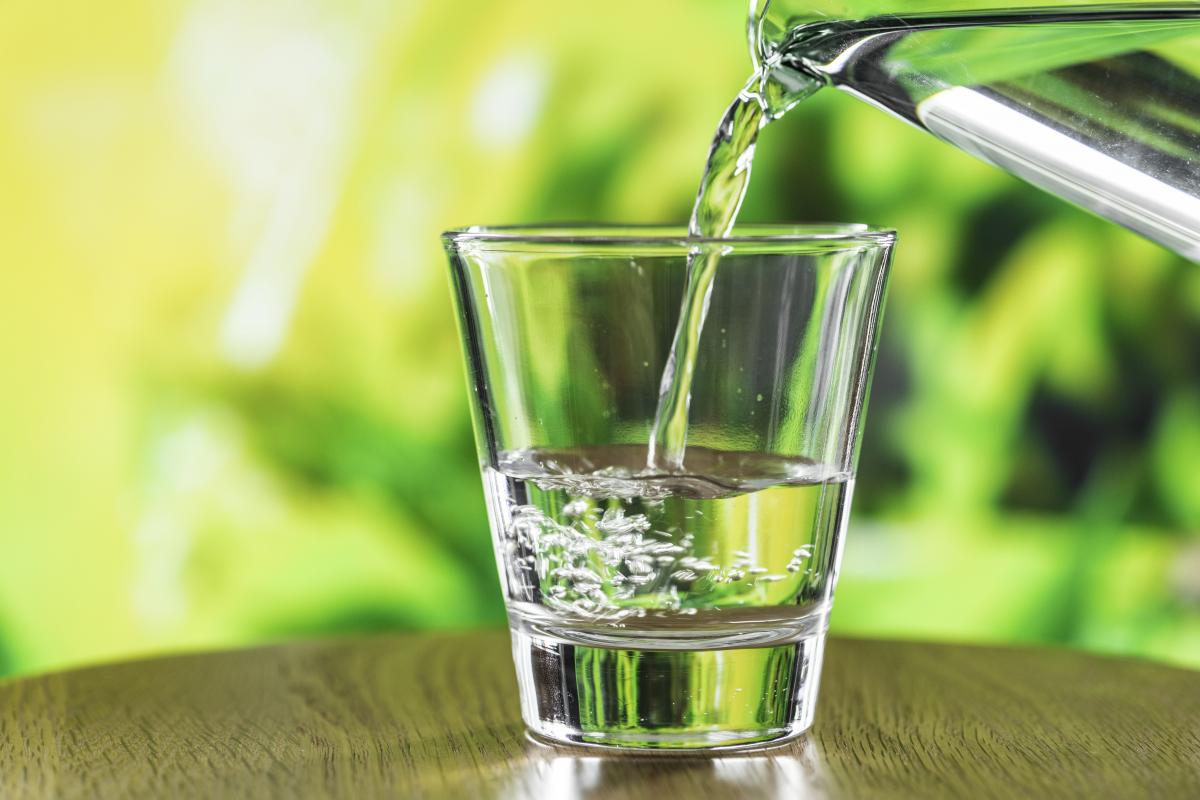
Physiologist Heinz Valtin from Dartmouth Medical School found no reliable scientific evidence supporting the popular health rule of drinking eight glasses of water a day, Science Blog reported.
Valtin examined scientific literature and research databases, while also consulting specialized researchers, before concluding that the requirement to consume eight glasses of plain water daily has no backing in published data.
Dartmouth Medical School, based in Hanover, New Hampshire, is an Ivy League medical institution known for its biomedical research and clinical studies.
The widespread advice likely originated from a recommendation published in 1945 by the United States Food and Nutrition Board. The document stated that an adult needs approximately 2.5 liters of water per day, an amount that roughly corresponds to eight glasses.
However, a crucial sentence immediately followed in the original guidelines, clarifying that a significant portion of the required fluid is already absorbed through food. That key detail was lost in subsequent retellings, transforming a general guideline for total fluid intake into a strict mandate for pure drinking water.
The Food and Nutrition Board operates under the National Academies, a private non-profit organization in Washington that provides scientific advice on health and nutrition policy.
Daily fluid needs vary widely
Official health guidelines do not establish a single standard volume of plain water for every individual. Twenty-two years ago, experts at the U.S. National Academies noted that most healthy people obtain the necessary amount of fluid by relying primarily on their sense of thirst.
General benchmarks for total daily intake stand at about 3.7 liters for men and 2.7 liters for women. These totals include all beverages as well as moisture contained in food products, with estimates suggesting that roughly one-fifth of daily fluid enters the body through food.
A 2022 study underscored how significantly individual fluid needs differ by analyzing 5,604 people across 23 countries, with participants ranging in age from eight days to 96 years.
The research revealed that daily water turnover ranges from about one liter to more than ten liters per person. Water turnover refers to the total volume of fluid the body exchanges each day, a process influenced by body size, physical activity, air temperature, humidity, altitude, and pregnancy.
Because of these varying physiological factors, researchers emphasized that no single universal figure fits every person.
Health claims lack evidence
The idea of constantly consuming a fixed volume of water can be useless and in certain situations dangerous, according to the report.
Proponents of the eight-glass rule frequently attribute additional health benefits to heavy water consumption, alleging that it flushes toxins, improves skin condition, reduces headaches, and aids weight loss.
However, University of Pennsylvania researchers Dan Negoianu and Stanley Goldfarb analyzed available clinical data in 2008 and found no scientific evidence supporting any of those four claims.
The University of Pennsylvania, located in Philadelphia, is an Ivy League research institution with a prominent medical faculty specializing in clinical studies and metabolic health.
Why the myth persists
Despite the absence of supporting data, the eight-glass rule remains popular because a fixed number is far more convenient than human physiology. Eight glasses are easy to count, set as daily phone reminders, or track as personal goals.
In contrast, the human body relies on thirst as its primary indicator, offering a natural mechanism that is less rigid than a set daily drinking target.