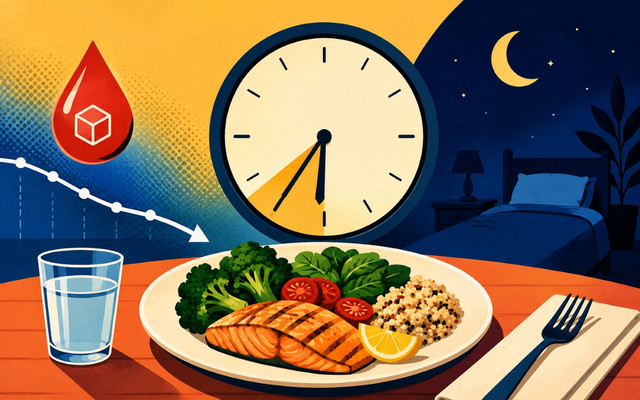
Eating dinner at least two hours before sleep significantly improves blood sugar control and metabolic health in adults, according to scientific research.
A study evaluating healthy adults found that consuming the last large meal of the day at 6:00 p.m. improved 24-hour blood glucose control and morning lipid metabolism compared to eating the exact same meal at 9:00 p.m.
Researchers also established that dining at 10:00 p.m. resulted in higher nighttime blood sugar levels, elevated insulin concentrations, and lower fatty acid oxidation in healthy adults compared to eating at 6:00 p.m.
Impact of Meal Timing on Glucose Control
Dietary guidance traditionally emphasizes meal composition, focusing on total carbohydrate intake, sugar content, and overall calorie counts. However, scientific findings indicate that meal timing acts as a distinct and powerful factor in metabolic regulation, as identical food intake produces markedly different blood glucose responses depending on whether it is consumed early or late in the evening.
This variation stems from the body's internal 24-hour biological clock, known as the circadian rhythm, which governs physiological functions across the day and night. Cellular sensitivity to insulin and the body's capacity to clear glucose from the bloodstream reach their peak during breakfast and steadily diminish as evening approaches.
The body's internal clock exerts direct control over key metabolic processes, including pancreatic insulin secretion, tissue glucose uptake, hepatic glucose production, and insulin sensitivity. When eating schedules repeatedly conflict with these natural biological rhythms, the body's ability to maintain healthy glucose levels can suffer long-term impairment.
Night Work and Long-Term Diabetes Risk
To measure these metabolic changes, researchers fitted healthy adult participants with continuous glucose monitoring devices, wearable sensors that track glucose concentrations continuously over 24-hour periods. The findings underscored specific health risks for individuals who regularly consume food late at night, such as night shift workers, who face a heightened risk of developing type 2 diabetes due to ongoing circadian misalignment.
Type 2 diabetes is a chronic metabolic disorder in which the body becomes resistant to insulin or fails to produce sufficient amounts, leading to persistently elevated blood sugar levels. Lipid metabolism and fatty acid oxidation refer to the biochemical pathways by which body tissues break down fatty acids for energy, processes that slow down when food is digested during nocturnal biological rest periods.
Although researchers note that no single dining schedule fits every individual, avoiding food intake within two hours of sleep helps synchronize eating patterns with natural circadian cycles. Evidence suggests that consuming the first meal before 8:00 a.m. and finishing the final meal before 7:00 p.m. may reduce the long-term risk of developing diabetes.