Hundreds of residents in Ceuta marched through the streets on Friday to demand immediate action from Prime Minister Pedro Sánchez following a massive border entry.
The Guardia Civil estimates that between 70 and 100 migrants are now returning voluntarily to Morocco each day as civil mobilisations intensify across the city.
Alongside the voluntary departures, Spanish authorities reported that they recently expelled 12 North African migrants who allegedly threw stones at a military vehicle during a Thursday night altercation that left four soldiers injured.
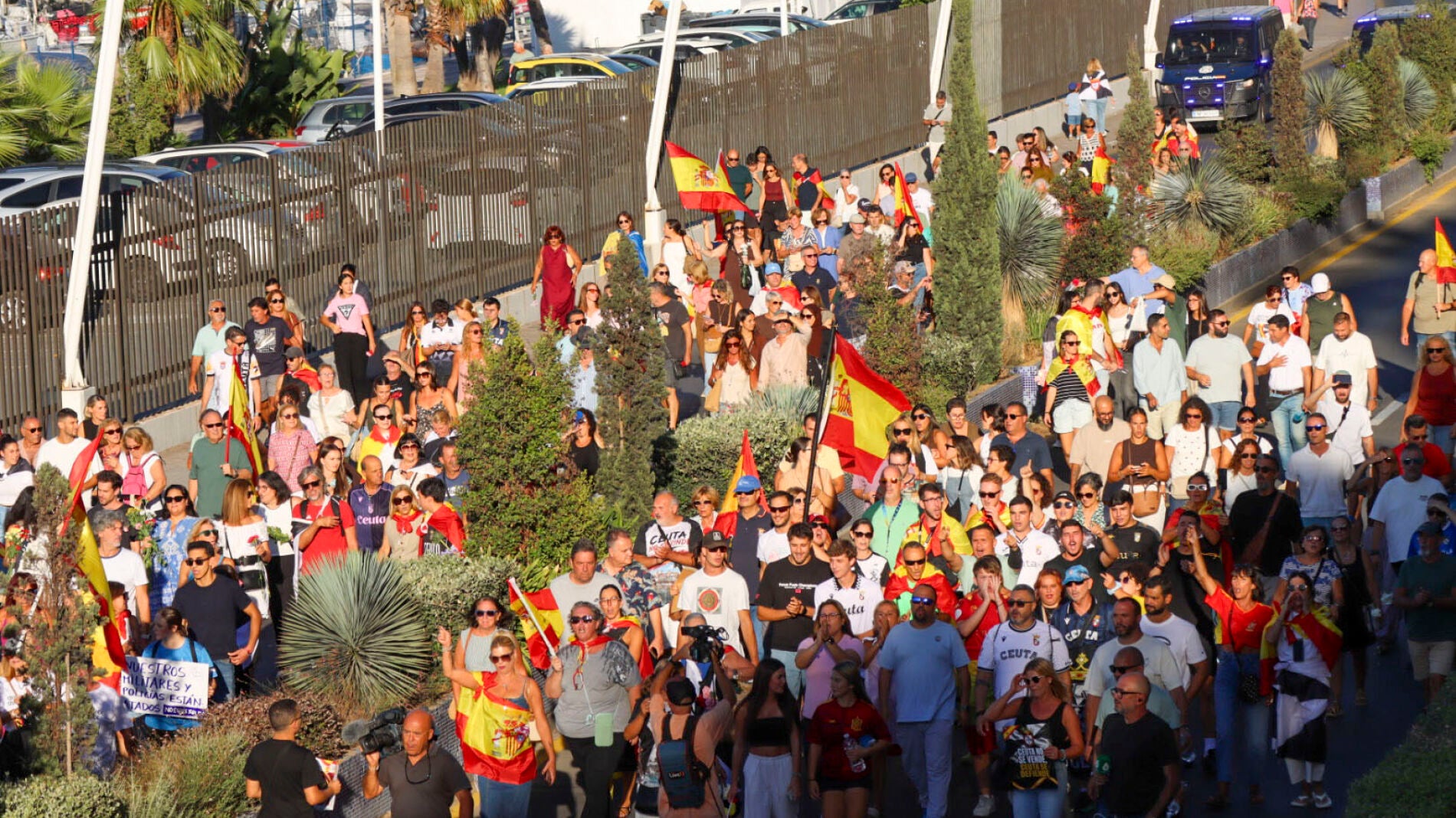
Peaceful Demonstrations at Kings Square
Friday’s demonstration saw citizens gather outside the Government Delegation in Plaza de los Reyes holding red carnations to highlight the peaceful character of their movement. Organisers chose to march to Benítez beach instead of Trampolín beach, where many migrants remain settled, following deliberations aimed at preventing confrontations and avoiding accusations of racism.
Ceuta is a Spanish autonomous city situated on the North African coast, sharing a land border with Morocco. The enclave, which serves as an outer frontier of the European Union, has been under severe strain since an estimated 72,000 migrants crossed into the city from Morocco.
The march followed earlier violent episodes involving minority groups that attacked migrants at Trampolín beach and set fire to their beach umbrellas, actions that drew widespread condemnation across the political spectrum. During Friday’s demonstration, participants chanted slogans declaring that Ceuta is not for sale and that the city defends itself.
Postponed Festivals and Rising Public Concern
The ongoing strain has disrupted traditional local life across the enclave. City authorities indefinitely suspended the annual local fair that was scheduled to begin on August 1 for patron saint celebrations, while the municipal government confirmed that the traditional Medieval Market usually held every September at the Royal Walls has been postponed.
Local residents have reported growing anxiety in public spaces as tension persists. Juan Ruiz, a resident of Ceuta, noted that many citizens have begun carrying pepper spray in the streets, describing the situation as extraordinary for a Spanish city.
Political Consensus on Border Emergency
Ceuta President Juan Jesús Vivas obtained unanimous support across the city Assembly on Friday, uniting all political groups including the Spanish Socialist Workers’ Party and Vox. The Assembly approved an institutional declaration warning that the city is at a breaking point and facing high risks to public safety, healthcare services, employment, and national security.
Officials in Vivas’ administration stated that government apathy has left the city without clear deadlines or visible improvements nearly a month after the initial border entry. The institutional resolution called on the national government to immediately execute the legal return of individuals who participated in the mass entry, reinforce security forces, repair economic damage to businesses and workers, and guarantee border inviolability.
In Madrid, the main opposition Popular Party announced plans to introduce legislation in the Congress of Deputies to provide legal protection for military personnel deployed in Ceuta, arguing that current regulations leave soldiers unable to intervene effectively during street altercations.