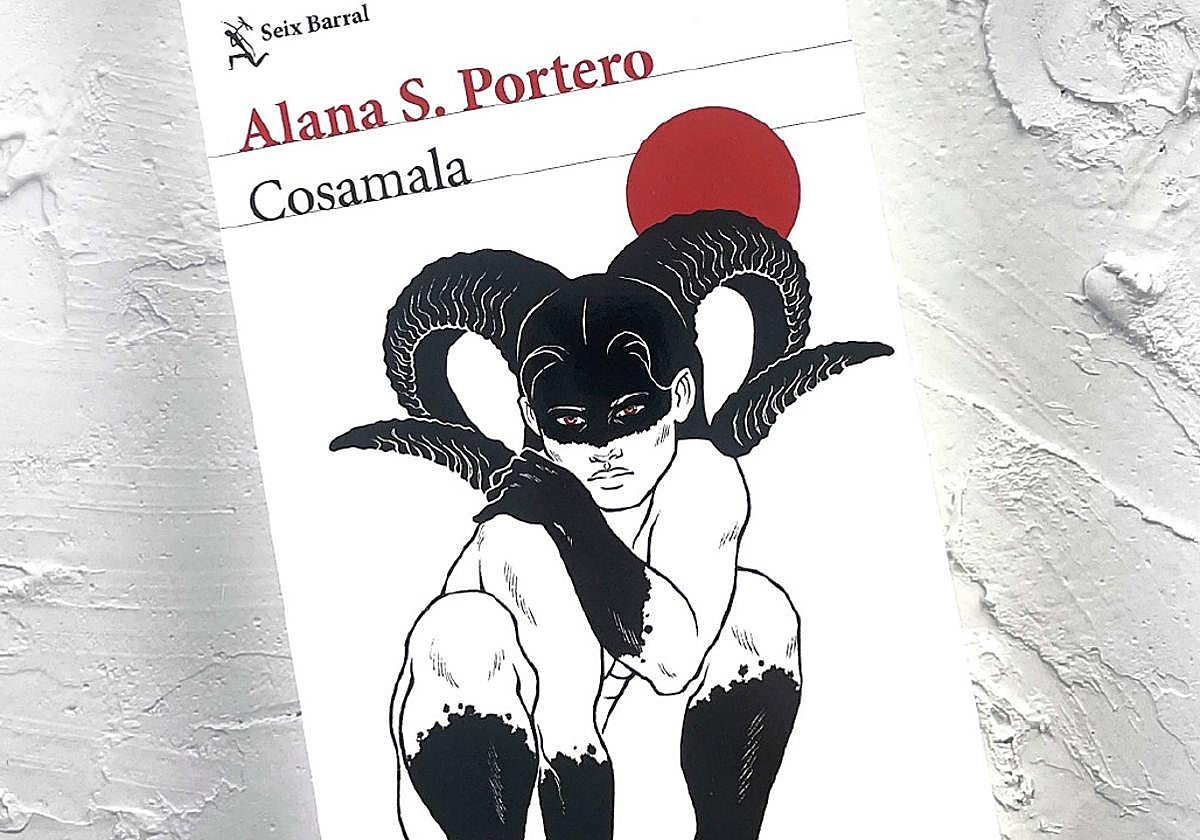
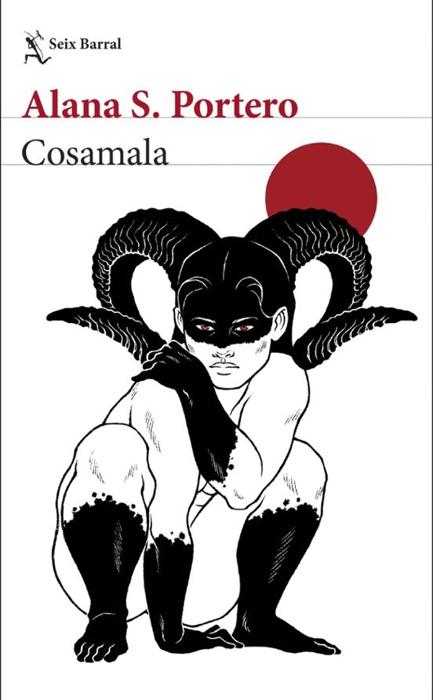
Alana S. Portero, the Madrid-born author of La mala costumbre, has published a new novel called Cosamala. The book leaves behind the contemporary Madrid setting of her acclaimed debut for Andalusia in 1937, in the middle of the Spanish Civil War, weaving together historical memory, Andalusian folklore, witchcraft and gothic fiction.
Critic Patricia Martín reviewed the novel as one of the best she has read this year. She said it gripped her from the opening pages, moved her to tears at several points and delivered one of the best endings she has read in a long time.
The Spanish Civil War pitted Spain's Republican government against Nationalist forces between 1936 and 1939. Guillena, the town at the centre of the repression Portero draws on, lies in the Sierra Norte de Sevilla, a rural, mountainous district in Seville province.
A coven amid civil war
The novel follows a group of women in villages across the Sierra Norte de Sevilla as they confront reprisals from the Nationalist uprising, the absence of male relatives and an increasingly uncertain future. Among them is Trinidad, known as la camacha, who introduces the women to a world of witchcraft and ancestral knowledge. A coven forms around her that turns the supernatural into a tool for confronting those who have brought terror into their lives.
Portero draws on real historical events, including the repression suffered by women in Guillena, Martín said, but chooses not to tell the story through the conventions of a traditional historical novel. Instead, the author incorporates gothic elements, popular legends and a supernatural dimension that transforms how the reader approaches that past. Martín called the combination a risk on paper that works extraordinarily well, and said it is precisely that mix that makes Cosamala such an original novel.
Witchcraft as resistance
Martín said the witchcraft in the novel does not exist merely to build a dark atmosphere or add a fantastical element. It represents a form of female resistance against violence, power and repression, as Portero reclaims an imagery historically associated with the persecution of women and turns it into a space of freedom, knowledge and solidarity.
Dialect, customs and characters
Martín praised Portero's writing for its strong personality, which she said makes the story work from the opening pages. She singled out the way the author recreates the speech, expressions and customs of Andalusian villages of the period, calling it careful work with language and setting that never tips into caricature or costs the dialogue its naturalness.
She also highlighted the construction of the characters. The women at the centre of the novel, she said, are given enough depth that their individual stories matter as much as the collective one, rather than existing only to represent an idea or illustrate a historical episode. That, Martín argued, is one reason the novel's political and social dimension never overwhelms the story it is telling.
Federico García Lorca's presence
The novel also makes room for Federico García Lorca, the Spanish poet and playwright killed during the Civil War in 1936. Martín said his presence could easily have become an obvious device in a novel set in Andalusia and shaped by popular tradition, but that Portero works him in organically, without forcing the references or reducing them to a wink at the reader. His figure, she wrote, fits the novel's sensibility and its constant dialogue between memory, poetry, popular culture and death.
An emotional ending
Martín said that although Cosamala carries an evident historical and political dimension, one of its greatest achievements is its capacity to move the reader. She said she does not usually cry much while reading, but that the novel brought her to tears more than once, in passages she described as particularly hard, and in others where the author found a precise way of writing about loss, violence and the bonds between women.
She singled out the ending as another of the novel's strengths, saying that without giving away details, Portero plays in a particularly brilliant way with history and with memory itself. Martín described an exciting proposal in the final pages, built on literature's capacity to open up possibilities that reality itself never got to consider, calling it a very intelligent narrative decision and a magnificent way to close the novel.
Martín concluded that Cosamala is an outstanding novel for its originality, its writing, its characters and everything it manages to convey without ever losing its narrative pace. She said it is a book she would recommend without hesitation, one she believes is worth everyone reading, and that it has earned a place in her personal top ten reads of all time.