

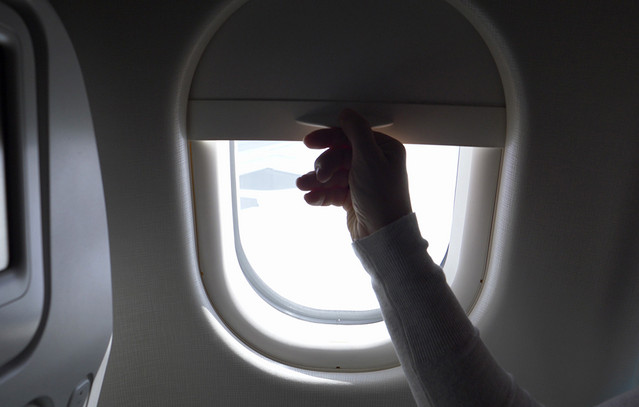
Flight attendants speaking to travel publication Travel + Leisure have outlined the unwritten rules of airplane window shade etiquette, confirming that passengers seated next to the window have primary authority over whether the blinds remain open or closed.
For many air travelers, booking a window seat provides a view of the clouds, a convenient corner for sleeping, and a sense of personal space inside the aircraft cabin. However, disputes often arise when a neighboring passenger opens or closes the shade without permission.
Under an informal but widely accepted balance among airline travelers, middle seat passengers are generally entitled to both inner armrests, while the window seat traveler maintains primary control over the window shade.
According to cabin crew members, adjusting a neighbor's window shade without asking is considered a breach of informal travel courtesy on standard flights. Flight attendants advised that passengers who want a shade adjusted should make a simple, polite request to the person in the window seat.
Travel + Leisure, a travel magazine headquartered in New York City that has covered commercial aviation and passenger travel trends since 1971, frequently highlights passenger behavior standards in commercial aircraft cabins. In standard economy seating configurations on commercial airliners, rows are typically divided into window, middle, and aisle seats, creating shared physical boundaries and distinct social expectations.
Cabin crew safety authority
Flight attendants emphasized that cabin crew members always maintain final authority over window shades regardless of passenger preferences. During critical phases of flight, particularly takeoff and landing, flight attendants may order all passengers to keep their window shades fully open.
This requirement provides cabin crew with clear visibility outside the aircraft cabin during emergency situations, allowing crew members to assess conditions and identify potential hazards outside the fuselage. International aviation safety standards require passengers to strictly follow all crew instructions during these operational phases.
Long-haul flight etiquette
Etiquette surrounding window shades becomes more complicated on long-haul international flights. When cabin lighting is dimmed and most passengers are trying to sleep, a single open window shade can flood the dark cabin with intense sunlight.
Flight attendants noted that in those situations, travel etiquette dictates that passengers read the cabin atmosphere. The crew emphasized that while a window is positioned beside a specific seat, passenger courtesy is shared, and asking politely remains the safest way to avoid in-flight friction.


