

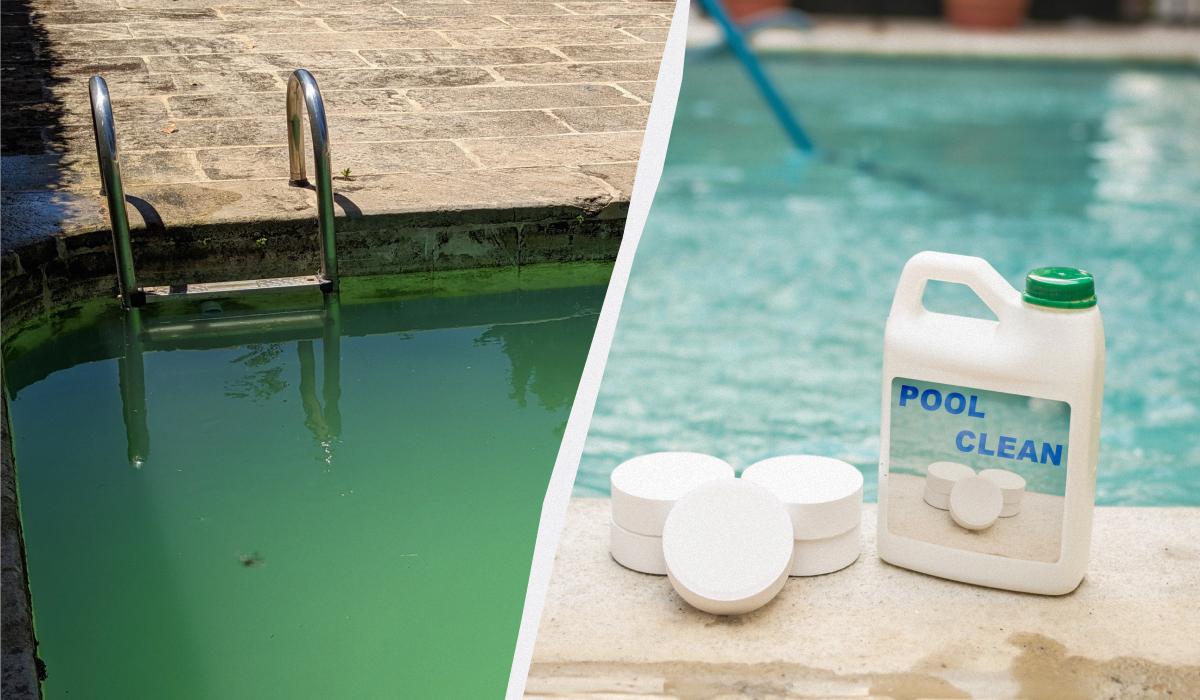
Suburban home pool owners facing cloudy or greenish water can restore clarity by applying targeted chemical treatments rather than relying solely on filtration.
Maintaining safe and clean swimming water requires monitoring four main indicators: pH levels, disinfection, algae growth, and suspended particles. Turning on a standard pool filter is often not enough when water begins to lose its transparency.
Testing pH levels with dedicated test strips or a liquid tester represents the essential first step in water care. The optimal pH range for pool water is between 7.2 and 7.4. If test results show improper balance, water quality can be corrected using pH+ or pH- preparations at a rate of roughly 100 to 200 grams per 10 cubic metres of water.
In water chemistry, pH measures the relative acidity or alkalinity of a liquid on a scale from 0 to 14. Keeping pool water within the ideal neutral-to-slightly-alkaline range prevents skin and eye irritation while ensuring that sanitising chemicals function effectively.
Disinfection and Algae Prevention
Disinfection relies on specialised home pool tablets formulated with chlorine, bromine, or active oxygen. Among these options, chlorine is considered the most effective and affordable choice. Chlorine tablets should be used according to product instructions, usually at a proportion of one tablet per 20 to 30 cubic metres of water.
To provide additional protection against algae growth, pool owners should apply algaecides. These chemical agents work best when added roughly once a week at a dosage of approximately 50 to 100 millilitres per 10 cubic metres of water.
All chemical treatments must be performed with the pool pump turned off. After the preparations have been added to the water, owners should switch on water circulation for two to four hours to distribute the chemicals throughout the pool.
Clearing Fine Particles and Milky Water
When pool water remains cloudy despite normal test indicators, the problem is often caused by microscopic particles that standard filters cannot catch. In such cases, flocculants and coagulants can help by grouping fine impurities into larger clusters that sink to the bottom or get trapped by a sand filter.
Sand filtration systems clean pool water by pumping it through a bed of specially graded quartz sand. Coagulating chemicals cause tiny suspended solids to stick together, forming larger clumps that sand particles can readily filter out.
Flocculants must be used with care because an overdose can increase water cloudiness instead of clearing it. A dosage of 50 to 100 millilitres per 10 cubic metres of water is typically sufficient, followed by running the filter in circulation mode for at least eight hours.
If the water develops a milky tint, pool owners should inspect the filter cartridge. A heavily soiled cartridge must be washed thoroughly or replaced to restore proper water clarity.


