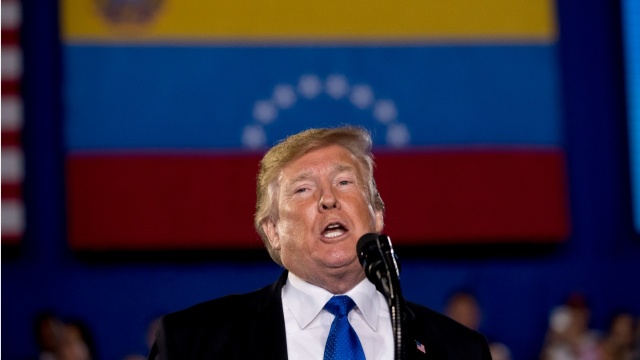
US President Donald Trump announced that the United States reached a major oil deal with Venezuela to control 65 billion barrels of reserves. He said the bilateral arrangement gives Washington majority control over more than 65 billion barrels of proven crude oil reserves in the South American nation.
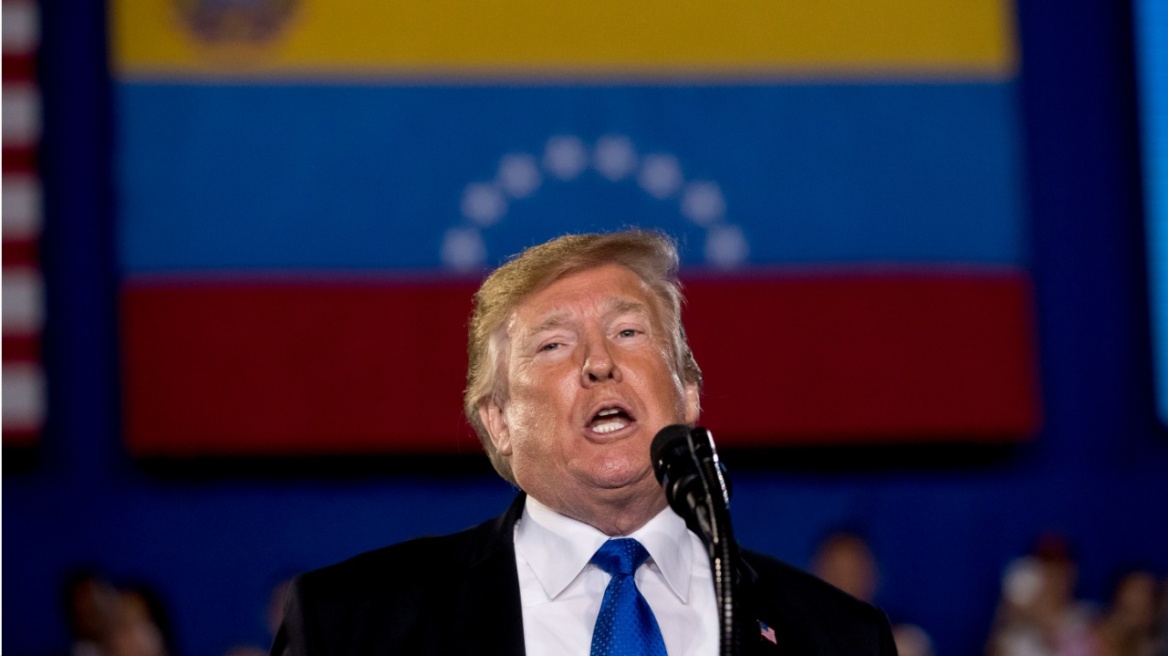
Trump described the transaction as the largest oil deal in world history and claimed it would more than double existing American oil reserves. He maintained that the agreement would significantly increase energy supplies and help lower gasoline prices for consumers over time.
The US leader disclosed the agreement in a post on his Truth Social platform, noting that negotiations involved the Venezuelan government alongside private commercial enterprises. He said Secretary of State Marco Rubio and Pete Hegseth conducted the discussions under his direct instruction, working in close cooperation with Venezuelan interim President Delcy Rodriguez.
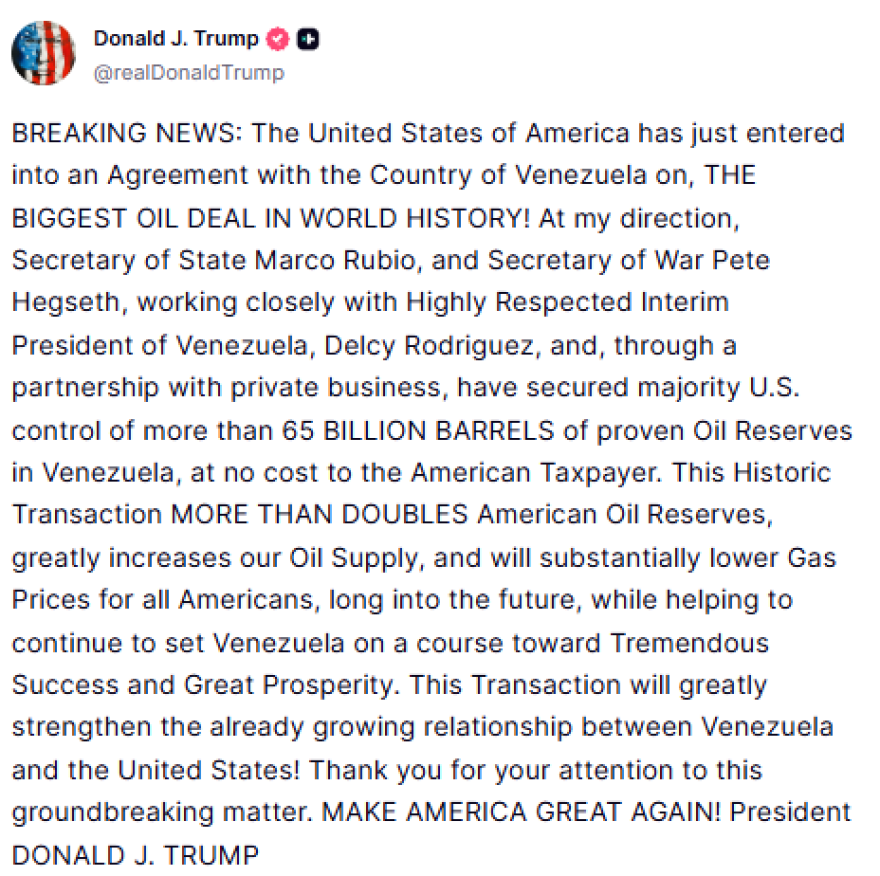
According to Trump, the partnership with the private sector ensures majority American governance over the reserves without imposing any financial cost on taxpayers in the United States. He added that the agreement will assist Venezuela in moving toward tremendous success and great prosperity while further strengthening diplomatic ties between Washington and Caracas. He stated that the transaction would greatly enhance the growing relationship between the two nations.
Unanswered questions on implementation

Despite the announcement by the US president, officials have released very few specific details regarding how the deal will be executed in practice. Public statements have not clarified which oil fields are covered, which private corporations will participate, or what legal and corporate structure will exercise American majority control.

Negotiations during recent weeks focused on securing long term access for American companies to Venezuelan petroleum fields, with a portion of production steadily directed toward the United States.

However, the implementation of such a plan could face legal and constitutional hurdles within Venezuela. The Venezuelan state retains statutory control over key operations within its national oil industry, which could complicate foreign control or private management structures.

Global oil reserves and production capacity
Venezuela holds approximately 303 billion barrels of proven crude oil reserves, placing its deposits among the largest in the world and, according to US energy data, the largest globally. The deal announced by Trump concerns more than 65 billion barrels, representing roughly one fifth of the nation's total proven reserves.
Although most of Venezuela's major oil deposits are fully mapped, national production has remained far below potential for many years. The low output follows extended periods of underinvestment, operational mismanagement, infrastructure decay, and international economic sanctions that restricted Venezuelan crude exports.

The strategic arrangement comes as Washington seeks to secure stable energy supplies while expanding Western Hemisphere crude production. For Caracas, re-engaging with foreign energy partners represents a potential avenue to revitalize its heavily impaired oil sector.