Álvaro Puche, a trainer who specialises in strength training for older adults, says balance problems blamed on ageing are usually caused by something else entirely: a progressive loss of muscular strength. He argues that no strong person has poor balance, and no weak person has good balance.
Puche said balance is not an isolated skill or an innate talent that cannot be improved. Instead, he described it as the result of a muscular system strong enough to hold the body up.
When balance matters more than avoiding a stumble
People tend to picture balance as standing on one leg or doing stability drills. In reality, Puche said, balance is the body's ability to organise itself against gravity, and it depends on two inseparable elements.
The first is proprioception, the sense that tells the brain where the joints and body segments are positioned in space. The second is the muscular strength needed to carry out the corrections that stop a fall.
Puche said good balance requires a healthy vestibular system and a clear awareness of where each body part sits in space, but that this awareness is useless without sufficient strength. Without strength, he said, the vestibular system has no capacity left to react.
It makes little difference if the brain knows exactly where the body is if the muscles cannot respond to that information. The stability of the foot, ankle, knee, hip and spine all depend on competent muscles supporting each joint.
Balance works as an early indicator of health
Before serious mobility problems appear, the body tends to send small warning signs: standing on one foot becomes harder, the ankles feel less secure, or certain movements suddenly demand extra concentration.
Puche said this kind of test reveals far more about how a person's life will unfold over the following decade than a blood test, a blood pressure reading or a cholesterol check. That, he said, shows how closely stability reflects the body's overall functional state.
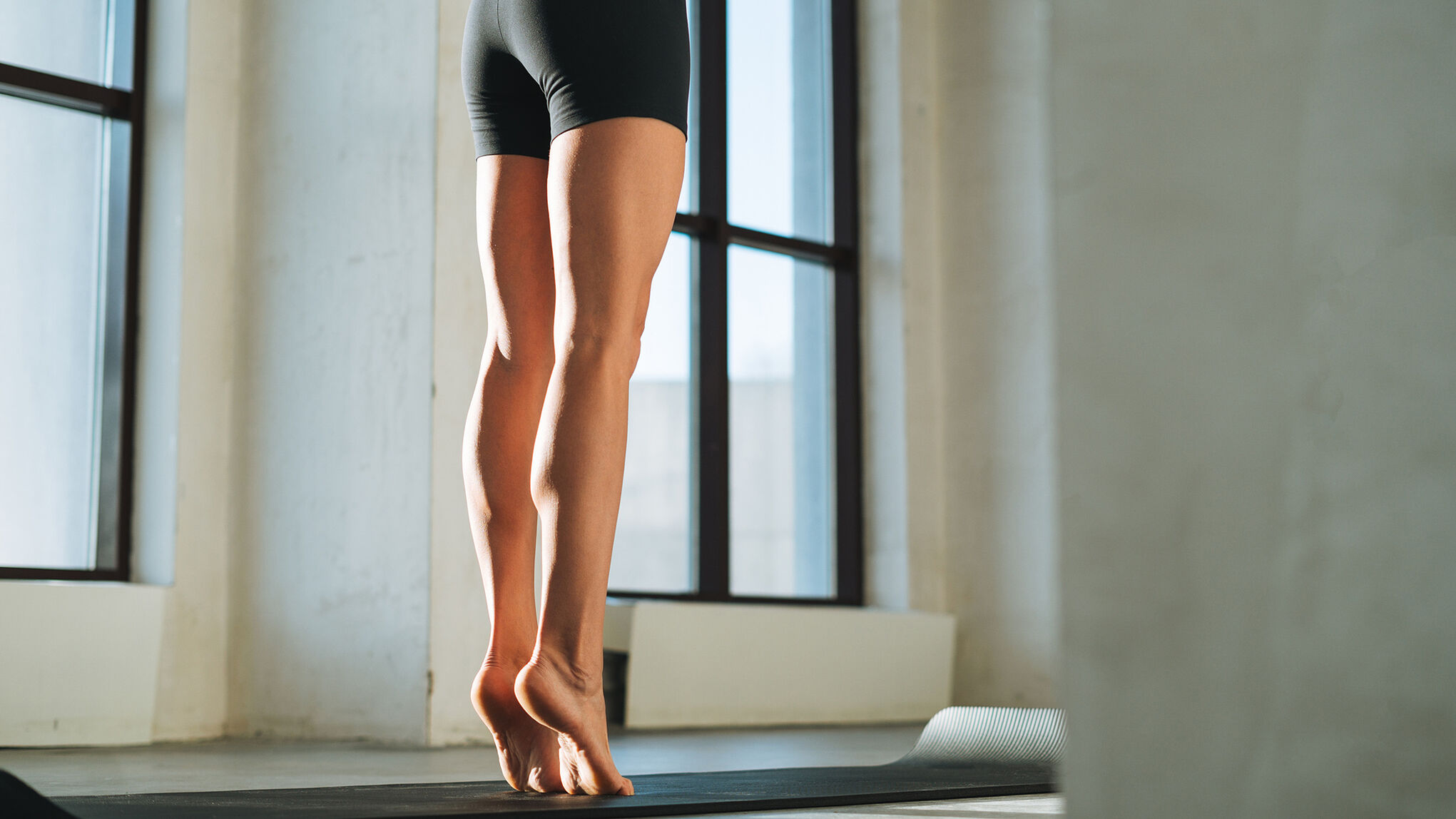
The same applies to simple movements such as raising the heels off the ground and holding that position for several seconds, which forces the calf muscles and soleus muscles to work. Those muscles are essential for foot stability and the quality of each step.
According to Puche, the minimum time a person should be able to hold their heels raised is 40 seconds at age 40, 30 seconds at age 50, and 25 seconds at age 60.
The big mistake is thinking walking is enough
Walking remains one of the best activities for cardiovascular, metabolic and mental health, Puche said. But walking alone does not activate every capacity the body needs to develop and preserve in order to age well.
The body relies on slow-twitch muscle fibres, which handle everyday endurance activities, and fast-twitch fibres, which are essential for reacting to a stumble, lifting weight or recovering lost balance. Puche said the fast-twitch fibres are precisely the ones that tend to deteriorate with age when they are not trained.
He said fast-twitch fibres are activated through strength and power training, and that if nothing is done to activate them, the tendency is to lose them. Losing fast-twitch muscle fibres at 60, he warned, inevitably means losing health, and said these fibres can save a person's life.
For that reason, Puche insisted there is no need to choose between walking and strength training. He said it often looks as though people must pick between walking or climbing stairs and doing squats, when in fact the two are perfect complements to each other.
Pilates: motor control, mobility and strength in one workout
For people who are not used to structured training, or for anyone over 60 whose balance feels unsteady, disciplines such as Pilates can be a useful ally, Puche said.
He said that for a woman over 65 with no established training habit, Pilates helps a great deal with gaining motor control, mobility and strength, since Pilates, at its core, is strength work. From there, he said, improving balance is only a short step away.
Every Pilates exercise requires locating the body in space, holding specific alignments and sustaining positions against gravity, which strengthens both proprioception and the deep muscles responsible for stability.
Test yourself
According to Álvaro Puche, what is the main cause of balance problems in older adults?
What is the recommended minimum time to hold the heels raised at age 60, according to Puche?
Which type of muscle fibre does Puche say deteriorates with age if not trained through strength and power exercise?
Have your say
Do you currently do any strength training, such as weights, squats or Pilates?