

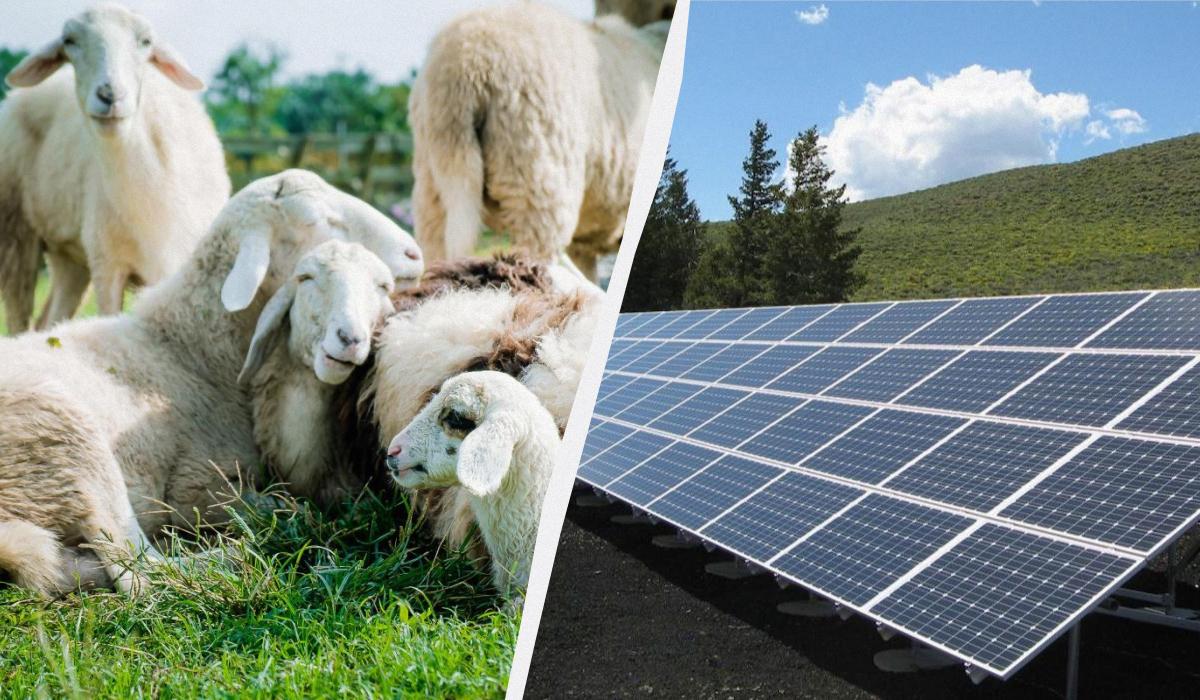
Sheep are grazing an estimated 27,500 hectares of solar power stations across Texas, accounting for more than half of all solar farm land in the United States. According to scienceblog.com, sheep won out over goats and cows because they are the only animals that can be turned loose on a solar farm without damaging it.
Solar operators face a persistent grass problem. If vegetation between the panels grows too tall, it shades the lower edge of the panels and cuts electricity output. If it dries out, it becomes a fire risk. Mowing has traditionally solved this, but the process is expensive and slow.
Why sheep beat goats and cows
Goats can climb onto solar panels, scratching the glass with their hooves. They also chew on almost anything out of curiosity, and a solar farm is covered in thousands of acres of exposed cabling.
Cows, meanwhile, are simply too tall and heavy for standard panel rows. They cannot graze the ground beneath the arrays and can bend mounting brackets and equipment by leaning on them. Panels can be installed higher on posts to accommodate cattle, but that has to be planned from the start and adds extra cost.
Sheep, by contrast, fit beneath the lowest rows of panels, eat grass rather than infrastructure, move calmly and have a steady appetite.
Operations reach ranch scale
Some grazing operations have grown to the size of ranches. Texas Solar Sheep keeps more than 6,000 sheep across a dozen sites. At SB Energy's 900-megawatt project, about 3,000 sheep manage 1,600 hectares. Operators say livestock now handle 70 to 80 percent of vegetation maintenance work, with mowers used only for spot touch-ups.
UNIAN previously reported that, during construction of a solar farm in the United States, engineers developed a solution allowing foxes to live beneath the panels while protecting them from predators.


