

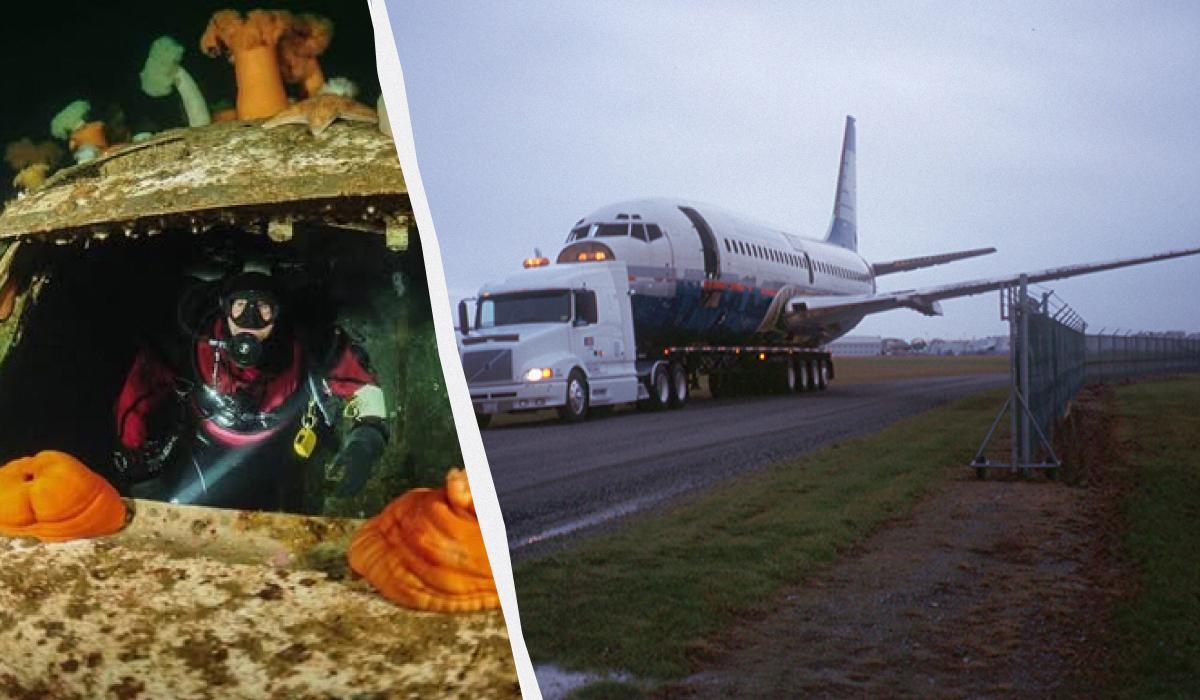
A retired Boeing 737 that once flew for Canadian Airlines now rests almost 30 metres underwater off British Columbia, Canada, where it has become an artificial reef for marine life. According to the Times of India, the aircraft was sunk near Vancouver Island in January 2006.
The stripped-down plane weighed 15 tonnes and measured 30 metres long. Finding a suitable location proved difficult, but Vancouver Island was ultimately chosen after local residents responded positively to the idea.
Years of preparation before sinking
Volunteers spent hundreds of hours cleaning the fuselage of oil, insulation and any remaining contaminants to make sure no toxic materials would enter the marine environment. The final sinking was approved only after four years of preparation.
On 14 January 2006, the aircraft was mounted on three-metre support struts and lowered by crane into the waters of the Strait of Georgia. The site was chosen specifically because the area had almost no marine life at the time, having been polluted by forestry industry waste for a decade. The plane was lowered together with its struts so divers could swim not only through the cabin but also beneath the fuselage.
More than 100 species now call it home
Predictions that new marine species would settle there have been confirmed, and the wreck site is now home to more than 100 documented species. Rockfish shelter along the wings and fuselage, cod rest on the surrounding sand, and schools of juvenile fish use the aircraft's structure as cover. Cloud sponges, plumose anemones, sea stars, octopuses and red sea urchins have colonised the plane's surfaces.
A popular dive destination
Divers now visit the site regularly, though cold water and strong currents place limits on the dive. Visitors can enter the cabin and look down through openings where the old cargo holds used to be. One of the support struts carries a memorial plaque honouring two World War Two pilots, along with a carved wooden mask that once decorated the plane's nose. Local dive centres regularly bring visitors to the wreck, which has become one of the most popular dive sites on Vancouver Island.
Another artificial reef project
In a separate reef-building effort, Florida ran an experiment to restore marine life in the Gulf of Mexico. Between 2007 and 2024, more than 500,000 tonnes of recycled oyster and clam shells were dumped into the Gulf, eventually transforming the seabed into a living oyster reef.


