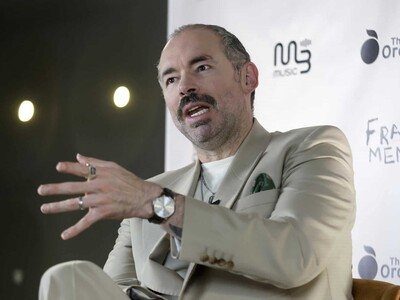
Colombian singer-songwriter Santiago Cruz released his 11th studio album, Fragmentos, on Wednesday in Bogotá, launching a reflective project shaped by personal history and creative freedom.
Speaking in an interview with news agency EFE, the 50-year-old artist explained that he has reached a stage in his life where he feels increasingly at peace with himself and composes music for the simple pleasure of song-crafting. He noted that as the years go by, he has stopped worrying about many things and feels more comfortable in his own skin.
Cruz told EFE that writing without external pretensions has been a liberating experience. While acknowledging the need to maintain his audience and pay bills through his music, he stated that from a creative standpoint, it is freeing to feel that the world ends once a song is completed, as everything that follows lies beyond his control.
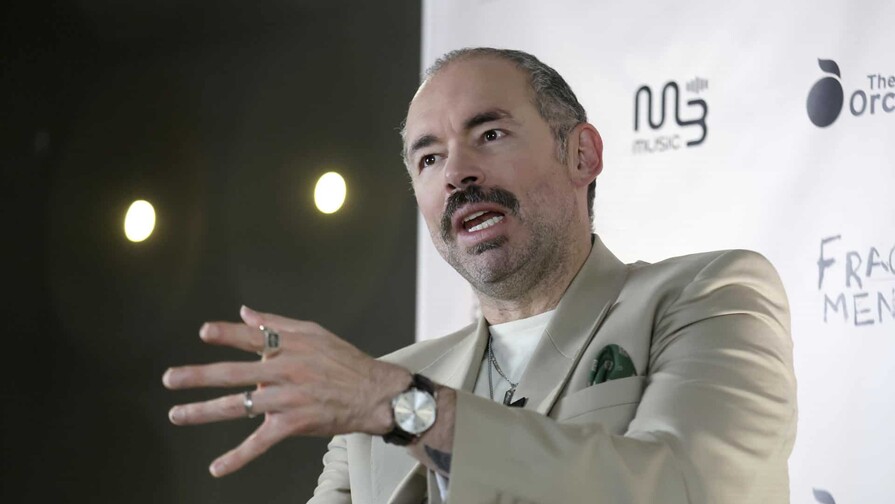
Born in 1976 in Ibagué, a city in western Colombia known as the musical capital of the country, Cruz has established himself over more than two decades as one of Colombia's most prominent pop and ballad singer-songwriters. After launching his recording career in the early 2000s, he built an extensive discography recognized across Latin America, earning multiple Latin Grammy nominations for his romantic compositions and introspective storytelling.
Reflections on loss and time
In Fragmentos, Cruz explores themes of absence, fragility, and finitude, drawing directly from personal experiences and a heightened awareness of the passage of time. The songs on the record were written over the course of the past two years, reflecting a period of intense personal contemplation.
A major catalyst for the album was Cruz approaching the age at which his father passed away. His father died in December 2002 at the age of 51, while Cruz turned 50 this year. The singer shared that since turning 48, his mind had been preoccupied with reaching that milestone of his father's absence, as if a ticking clock had been activated.
Recent deaths of other people close to him also prompted deeper reflections on human vulnerability. Cruz explained that he feels comfortable dealing with fragility, adding that he views vulnerability as a distinct form of strength rather than a weakness.
Tribute to Fito Páez
The new album features a cover of Tumbas de la gloria, a famous song by Argentine rock icon Fito Páez. The track carries deep personal significance for Cruz, dating back to 1999 when he performed as the opening act for Páez at a concert in Bogotá.
Opening for the Argentine star proved to be a decisive moment in Cruz's life, inspiring him to leave his corporate office job to pursue music full-time. Cruz remarked to EFE that Páez was unwittingly instrumental in changing his career path, making Tumbas de la gloria an ideal tribute that aligns with the overarching themes of fragility on Fragmentos.
Páez, a native of Rosario, Argentina, is one of the foundational figures of Spanish-language rock. His 1992 album El amor después del amor, which contains the original recording of Tumbas de la gloria, remains the best-selling album in Argentine rock history.
First English recording in Nashville
Fragmentos also marks a milestone in Cruz's career with his first recording in English on the track The Lucky Ones. The song is a duet with South African artist Roan Ash, whom Cruz met during a songwriting camp organized by Warner Chappell Music in Nashville, Tennessee.
Cruz recalled that the song came together naturally during their sessions in Nashville. He was so impressed with the finished piece that he asked Ash whether Ash or he should record it, as he felt the song could not be left unused. Ash generously agreed to yield the track, prompting Cruz to invite him to record it as a duet.
Nashville is globally celebrated as a major center for music production and publishing, hosting songwriting camps where international artists collaborate across genres. Warner Chappell Music, the global publishing arm of Warner Music Group, regularly gathers songwriters and producers at these events to foster cross-cultural compositions.
Cross-genre musical collaborations
In addition to his work with Ash, Cruz collaborated with Spanish singer-songwriter El Kanka on the track Pasará. The song combines regional Mexican musical arrangements with lyrics crafted in a traditional singer-songwriter style.
Cruz explained that despite the regional Mexican aesthetic of the production, he deliberately avoided inviting an artist from the regional Mexican or popular music genres. He felt that choosing a genre insider would have been an easy option, so he decided to double down by bringing in El Kanka, an artist completely outside the genre, to bring a unique perspective to the piece.
The album also features a collaboration with Uruguayan musician Cardellino, expanding the international scope of the record. Following the release of Fragmentos, Cruz is set to embark on his new concert tour, titled Sigo en pie.