

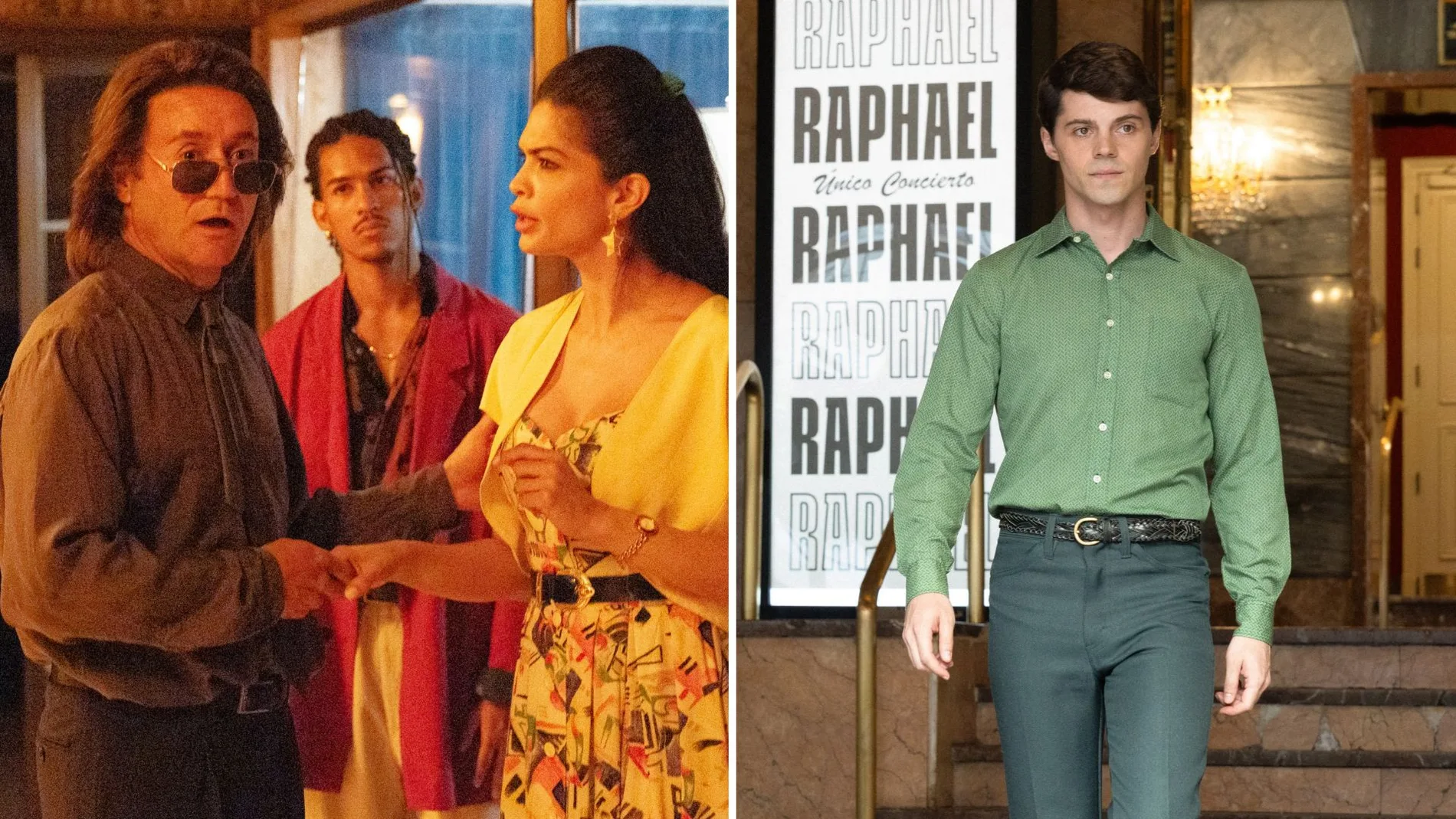
Actors Carlos Santos and Javier Morgade have shared the secrets behind portraying Spanish music legend Raphael in the new Netflix biographical series titled Aquel.
The eight-part television drama, which has been streaming on the platform for two weeks, traces the iconic balladeer from his early career to international stardom, marriage, and a life-saving organ transplant.
Speaking to Spanish newspaper La Razon, both performers explained that the production exposed unexpected chapters of the singer's life that neither had known before stepping into the role.
Audition process and screen tests
Santos, who plays Raphael in his mature stage, was called in for an elaborate screen test with full styling, makeup, and a wig alongside co-star Natalia Varela.
After completing the dialogue reading, producers asked if he could sing, prompting Santos to perform Que Sabe Nadie, a signature ballad he had mimicked at home since early childhood.
Santos said his lifelong habit of impersonating Raphael, coupled with the hair and makeup work, proved decisive in convincing producers he could embody the older singer.
Morgade took a contrasting path to land the role of young Rafael Martos, starting with audition readings from episodes one and four that covered the artist's earliest career steps.
Producers then requested a video recreation of Raphael's Eurovision performance of Yo Soy Aquel, which Morgade filmed with a friend in an empty theater on a Saturday morning before a final chemistry test with Varela.
Physical styling and family guidance
Morgade noted that while some observers saw similarities in his facial bone structure and nose, others felt he looked more like singer Camilo Sesto.
Santos explained that makeup, hair, wardrobe, and special effects created the visual illusion, emphasizing that the goal was never a literal photocopy requiring plastic surgery, but capturing Raphael's inner soul and essence.
According to Santos, once an actor connects with the character's spirit, the outward physical mannerisms follow naturally on camera.
Raphael's son, Jacobo Martos, supported the cast continuously on and off set, acting as an emotional safety net for Santos, Morgade, and Varela.
Raphael's grandchildren also visited filming, where Morgade recalled spotting grandson Nico watching a scene and remarking that Morgade had captured his grandfather's exact gesture.
Raphael himself launched his Raphaelismo Tour the day before shooting began, but he invited both actors to his dressing room at Madrid's Teatro de la Zarzuela after a performance.
Morgade described the veteran star as charming and unassuming, adding that Raphael avoided giving acting instructions and joked about checking whether the crew was treating Morgade properly.
Vocal rehearsals and musical dubbing
The series includes 12 musical performances, requiring three weeks of intensive rehearsals with vocal coach Felipe Forastier.
Morgade joked that he sang like a tractor, prompting a change of approach once producers decided that tribute singer Sergio Romero would supply the vocals for the performances.
With Romero handling the singing tracks, Morgade and Forastier concentrated on breathing points, vocal projection, soft palate placement, and ensuring neck movements matched each note realistically.
Santos sang a brief passage himself for a recreation of the musical Jekyll and Hyde, but sound technicians dubbed his performance with Romero as well to preserve vocal continuity across all episodes.
Narrative structure and health crisis
The story shifts after episode six, which portrays Raphael's courtship and wedding with his wife, Natalia.
Episode seven leaps forward to show Raphael as a global icon raising three children, with some reaching their teenage years and others preparing to leave home.
Santos identified the eighth and final episode as the most emotionally challenging section to film because it tackled Raphael's severe illness and liver transplant alongside Jekyll and Hyde.
Santos noted that portraying an organ transplant was deeply intense, as the sudden medical emergency threatened both Raphael's family life and the career he had spent decades establishing.
Soviet tours and concert history
Both actors admitted they were astonished by historical events depicted in the series, particularly Raphael's massive concert success across the Soviet Union.
Santos pointed out that it was extraordinary for a famous artist living under Spain's dictatorship to receive official authorization to tour a communist country.
Morgade added that Raphael revolutionized live music in Spain by introducing the modern solo concert format, inspired by French singer Edith Piaf.
Before Raphael, Spanish performances were variety shows featuring multiple acts, but Raphael staked his own money and reputation to headline solo at the Teatro de la Zarzuela.
Santos said the Zarzuela remained a central landmark for the singer, hosting his original solo concert, his return following his liver transplant, and another comeback after a health setback one year ago.
Morgade also learned during production that Raphael wore a wig over a shaved head during his classic television performance of the carol El Tamborilero.
Vinyl records and childhood memories
Morgade grew up watching Raphael on holiday television specials and mimicked him during family gatherings, though the singer was already 50 when Morgade was born.
Santos revealed that his family has owned a vinyl copy of Raphael's 1982 album since Santos was five, the record that earned Raphael a unique Uranium Disc for selling 80 million copies.
Forty years later, Raphael autographed and dedicated that album, which includes Digan Lo Que Digan, El Tamborilero, and Yo Soy Aquel, to Santos and his mother.
Past roles and musical favorites
Santos previously portrayed real-life figures including Civil Guard chief Luis Roldan in El Hombre de las Mil Caras, filmmaker Pedro Almodovar in El Ministerio del Tiempo, and television pioneer Chicho Ibanez Serrador, alongside his role in Los Hombres de Paco.
Morgade, who starred in the film Disco, Ibiza, Locomia, joked that if he ever portrayed another musician he would pick Bad Gyal or late Swedish DJ Avicii, though he prefers future biographical roles not to involve singing on stage.
Morgade said studying Raphael taught him to cultivate genuine stage confidence despite outside criticism, while the 49-year-old Santos reflected that performance insecurities never disappear, noting that identical doubts trouble icons like Julio Iglesias, Madonna, and Robert De Niro.
For their personal favorites, Morgade chose Yo Soy Aquel and Balada Triste de Trompeta, which he now plays regularly on Spotify, while Santos highlighted Que Sabe Nadie, Como Yo Te Amo, and Estar Enamorado.
Santos concluded that receiving direct gratitude from Raphael, his wife, and their grandchildren at the official premiere was the greatest reward of the entire project, far outweighing audience reviews.