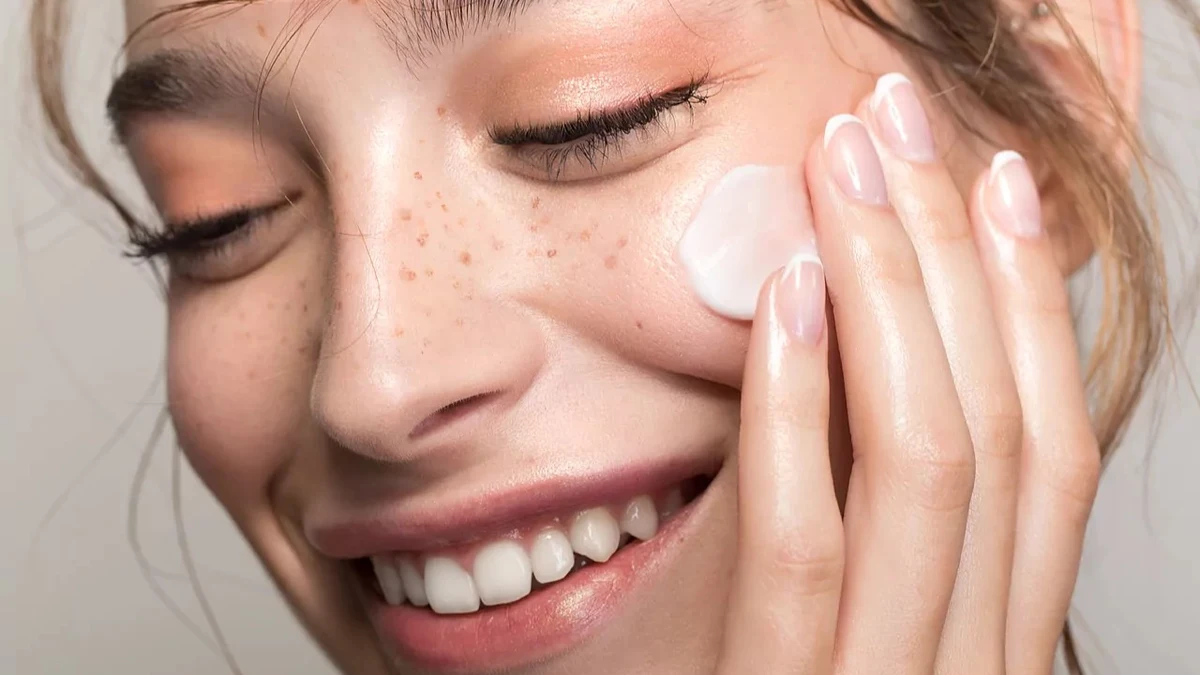
Radiofrequency devices for the face are surging in popularity as a complement to LED masks, prized above all for their ability to visibly firm and tighten the skin.
LED masks have become a bathroom staple over the past few years. First favored by beauty salons and dermatology clinics, they went mainstream once celebrities such as Victoria Beckham, Margot Robbie and the Kardashian-Jenner family adopted them as part of their skincare routines. The hashtag "LED masks" now draws enormous numbers on social media, a surge that has helped fuel the wider beauty-tech boom and clear the way for another once-clinical tool: radiofrequency devices.

Radiofrequency treatments were, until recently, largely confined to aesthetic clinics before making their way into home skincare routines. Selma van Asselt, a concept and product developer for the professional beauty industry, said the technology rejuvenates the skin without surgery or fillers and produces lasting effects. She said it creates an almost immediate tightening effect on the skin, along with a longer-lasting plumping and firming effect over time.
How radiofrequency works on the skin
Radiofrequency devices emit very high-frequency electromagnetic waves that pass through the surface of the skin and generate heat in its deeper layers. That heat causes existing collagen to shrink, prompting the skin to break down the altered, contracted collagen and replace it with new, plumper collagen, which reduces visible signs of aging.
Six radiofrequency devices to know
Several models stand out for different reasons: the CurrentBody Skin RF device for ease of use, the Silk'n FaceTite Revive for all-round results, the FAQ 102 RF for its sophistication, the Amiro S1 Golden Dot Matrix RF for versatility, the Silk'n FaceTite Multiplatform for targeting specific areas of the face, and the Iborria Radiofréquence Facial Visage for speed.
The CurrentBody Skin RF device is used just once a week, unlike most rivals. Already popular in clinics, it is said to visibly firm the skin, improve its texture and smooth wrinkles within a few months. It delivers radiofrequency waves that heat the skin to 43 degrees Celsius to support collagen production. Its effects can be boosted with single-use microneedling patches, made of very fine, painless microneedles that create tiny channels to improve absorption of hyaluronic acid beneath the skin's surface; some target forehead wrinkles, others the eye area, and they suit all skin types, including sensitive skin. It is used once a week for eight weeks, then every four to eight weeks to maintain results. It currently costs 279.99 euros, down 20% from 349.99 euros.
The FAQ 102 RF device combines four treatments at once: full-spectrum pulsed light to stimulate collagen and elastin production, radiofrequency, eight-color LED to target specific skin concerns, and pulsations that relax muscle tension and boost circulation. The brand says it delivers results close to those of a facelift. It is used one to two times a week for eight weeks, then one to two times a month. It is priced at 584.10 euros, down 19% from 723.90 euros at Foreo, or 399 euros, down 29% from 559 euros, on Amazon.
The Silk'n FaceTite Revive targets wrinkles, pigmentation spots, sagging facial contours, crow's feet, frown lines and smile lines by combining radiofrequency, infrared heat and LED light to stimulate collagen and elastin at the same time. It is used daily for 20 minutes over 10 weeks and costs 149 euros on Amazon, down 40% from 249 euros.
The Silk'n FaceTite Multiplatform combines radiofrequency, infrared, red LED and EMS microcurrent technology to work on different layers of skin, aiming for lasting regeneration, a smoother complexion, firmer facial muscles and reduced pigmentation spots. It comes with three different tips for different areas of the face and is used twice a week for three to 15 minutes per area, depending on the zone treated. It costs 349 euros on Amazon.
The Iborria Radiofréquence Facial Visage is a six-in-one device combining radiofrequency, electrostimulation and LED light to stimulate collagen production, boost radiance, smooth the skin, relax facial muscles and improve the absorption of products applied afterward. It is used three times a week for four minutes and costs 110 euros on Amazon.
Radiofrequency, LED and microcurrent: what's the difference
Van Asselt said radiofrequency creates heat while LED warms the skin; radiofrequency requires cellular energy, whereas LED helps generate it; and radiofrequency creates new collagen indirectly, by shrinking existing collagen with heat, while LED creates new collagen through increased cellular energy. She said radiofrequency speeds up cellular activity, rebuilds collagen and elastin fibers and tightens facial muscles for firmer, smoother skin, while LED reaches different layers of the skin depending on the color used, red to stimulate collagen production, yellow to soothe the skin and blue to reduce redness. Microcurrents, meanwhile, are small electrical impulses designed to redefine the oval of the face and firm the skin. The French Association of Aesthetic Medicine said anti-aging microcurrent treatment can reactivate the skin's cellular regeneration mechanisms and help counter facial aging.
How to use a radiofrequency device safely
Guidance for best results includes two to three sessions a week for 10 weeks, with deeper, longer-lasting improvements typically becoming visible from the fifth or sixth week. A conductive gel should always be applied to clean, impurity-free skin before each session, and each area should be treated for 10 to 15 minutes. Some redness caused by improved microcirculation can appear but fades within a few hours. After 10 weeks, users are advised to pause treatment to allow new collagen production to build volume and firmness.
Radiofrequency devices are generally recommended from age 30 to 35 and are not advised for people with skin conditions such as rosacea, eczema, psoriasis or recent scarring, those with diabetes or clotting disorders, or women who are pregnant or breastfeeding.
How to choose the right device
With the market for these tools expanding fast, not every model performs equally well, and some are simply ineffective, van Asselt said. She advised checking a brand's reputation first, then looking at whether a device combines complementary technologies such as infrared or LED, which broaden and deepen the results.
Test yourself
What effect do radiofrequency devices have on existing collagen, according to the article?
Which device is used just once a week, unlike most competitors?
From what age are radiofrequency devices generally recommended, according to the article?
Have your say
Would you try an at-home radiofrequency device for your skincare routine?