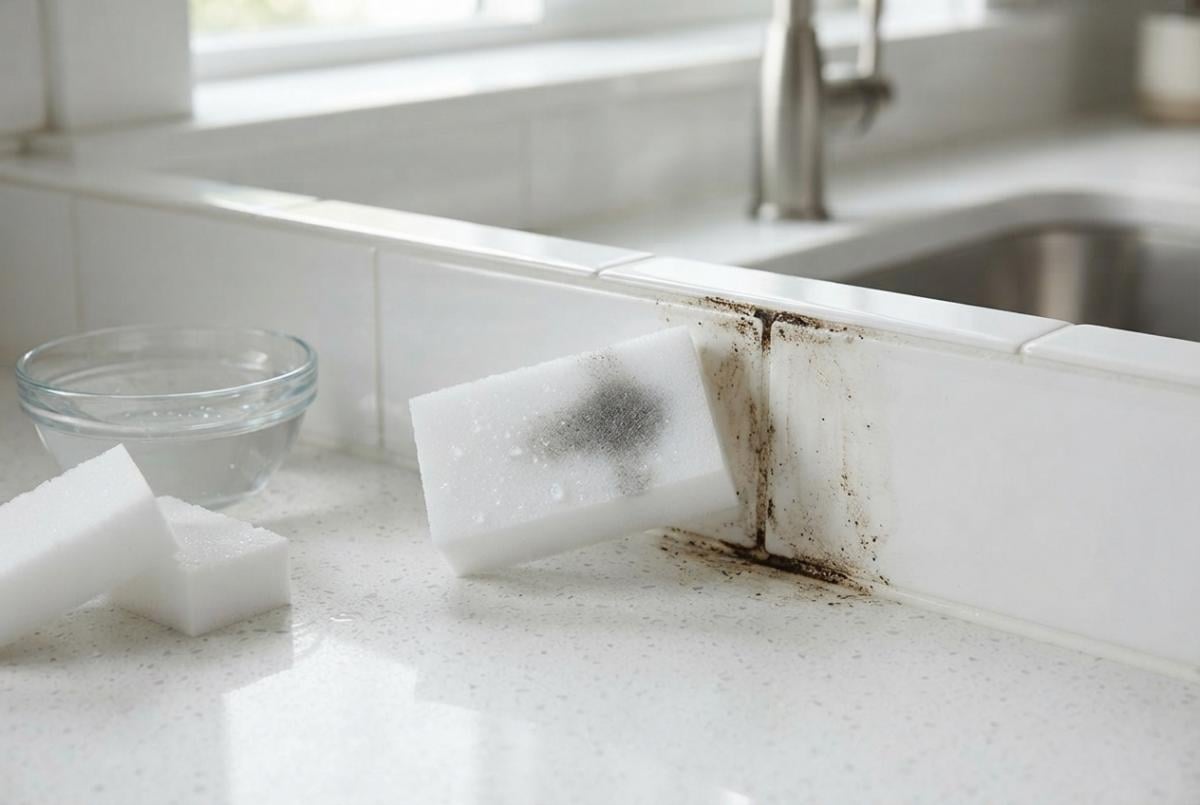
Melamine sponges have become a popular cleaning tool because they lift stubborn stains, marks and grime that a regular cloth cannot remove, without relying on large amounts of household chemicals, according to cleaning advice shared this week. But the material has quirks, and using it on the wrong surface can leave lasting damage.
The sponge works best on hard surfaces that can withstand mechanical friction, including tile, ceramic tiling, plastic items and other durable materials. That makes it useful for cleaning kitchens, bathrooms and other rooms with heavy-duty surfaces. Before reaching for it, though, it is worth checking that the coating will not be harmed by the abrasive effect.
How to Use a Melamine Sponge Properly
A melamine sponge needs to be lightly dampened with water before use. There is no need to soak the whole piece: moistening a small section is enough.
Cutting off a piece is also practical. The melamine material gradually wears down during cleaning, so using a whole block to deal with a small stain is wasteful.
- Put on household gloves
- Cut a small piece off the sponge
- Lightly dampen it with water, without fully soaking the material
- Gently work the stained area without pressing too hard
- Wipe away leftover grime and sponge particles with a clean, damp cloth
It is important to remember that the sponge is abrasive. While it rubs away dirt, it can also damage certain coatings in the process.
What Not to Clean With a Melamine Sponge
The main drawback of a melamine sponge is that it acts as a fine abrasive. That means friction from the sponge can damage not only the stain but the top layer of the surface underneath it.
Varnished, polished, painted and other delicate materials call for particular caution, since a melamine sponge can leave dull patches, scuffs or scratches on them.
Before cleaning a whole item, it is better to test the sponge on a small, inconspicuous area first. If the coating changes color, loses its shine or shows friction marks, that cleaning method should be abandoned.
Test yourself
What kind of surfaces can a melamine sponge safely clean, according to the article?
What should you do to a melamine sponge before cleaning with it?
Why does the article warn against using melamine sponges on polished surfaces?
Have your say
Do you use melamine sponges for cleaning at home?