

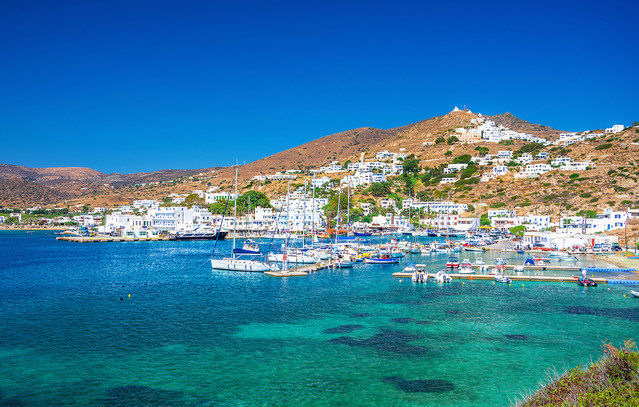
French newspaper Le Figaro has published a feature on the Greek island of Ios, presenting a side of the destination beyond typical tourist clichés under the headline "The unexpected Cyclades: a stop in Ios, the small island in the footsteps of Homer."
The piece describes an island offering a strikingly wide range of activities, combining some of the most beautiful sandy beaches in the Aegean Sea with wild landscapes and scattered coves. Ios is part of the Cyclades, a group of Greek islands in the Aegean known for whitewashed villages and rugged terrain.
The Homer connection
The feature gives particular attention to the island's cultural identity, highlighting its link to Homer, the ancient poet traditionally credited as the author of the Iliad and the Odyssey. According to tradition cited by Le Figaro, Ios is home to Homer's tomb, and the association with the poet is described as one of the elements that strengthens the destination's cultural character today.
The article also notes that Ios has drawn contemporary artists who have chosen the island as a place to create, generating what it calls an interesting dialogue between mythology, history and contemporary art. Le Figaro describes Ios as "timeless and wild," pointing to its natural surroundings alongside a shift toward a more modern and sustainable tourism model. The newspaper specifically mentions electric bicycles, marked hiking routes and cultural QR codes as features that enrich the visitor experience and add contemporary dimensions to exploring the island.
Chora's whitewashed streets
Special mention goes to Chora, the island's capital, presented as one of the distinctive features of Ios. Built on a hillside above the port, Chora is described as an impressive cluster of white and beige cube-shaped buildings, with narrow passageways, stairways and small chapels marked by rounded domes. Le Figaro also describes the experience of wandering Chora's maze-like alleys and watching the sunset over the bay. The island's contemporary artistic identity forms a significant part of the feature as well.
Particular emphasis is placed on the museum dedicated to Yannis Gaitis and Gavriella Simosi, a project that took two decades to complete. The French outlet describes the museum as a notably significant architectural work, sited on a hill above Chora and the port, and presents the two artists' work alongside the way their artistic vision engages with Greek mythology. Below the museum sits the renovated marble Odysseas Elytis amphitheater, built on the remains of a Hellenistic-era monument with a view toward the sea, which the feature presents as a venue for music and cultural events.
Hiking trails and the Skarkos site
The feature places considerable weight on hiking and on exploring the island's natural and archaeological heritage. Le Figaro refers to marked trails, some of which follow ancient routes that were in use roughly 4,000 years ago. One of these routes passes through the archaeological site of Skarkos, described as one of the most significant prehistoric sites in the Aegean and one that has received a European distinction for its cultural value.
There are also shorter routes designed for getting to know the island, among them a path to Plakotos in the northwest, a distinctive, windswept spot with sea views that is linked to the tradition surrounding Homer's tomb.
Beaches along an 87-kilometer coastline
The feature also highlights the island's coastline, describing dozens of beaches spread along a total coastline of 87 kilometers. Le Figaro notes that some beaches are accessible only on foot or by boat, while all are marked by a distinctive color and shimmer in the water, which it links to the schist bedrock and sand. The newspaper singles out Manganari, at the southern tip of Ios, a triple sandy beach with clear waters that has also featured in cinema, having served as a filming location for The Big Blue.
Local food and traditions
Gastronomy also plays a significant role in the feature, presented as an expression of the island's authentic way of life. The 13 windmills overlooking Chora are cited as evidence of the intense agricultural activity of the past, while the island's food culture is described as a living tradition that evolves through the seasons and through knowledge passed down between generations. The natural environment is presented as an integral part of that culinary identity, with aromatic plants, fig trees, olive trees, livestock and fish-rich waters forming what the article calls the island's local "pantry."
Among its recommendations to readers, Le Figaro singles out cheese tastings, local products and traditional flavors, including sweets and preparations made with watermelon, honey and sesame, cheese products, capers, aromatic herbs and dried figs.
A municipality-backed press trip
Le Figaro's presentation of Ios came about as the result of a planned press trip organized by the island's municipality. The feature is seen as significant for showcasing a broader tourism identity for Ios, spanning its history and mythology, archaeological heritage, art and culture, hiking and nature, beaches, gastronomy, and its contemporary push toward a greener, more digitally connected model of tourism.


